Return to entryChecking Labradorite printable layout…
Crystal & Gemstone Grimoire

Labradorite

Feldspar · Plagioclase series

Historical & Cultural Uses

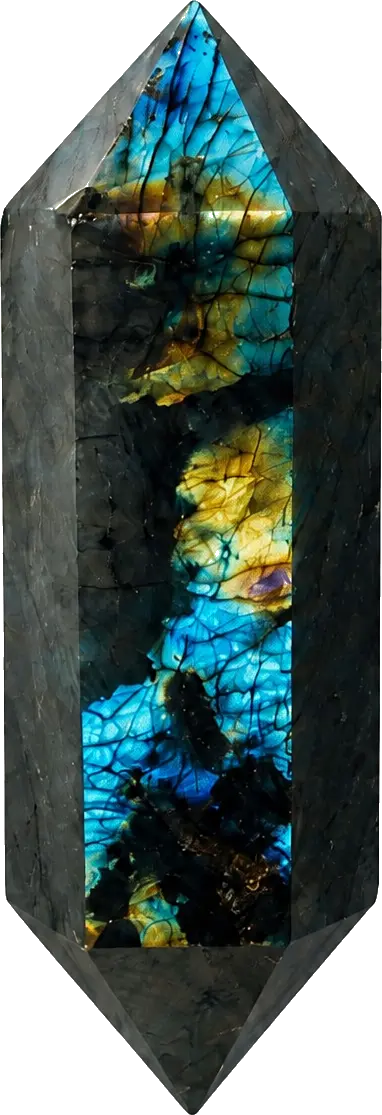
Named for Labrador, Canada, labradorite entered European mineralogical literature in the late eighteenth century. Its directional blue-to-gold labradorescence made it valued as an ornamental and lapidary stone.

Folklore & Legends

Modern folklore often compares labradorescence to aurora light held within dark stone. The image is evocative, but it should not be presented as a documented universal Indigenous tradition without a reliable historical source.

Magical Associations

  • Transformation
  • Protection
  • Intuition
  • Dreamwork

Core Correspondences

Element:
Water
Planet:
Moon
Energy:
Transformational ·
Chakra:
Third Eye

Care & Safety

At Mohs 6–6. 5, labradorite resists light wear but is not immune to scratches. Its two good-to-perfect cleavage directions make edges and points vulnerable to impact.

Spiritual & Magical Uses

  • Meditation and reflective
  • Symbolic protection and
  • Dream journaling and

How to Work With This Crystal

Use as a visual focus during meditation, place beside a dream journal or divination tools, carry in a protective pouch, or set on an altar for transformation.

Cleansing & Care

Wipe with a soft damp cloth or use mild soap and lukewarm water, then dry thoroughly.

Additional Correspondences

Color: Gray · Dark gray • Season: Winter

Crystal & Gemstone Grimoire

Labradorite

Feldspar · Plagioclase series

Mineral Profile

Mineral NameLabradorite (plagioclase
Mineral ClassFeldspar · Plagioclase series
Chemical Composition(Ca,Na)(Al,Si)₄O₈
Crystal SystemTriclinic
Hardness (Mohs)6–6
LusterVitreous
Color(s)Gray · Dark gray · Blue-green
TransparencyTransparent to translucent
StreakWhite
Common FormationsMassive · Cleavable masses ·
CleavagePerfect in two directions
FractureUneven to conchoidal
Geological OriginA calcium-sodium plagioclase
Common LocationsLabrador, Canada · Finland ·
Notable VarietiesSpectrolite · Transparent
RarityCommon mineral

Historical & Cultural Context

Labradorite takes its name from Labrador, Canada, where specimens drew European mineralogical attention in the late eighteenth century. The stone became prized in lapidary and decorative work because careful orientation and polishing reveal labradorescence—a directional iridescent schiller produced by its internal feldspar structure. Finnish material showing a broad, vivid spectrum is marketed as spectrolite. Labradorite is now cut into cabochons, beads, carvings, inlay, and display pieces.

Magical & Spiritual Practice

In modern crystal-working traditions, labradorite is commonly used as a symbol of transformation, intuition, protection, imagination, and dreamwork. Its dark body and shifting internal color make it a natural visual metaphor for hidden potential becoming visible when perspective changes. Practitioners may hold it during meditation, place it beside a dream journal, include it in divination or boundary work, or use it as a focus for navigating change.

Notes & Personal Connection

Add your experiences, observations, dreams, and notes. How does this crystal speak to you?

Care & Safety

At Mohs 6–6. 5, labradorite resists light wear but is not immune to scratches.

Sources & Research Notes

GIA • Mindat • International Gem Society