Crystal & Gemstone Grimoire
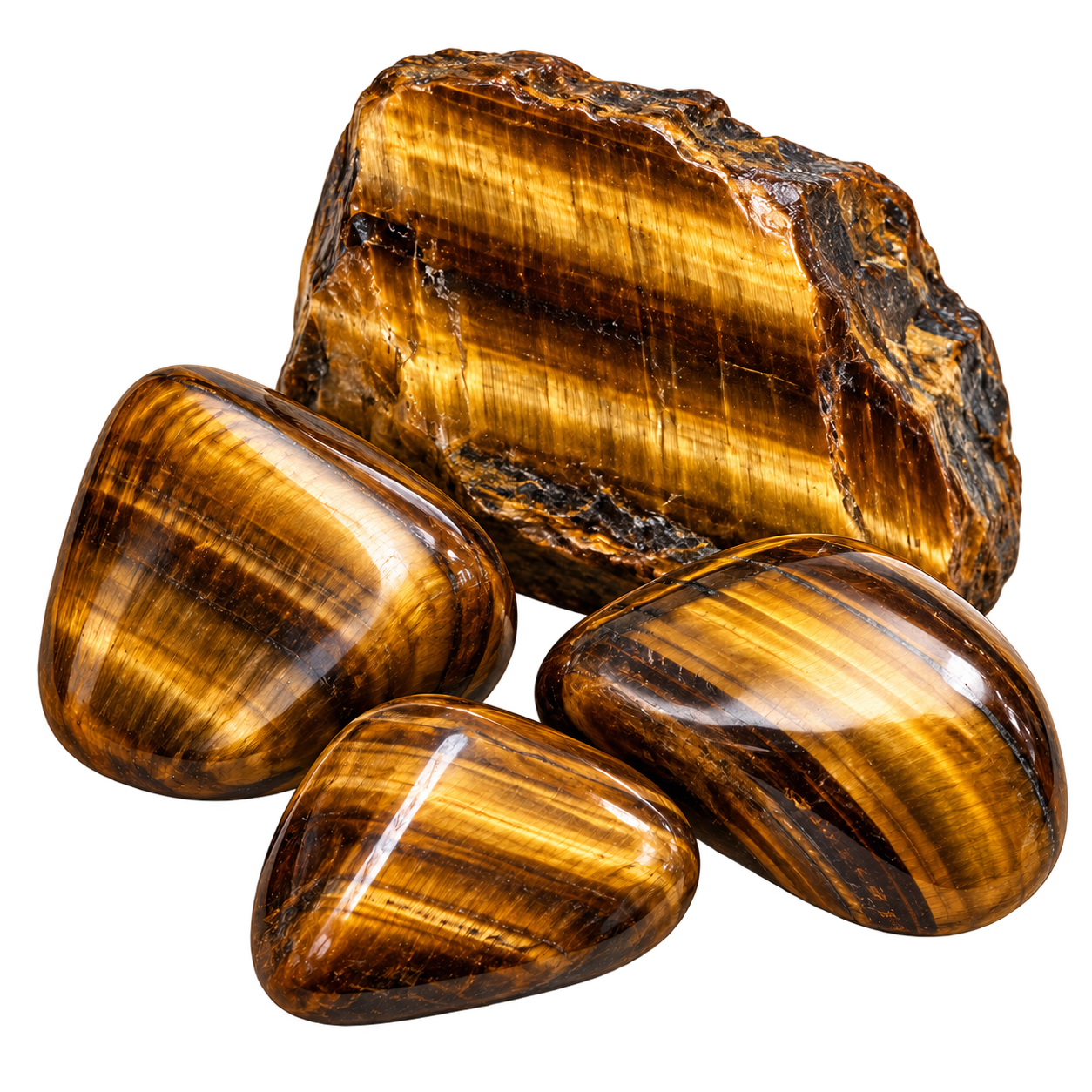
Tiger’s Eye
Tiger’s Eye (chatoyant quartz material)Historical & Cultural Uses
Tiger’s Eye is valued as an ornamental and jewelry stone for its chatoyant band of light. Specific courage, protection, and confidence meanings are identified as modern metaphysical traditions.
Magical Associations
- Confidence
- courage
- grounding
- protection
- discernment
- focus
- steady action
- personal power
- motivation
- clear judgment.
Folklore & Legends
Within modern crystal and metaphysical practice, Tiger’s Eye is associated with courage, confidence, protection, discernment, focus, and grounded action.
Core Correspondences
Spiritual & Magical Uses
- Confidence work
- grounding practices
- prosperity intention work
- focus and decision-making support
- protective carrying stones
- travel talismans
- altar work centered on courage or forward movement.
⚠ Care & Safety
Do not ingest. Avoid creating or inhaling mineral dust. Handle drilled or broken pieces carefully. Natural stones vary, and dyed or treated pieces may occur in the marketplace.
Educational purposes only. Not medical advice.How to Work With This Crystal
Carry tiger’s eye as a pocket stone for confidence and grounded focus, place it on an altar for courage or prosperity work, hold it during meditation when seeking steadiness or clear judgment, or use it in ritual layouts focused on protection, momentum, or personal strength.
Cleansing & Care
Clean gently with a soft dry or slightly damp cloth. Avoid harsh chemicals and protect polished stones from scratching against harder materials. Energetically, practitioners may choose smoke cleansing, sound, moonlight, or other low-risk methods that fit their practice.
Additional Correspondences
Page 2 of 2
Deeper Reading
Mineral Profile
- Mineral Class
- Quartz variety / gemstone.
- Chemical Composition
- Silicon dioxide (SiO2), as a quartz variety, with color and pattern influenced by iron-rich fibrous inclusions or replacement textures.
- Crystal System
- Trigonal (quartz group)
- Hardness (Mohs)
- 6.5 to 7
- Luster
- Silky to vitreous when polished
- Color(s)
- Golden brown, honey brown, yellow-brown, bronze, brown with chatoyant bands · some pieces may be deeper red-brown or darker brown.
- Transparency
- Opaque to translucent at thinner edges, depending on cut and quality
- Streak
- White
- Common Formations
- Most commonly seen as polished tumbled stones, cabochons, beads, carvings, and freeforms rather than raw crystal points.
- Cleavage
- None
- Fracture
- Conchoidal to uneven
- Geological Origin
- Chatoyant quartz material whose preserved fibrous texture creates the moving band of light. GIA documents a Western Australian example in which crocidolite-filled fractures were encapsulated by quartz; iron oxides contributed the golden color and the fibrous structure produced chatoyancy.
- Common Locations
- South Africa is one of the best-known commercial sources. Tiger’s eye is also found in Australia, Namibia, India, and other localities.
- Notable Varieties
- Classic golden tiger’s eye · red tiger’s eye (sometimes heat-treated or naturally altered) · blue tiger’s eye / hawk’s eye.
- Rarity
- Common in the lapidary and metaphysical trade.
Historical & Cultural Uses
Tiger’s Eye has been cut into cabochons, beads, carvings, and ornamental objects to display its chatoyancy. The stone's mineralogical and lapidary history is kept separate from modern metaphysical associations with courage, protection, confidence, focus, and grounded action.
Magical & Spiritual Uses
Confidence work; grounding practices; prosperity intention work; focus and decision-making support; protective carrying stones; travel talismans; altar work centered on courage or forward movement.
Notes & Personal Connection
Add your own experiences, observations, dreams, and notes about working with this crystal. How does this crystal speak to you? What is your personal connection?
Keep This Grimoire Entry
Print Page 1 and Page 2 together, single-sided or front and back.
Download to Print