Crystal & Gemstone Grimoire
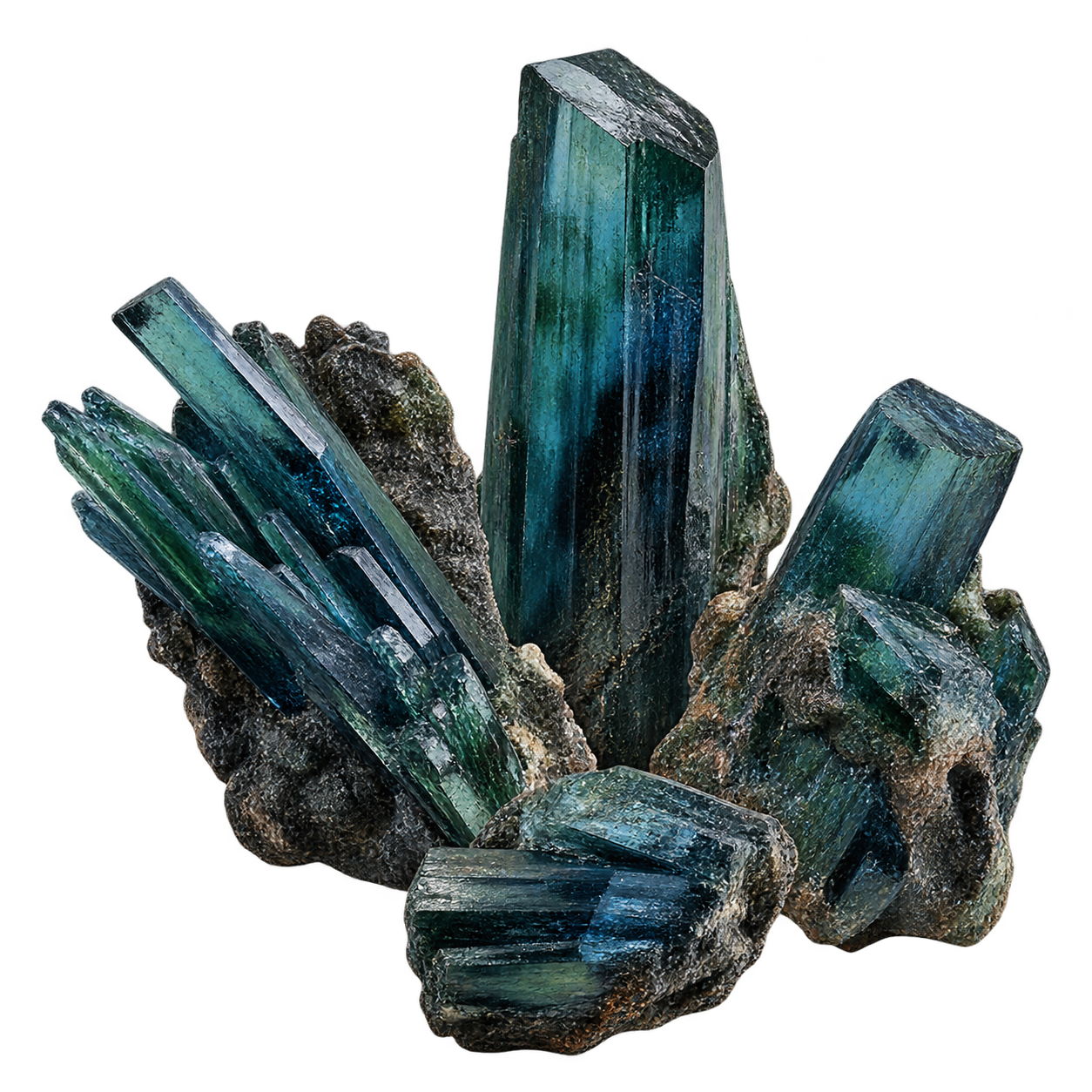
Vivianite
VivianiteHistorical & Cultural Uses
Abraham Gottlob Werner named Vivianite in 1817 for John Henry Vivian; the type locality is in Cornwall, England.
Magical Associations
- Heart-centered reflection
- Compassion
- Grief symbolism
- Emotional wounds
- Forgiveness symbolism
Folklore & Legends
A distinct historical folklore tradition for Vivianite is sparse. Within modern crystal practice, it is associated with compassion, grief reflection, forgiveness, and heart-centered contemplation.
Core Correspondences
- Energy
- CompassionReflection
- Mohs
- 1.5–2
Spiritual & Magical Uses
- Reflective crystal work
- Grief symbolism
- Heart-centered altar work
- Wearable reminder when safely contained
⚠ Care & Safety
Vivianite is extremely soft at Mohs 1.5–2 and can scratch, cleave, or alter readily. Protect it from light, heat, moisture, abrasion, and repeated handling.
Educational purposes only. Not medical advice.How to Work With This Crystal
Use for reflective crystal work, grief symbolism, heart-centered altar work, or as a wearable reminder when safely contained.
Cleansing & Care
Keep handling and cleaning minimal. Use a very soft dry brush or protected display; avoid soaking, abrasion, strong light, heat, chemicals, and repeated exposure.
Additional Correspondences
Page 2 of 2
Deeper Reading
Mineral Profile
- Mineral Class
- Hydrated iron phosphate mineral
- Chemical Composition
- Fe₃(PO₄)₂·8H₂O
- Crystal System
- Monoclinic
- Hardness (Mohs)
- 1.5–2
- Luster
- Vitreous to pearly; sometimes dull
- Color(s)
- Nearly colorless when fresh · Pale blue · Deep blue · Greenish blue · Blue-green
- Transparency
- Transparent to translucent in suitable crystals
- Streak
- White, becoming blue or blue-green with alteration
- Common Formations
- Prismatic to bladed crystals · Radiating crystal groups · Fibrous aggregates · Earthy or nodular masses · Concretions and coatings
- Cleavage
- Perfect in one direction
- Fracture
- Fibrous to uneven; very soft and sectile
- Geological Origin
- A secondary hydrated iron phosphate that forms in reducing, iron- and phosphate-bearing environments, including sedimentary settings, peat and clay deposits, phosphate-bearing veins, and altered organic or fossil material.
- Common Locations
- Cornwall, England (type locality) · Bolivia · Cameroon · Germany · Ukraine · United States
- Notable Varieties
- Fresh nearly colorless vivianite · Blue to greenish-blue oxidized material · Prismatic crystal groups · Earthy vivianite
- Rarity
- The species is documented from many localities, but transparent, well-formed, unaltered crystals suitable for display are comparatively selective and exposure-sensitive.
Historical & Cultural Uses
Mindat documents Vivianite as a valid grandfathered mineral species named by Abraham Gottlob Werner in 1817 for John Henry Vivian, with a Cornwall type locality. Fresh material may be nearly colorless and commonly changes toward blue or greenish-blue as oxidation and exposure progress. A substantial distinct historical folklore tradition is not well documented, so none is invented here.
Magical & Spiritual Uses
Vivianite is commonly associated in contemporary metaphysical practice with the heart, compassion, grief, forgiveness, and moving through deeply held emotional pain. These are metaphysical associations, not scientifically established effects.
Notes & Personal Connection
Add your own experiences, observations, dreams, and notes about working with this crystal. How does this crystal speak to you? What is your personal connection?
Keep This Grimoire Entry
Print Page 1 and Page 2 together, single-sided or front and back.
Download to Print