Return to entryChecking Blue Lotus printable layout…
Herbs & Salts Grimoire

Blue Lotus

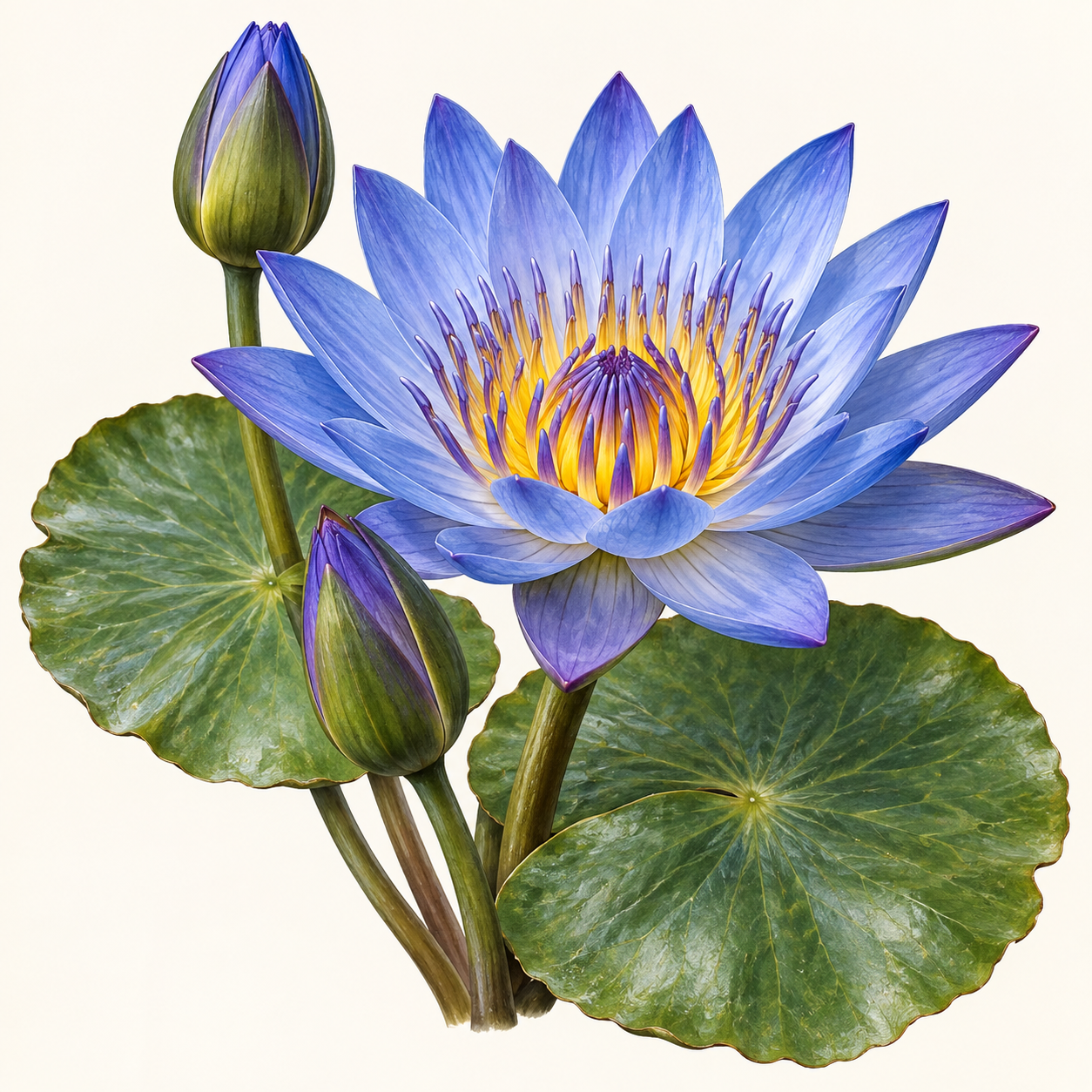
Accepted taxon: Nymphaea nouchali var. caerulea (Savigny) Verdc. The older name Nymphaea caerulea Savigny is a widely used synonym and remains common in books and commerce.

Traditional Uses

Blue water lily had ornamental, symbolic, ritual, and cultural importance in ancient Egypt. It appeared frequently in art, funerary scenes, banquet imagery, jewelry, and religious symbolism.

Folklore

In ancient Egyptian visual culture, the blue water lily became strongly associated with the sun’s daily cycle, renewal, rebirth, beauty, and emergence because the flower opens and closes with the light. It appears in tomb and temple art and in scenes of feasting and offering.

Magical Associations

  • Spiritual exploration
  • intuition
  • dreams
  • rebirth

Core Correspondences

Element:
Water
Planet:
Moon · Sun
Deities:
Egyptian · modern
Energy:
Intuition, renewal
Chakra:
Third

Witchcraft Uses

  • Meditation
  • altar offerings
  • ancestor or liminal work
  • dream-focused ritual
  • spiritual-growth work

Caution

Botanical products vary widely in identity and concentration. Use only products clearly labeled for their intended use.

Educational purposes only. Not medical advice.

How to Work With

Use dried petals as altar material, in incense blends intended for safe external burning, or in ritual oils made with appropriate safe infusion methods.

Best Time to Harvest

Flowers are typically collected when open and fresh.

Correspondences

Color: Blue, violet, gold/yellow • Number: 3 and 7 • Tarot: The Moon and • Metal: Silver, by lunar

Herbs & Salts Grimoire

Blue Lotus

Accepted taxon: Nymphaea nouchali var. caerulea (Savigny) Verdc. The older name Nymphaea caerulea Savigny is a widely used synonym and remains common in books and commerce.

Botanical Profile

Plant FamilyNymphaeaceae
Common NamesBlue lotus · Egyptian blue water lily · blue water lily
Alternate Names
Growth HabitRhizomatous aquatic perennial / hydrogeophyte with floating leaves and flowers rising at
Native RangeNative from Egypt through parts of eastern and southern Africa, with additional
HabitatFreshwater ponds, lakes, slow waterways, marshes, and other warm aquatic habitats
Identifying CharacteristicsRound to broadly oval floating leaves with a deep basal notch; long stalks; showy blue to blue-violet
Parts Traditionally UsedFlowers and, in historical contexts, other

Traditional Uses & Modern Evidence

Historical discussions sometimes describe blue water lily in medicinal or intoxicating contexts, but evidence is complex and often overstated in modern popular culture. Present the plant's historical ritual importance separately from modern commercial claims. Modern products marketed as blue lotus vary in botanical identity and composition. Historical Egyptian symbolism does not establish modern psychoactive claims, and limited laboratory or analytical findings do not demonstrate safe or effective treatment in people.

Magical & Spiritual Practice

Meditation; altar offerings; ancestor or liminal work; dream-focused ritual; spiritual-growth work; incense blends; ritual oils; devotional or renewal rites.

Notes & Personal Connection

Add your own experiences, observations, and notes about working with this plant. How does it speak to you? What is your personal connection?

Safety & Caution

Botanical products vary widely in identity and concentration. Use only products clearly labeled for their intended use.

Sources & Research Notes

Royal Botanic Gardens, Kew