Return to entryChecking Comfrey printable layout…
Herbs & Salts Grimoire

Comfrey

Symphytum officinale

Traditional Uses

Comfrey has a long external-use history for minor sprains, bruises, and sore muscles. EMA recognizes certain comfrey-root preparations only for short-term topical treatment of minor sprains and bruises; internal use is unsafe.

Folklore

Names such as knitbone and boneset reflect comfrey's old reputation for helping the body become whole. Folk symbolism extended that language into repair, reunion, protection, and steady recovery.

Magical Associations

  • Healing symbolism
  • Recovery
  • Restoration
  • Protection

Core Correspondences

Energy:
Restorative · Grounding

Witchcraft Uses

  • Healing and recovery sachets
  • Protection spell packets
  • Grounding altar work
  • Banishing-sickness symbolism
  • Gratitude offerings

Caution

Do not ingest comfrey or brew it as tea. It contains pyrrolizidine alkaloids that can seriously damage the liver.

Educational purposes only. Not medical advice.

How to Work With

Keep dried comfrey sealed in a symbolic recovery or protection sachet, place it on an altar for mending and stability, or grow it responsibly.

Best Time to Harvest

If growing comfrey for non-ingestible craft or symbolic use, harvest leaves with gloves before or during flowering and allow.

Correspondences

Color: Purple · Green • Season: Spring · Summer

Herbs & Salts Grimoire

Comfrey

Symphytum officinale

Botanical Profile

Plant FamilyBoraginaceae
Common NamesComfrey · Common comfrey
Alternate NamesKnitbone · Boneset · Bruisewort
Growth HabitRobust clump-forming herbaceous perennial
Native RangeEurope to western Siberia and northwestern Türkiye; introduced widely
HabitatMoist grassland, streambanks, ditches, roadsides, field margins, and damp disturbed ground
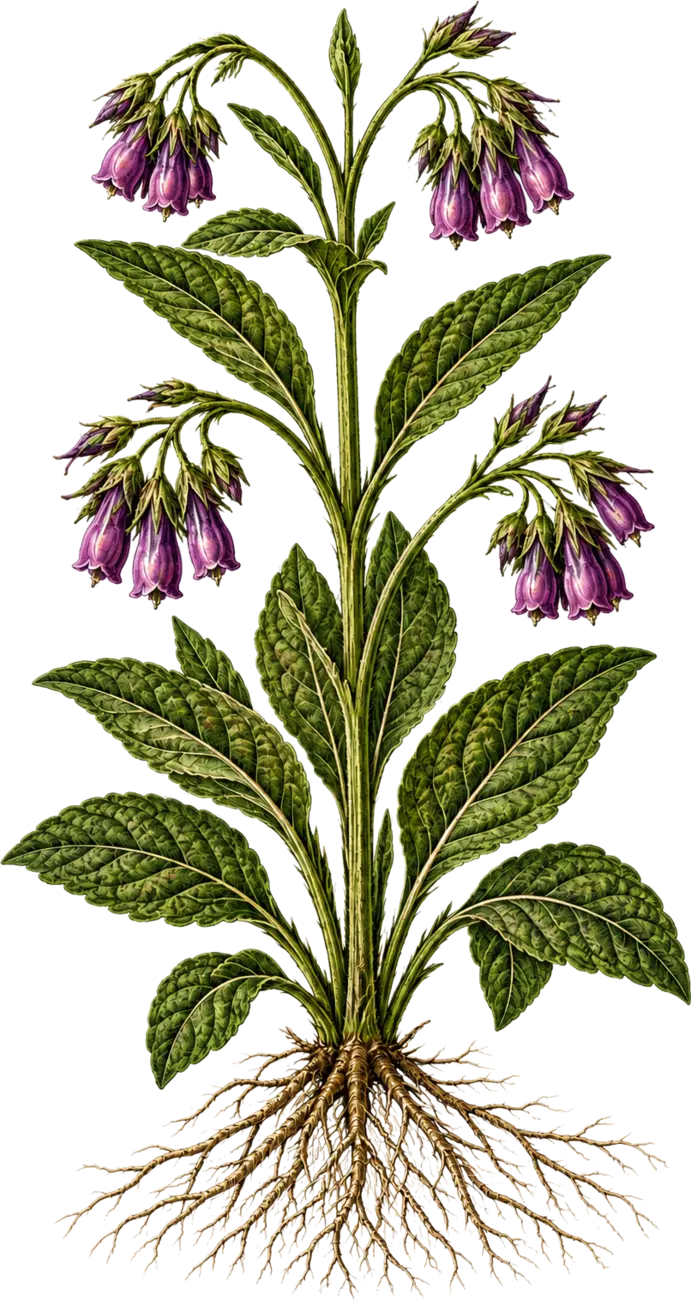
Identifying CharacteristicsLarge rough hairy leaves, winged stems, nodding clusters of tubular purple, pink, cream, or blue flowers, and
Parts Traditionally UsedRoot · Leaves

Traditional Uses & Modern Evidence

Comfrey leaf and root appear in European household herbal traditions under names such as knitbone and bruisewort. Poultices and salves were applied externally for bruises, sprains, minor injuries, and sore muscles. The European Medicines Agency recognizes traditional use of specified comfrey-root preparations for the short-term symptomatic treatment of minor sprains and bruises. That narrow recognition does not support applying homemade preparations to broken skin or using comfrey internally.

Magical & Spiritual Practice

Comfrey's magical identity follows its folk names knitbone and boneset and the root sense of Symphytum: joining or growing together. The approved Black Cat source therefore places it in work for recovery, restoration, stability, strength, nurturing, and protection. In contemporary practice, dried material may be sealed in a symbolic healing sachet, placed on an altar during recovery work, or offered in gratitude.

Notes & Personal Connection

Add your own experiences, observations, and notes about working with this plant. How does it speak to you? What is your personal connection?

Safety & Caution

Do not ingest comfrey or brew it as tea.

Sources & Research Notes

Approved Black Cat Curiosity Co • Kew Science • U.S. FDA