Return to entryChecking Jasmine printable layout…
Herbs & Salts Grimoire

Jasmine

Jasminum officinale L.

Traditional Uses

Jasmine has long histories in perfumery, garden culture, symbolic use, tea scenting, and some traditional herbal settings. Species and preparation vary, so these traditions are not proof of broad modern effectiveness.

Folklore

Jasmine carries strong symbolic associations across multiple cultures, especially around beauty, night fragrance, courtship, hospitality, devotion, and tenderness.

Magical Associations

  • Love
  • Attraction
  • Sensuality
  • Peace

Core Correspondences

Element:
Water · Air
Planet:
Moon · Venus
Energy:
Gentle · Attractive

Witchcraft Uses

  • Love and attraction work centered on invitation
  • Dream sachets
  • Moon altars
  • Evening devotion
  • Beauty and self-devotion rituals

Caution

Products sold as jasmine vary by species and intended use.

Educational purposes only. Not medical advice.

How to Work With

Add correctly identified dried flowers to a dream or calm sachet, place a blossom or botanical image on a moon or love altar, or pair its fragrance.

Best Time to Harvest

Gather fresh, newly opened flowers in dry conditions after dew has lifted.

Correspondences

Color: White · Soft green • Zodiac: Moon • Season: Spring · Summer

Herbs & Salts Grimoire

Jasmine

Jasminum officinale L.

Botanical Profile

Plant FamilyOleaceae
Common NamesJasmine · Common jasmine · Poet's jasmine
Alternate NamesCommon jasmine · Poet's jasmine · White jasmine
Growth HabitFragrant scrambling shrub or vine with arching stems, commonly trained on supports
Native RangeTranscaucasus through western and southern Asia to south-central China; cultivated and introduced
HabitatCultivated gardens and containers with good light, well-drained soil, moderate moisture, climbing support, and protection
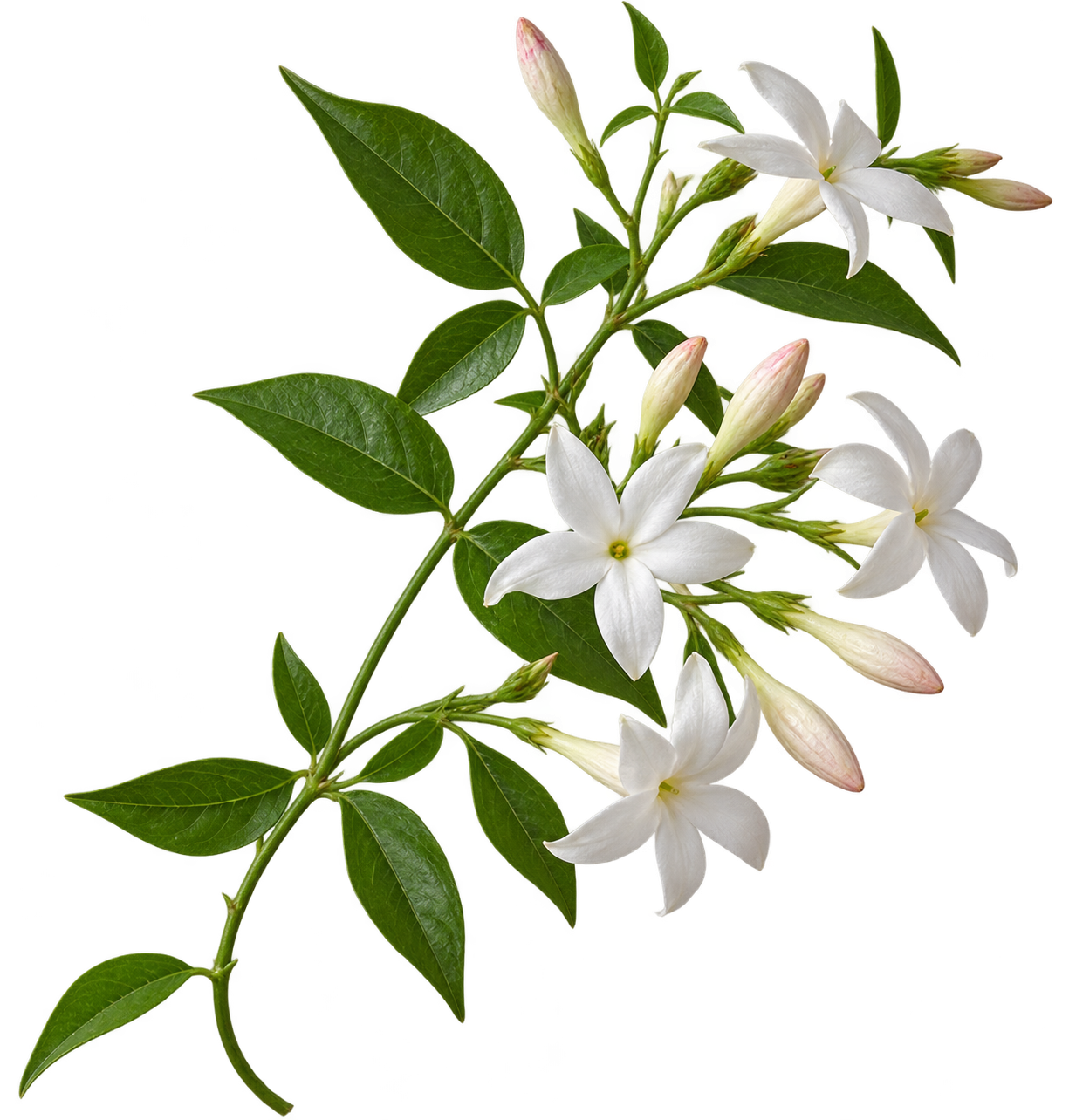
Identifying CharacteristicsSlender climbing or arching stems with opposite pinnate leaves, elongated flower buds, and highly fragrant white star-like
Parts Traditionally UsedFlowers · Leaves in some traditional systems

Traditional Uses & Modern Evidence

Traditional systems have used jasmine in varied preparations connected with scent, comfort, relaxation, skin applications, and region-specific practices. Flowers are especially important in perfumery and hospitality, while some culinary traditions use jasmine aroma to scent tea. The exact species, product, and tradition matter and should not be flattened into one universal medicinal claim. Jasmine is best established in mainstream use for fragrance, ornamental value, and culinary scenting in selected tea traditions.

Magical & Spiritual Practice

Contemporary witchcraft connects jasmine with love, attraction, prophetic dreaming, lunar practice, peace, beauty, and devotion. Add clearly identified dried flowers to a dream sachet, place a blossom or botanical image on a moon or love altar, or use fragrance as an atmospheric cue when tolerated. Attraction work should focus on invitation rather than coercion.

Notes & Personal Connection

Add your own experiences, observations, and notes about working with this plant. How does it speak to you? What is your personal connection?

Safety & Caution

Products sold as jasmine vary by species and intended use.

Sources & Research Notes

Royal Botanic Gardens, Kew • NCBI LactMed