Return to entryChecking Sage printable layout…
Herbs & Salts Grimoire

Sage

Salvia officinalis L.

Traditional Uses

Sage has an exceptionally long European history as a culinary and medicinal herb. Documented traditional uses of sage leaf have included preparations for digestive complaints, excessive perspiration, and inflammation of the mouth and throat.

Folklore

European folklore and historical writing repeatedly connected common sage with health, preservation, longevity, memory, wisdom, and protection from misfortune.

Magical Associations

  • Cleansing
  • Purification
  • Protection
  • Wisdom

Core Correspondences

Element:
Tradition varies
Planet:
Tradition varies
Energy:
Cleansing · Protective

Witchcraft Uses

  • Use dried common sage in a sachet
  • Burn a small amount as incense or
  • Incorporate the dried herb into non-ingested altar
  • Use symbolically in home-cleansing or boundary-setting rituals
  • Pair with journaling or study work as

Caution

Culinary use and concentrated medicinal use are not equivalent.

Educational purposes only. Not medical advice.

How to Work With

Use dried common sage in a sachet, spell jar, or non-ingested altar work for wisdom, clarity, protection, memory, release, or household blessing.

Best Time to Harvest

No harvesting guidance was supplied in the approved publishing package.

Correspondences

Herbs & Salts Grimoire

Sage

Salvia officinalis L.

Botanical Profile

Plant FamilyLamiaceae
Common NamesSage · Common Sage · Garden Sage
Alternate NamesCommon Sage · Garden Sage
Growth HabitAromatic evergreen to semi-evergreen subshrub
Native RangeSouthwestern Germany through southern Europe; widely cultivated beyond its native range
HabitatCultivated gardens and suitable dry, sunny sites beyond its native range
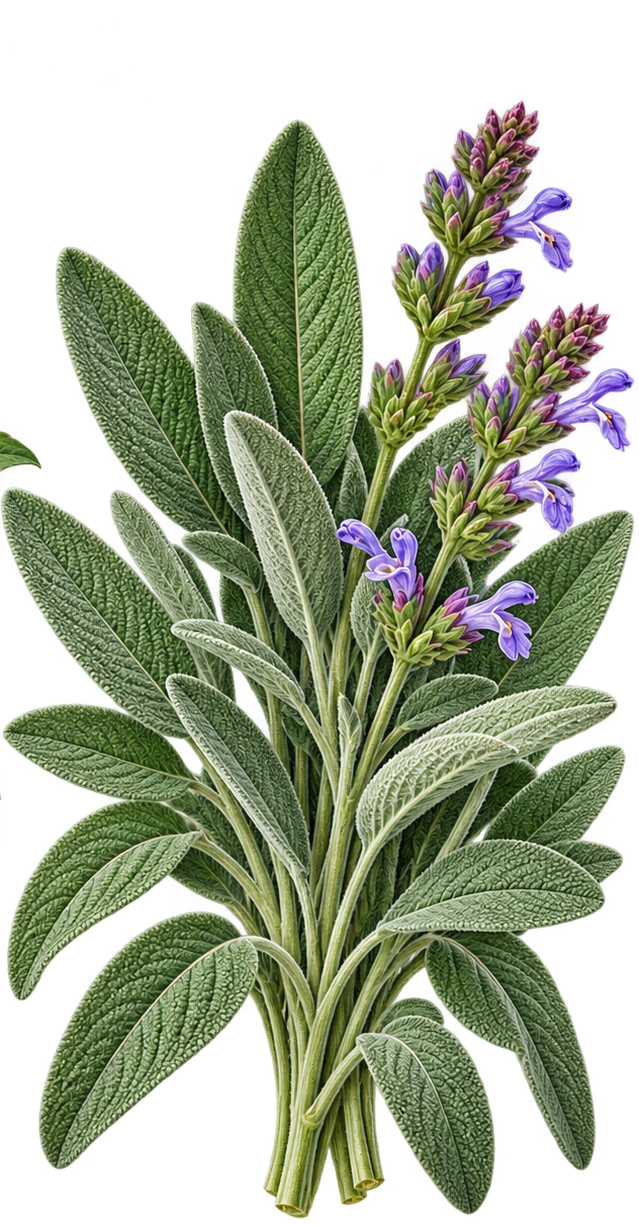
Identifying CharacteristicsWoody lower stems, strongly aromatic gray-green leaves with a textured or wrinkled surface, and flower spikes commonly
Parts Traditionally UsedLeaves · Essential oil

Traditional Uses & Modern Evidence

Sage has an exceptionally long European history as a culinary and medicinal herb. The European Medicines Agency's historical assessment records sage in ancient Egyptian, Greek, and Roman medicinal traditions and notes later use in medieval and early modern European herbals. Medieval European sources gave sage such a strong reputation that it acquired associations with health, preservation, wisdom, and longevity.

Magical & Spiritual Practice

Common modern Western magical practice may associate common sage with cleansing, purification, protection, wisdom, clarity, memory, longevity, healing symbolism, household blessing, banishing or releasing unwanted influences, and spiritual growth. These are spiritual, folk, or modern magical associations, not scientific effects. Planetary, elemental, gendered, and deity correspondences vary between occult authors and traditions. A single modern correspondence system is not presented as historically universal.

Notes & Personal Connection

Add your own experiences, observations, and notes about working with this plant. How does it speak to you? What is your personal connection?

Safety & Caution

Culinary use and concentrated medicinal use are not equivalent.

Sources & Research Notes

Royal Botanic Gardens, Kew • European Medicines Agency • European Medicines Agency