The Complete Guide to Samhain
Honoring Ancestors & the Dead
Page 5 of 10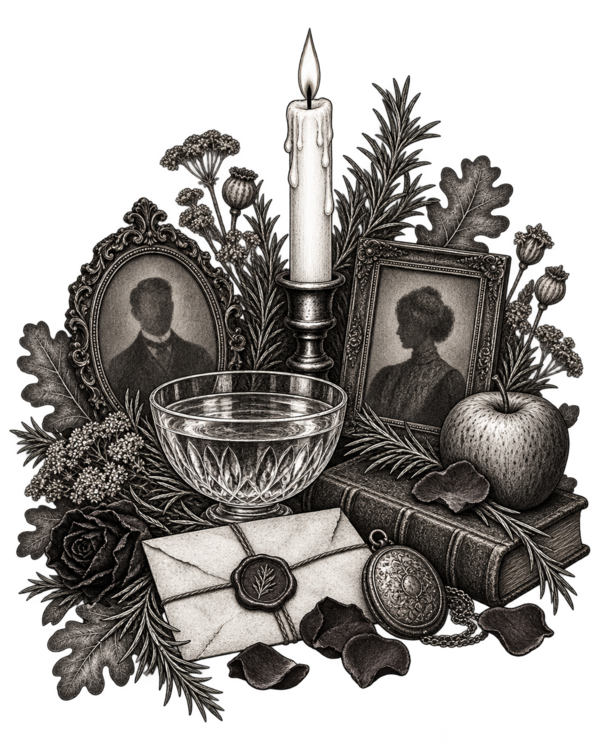
INTRO:
Remembrance is one of the most meaningful ways modern practitioners approach Samhain, and Irish folk tradition does preserve beliefs that the dead might return to the family home at Halloween. A modern ancestor practice, however, does not need to imitate an imagined ancient ceremony.
ANCESTOR ALTAR / MEMORY SPACE:
Possible items:
- photographs;
- names written on paper;
- heirlooms;
- family recipes;
- flowers;
- a candle or LED candle;
- a glass of water;
- a small serving of a meaningful food;
- letters;
- objects connected with someone’s life;
- symbols of chosen or spiritual ancestors.
IMPORTANT INCLUSIVITY:
Not everyone has safe, loving, or known biological ancestors.
A practitioner may choose to honor:
- beloved relatives;
- chosen family;
- friends;
- mentors;
- community elders;
- cultural predecessors approached respectfully;
- unnamed ancestors;
- those who died without being remembered;
- beloved animals / companion animals in a separate remembrance practice;
- no ancestors at all.
No one is obligated to honor abusive family members.
SIMPLE REMEMBRANCE PRACTICE:
1. Clean a small surface.
2. Place one object representing someone or something you want to remember.
3. Light a candle safely, or use an LED candle.
4. Say their name, tell a story, read a letter, prepare a favorite food, or sit quietly.
5. Give thanks for what is worth carrying forward.
6. Close deliberately: extinguish the candle, remove perishable offerings, and return the space to ordinary use when ready.
A “DUMB SUPPER” NOTE:
Silent meals for the dead appear in modern Samhain practice and are sometimes presented online as universally ancient. Do not make a sweeping ancient-origin claim here.
If included, describe it simply as a modern remembrance practice in which a meal is eaten in silence with a place symbolically set for the dead.
CEMETERY ETIQUETTE:
If visiting a cemetery:
- follow posted rules and hours;
- do not remove stones, soil, plants, grave goods, or objects;
- do not trespass;
- do not photograph mourners without permission;
- avoid leaving food, wax, glass, salt, crystals, herbs, ribbons, or non-biodegradable objects that can harm wildlife or interfere with groundskeeping;
- a quiet visit, cleaning a permitted family marker, flowers where allowed, or simply speaking a name can be enough.