The Complete Guide to Yule
From Jól to Christmas to Modern Yule
Page 4 of 14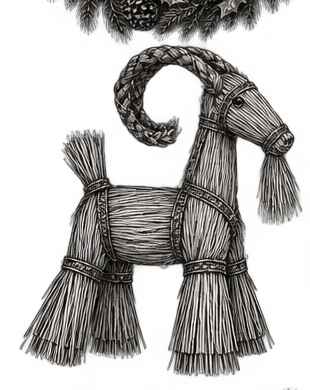
As Christianity spread through Scandinavia, older seasonal feasting and newer Christian celebration increasingly overlapped.
The saga of Håkon the Good describes an attempt to align Yule with Christian Christmas timing.
Over time, the word itself survived in Scandinavian languages: jul remains the ordinary word for Christmas in several Nordic languages.
This linguistic continuity does not mean modern Nordic Christmas is simply an unchanged Viking ceremony.
WINTER GREENERY:
Evergreens became deeply embedded in European winter celebration.
Historical evidence is strongest in later periods:
- medieval church records show the purchase of holly and ivy;
- private homes also used seasonal greenery;
- evergreen decorating continued and evolved through early modern and Victorian periods.
Evergreen symbolism is easy to understand: plants that remain green through winter can suggest life, endurance, continuity, and the promise of spring.
But avoid turning that symbolism into an unsupported claim that every holly wreath is a direct survival from pre-Christian Norse Yule.
THE CHRISTMAS TREE:
The decorated indoor Christmas tree is not an ancient Viking Yule custom.
The custom developed in German-speaking Europe and became increasingly popular elsewhere over later centuries.
THE YULE LOG:
The Yule / Christmas log is historically documented in later European Christmas custom.
English Heritage notes the burning of a Christmas or Yule log during the Twelve Days in early Stuart England.
That tradition is historically interesting and perfectly usable in modern Yule practice, but it should not automatically be presented as a directly documented Viking-age solstice ritual.
THE YULE GOAT:
The Yule Goat has a documented place in later Scandinavian Christmas tradition.
Nordiska museet records the Yule Goat as a frightening and gift-giving figure in 17th- and 18th-century tradition, later replaced in that role by the modern Santa figure.
Today it is especially familiar as a straw Christmas decoration.