Deity Grimoire
Cernunnos
Named antlered deity in limited Gaulish evidence · Modern nature-centered deity in contemporary Pagan practiceDomains
- Animals and wild nature in modern interpretation
- Abundance and wealth in scholarly and modern interpretation
- Liminality
- Fertility in later interpretation
Symbols
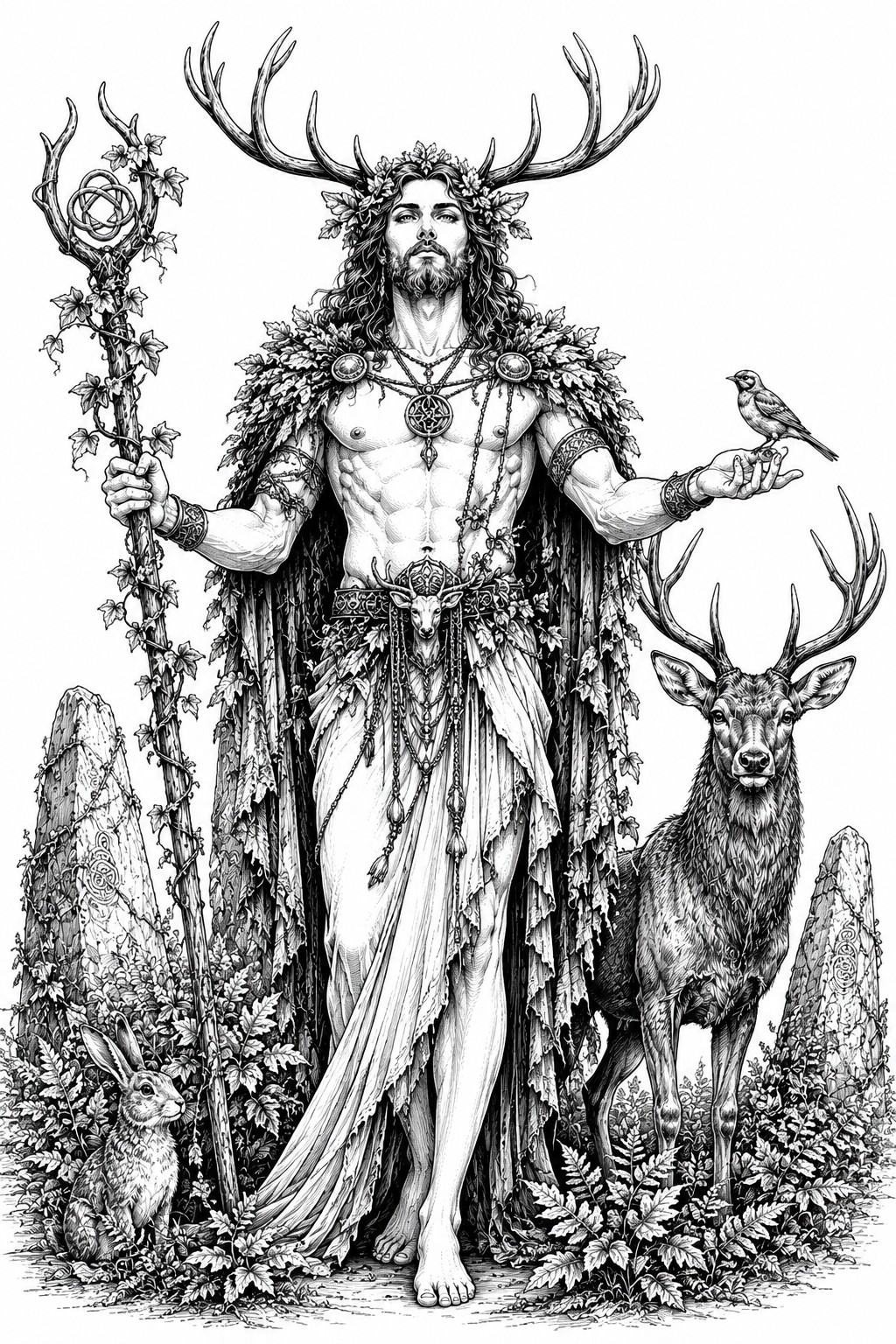
- Antlers
- Torcs
- Animals
- Serpent imagery in related iconography
- Woodland imagery in modern practice
Offerings
- No universal ancient offering list survives
- Modern nature-centered offerings should be sustainable and identified as contemporary
Aspects
- Named antlered figure on the Pillar of the Boatmen
- Possible antlered figure on the Gundestrup Cauldron
- Lord of animals in later interpretation
- Modern Horned God association
Magical / Spiritual Work
- Nature connection
- Animal symbolism
- Abundance
- Fertility symbolism
- Liminality
- Seasonal reflection
⚠ Important Context
Historical evidence for Cernunnos is limited and primarily inscriptional or iconographic. The Pillar of the Nauti names him; the Gundestrup Cauldron comparison is important but not proven by an inscription.
Sacred Days / Festivals / Times
Seasonal nature cycles in modern Pagan practice
Devotional Approach
Center nature connection, ethical animal care, habitat stewardship, and antler or torc symbolism while naming reconstructed rites, Green Man links, and Horned God theology as modern.
Core Correspondences
Page 2 of 2
Deeper Reading
Historical & Cultural Context
The most important named evidence is the early Roman-period Pillar of the Nauti, discovered beneath Notre-Dame in Paris and dedicated during the reign of Tiberius. Its inscriptions place Celtic and Roman gods together and identify Cernunnos beside an antlered figure. Other antlered figures invite comparison, especially the late Iron Age Gundestrup Cauldron figure holding a torc and serpent, but that image is not labeled and its identification as Cernunnos remains interpretive. Surviving evidence supports careful discussion of iconography, not a reconstructed biography.
Myths & Primary Stories
Unlike deities preserved through extensive literary traditions, Cernunnos is known chiefly from a small set of names and images. No securely identified ancient text supplies his birth, family, deeds, death, moral teachings, festivals, or seasonal mythology. Antlers or horns and the torc are significant visual attributes, while animals and a serpent belong to particular comparative images. Modern narratives can support living practice, but they must be identified as contemporary reconstruction rather than surviving Gaulish myth.
Evolution & Later Interpretations
Modern scholarship and contemporary Pagan, neopagan, occult, and nature-centered traditions have interpreted Cernunnos through themes of wild places, animals, abundance, fertility, vitality, seasonal cycles, and the Horned God. Some practitioners also connect him with the Green Man, but the medieval and later foliate Green Man motif is historically distinct. Modern systems may bring these symbols together devotionally without turning that connection into established ancient Celtic doctrine.
Worship & Historical Practice
The Pillar of the Nauti and related evidence demonstrate religious significance within specific ancient settings, but they do not reveal a complete standardized cult. No universal priesthood, festival calendar, offering list, ritual script, or pan-Celtic theology can be recovered from the surviving material. Archaeological objects and inscriptions should be described as evidence, while any reconstructed ritual must be labeled modern or inspired practice.
Working With & Honoring This Figure Today
Contemporary practitioners may honor Cernunnos through nature observation, habitat stewardship, ethical animal care, seasonal reflection, meditation, antler or torc symbolism, and sustainable offerings that do not harm wildlife or protected places. Associations with growth, abundance, wildness, animals, and natural cycles are best presented as modern devotional frameworks informed by limited ancient imagery, not securely documented ancient doctrine.
Notes & Personal Connection
Explore This Entry
Keep This Grimoire Entry
Print every generated page in order, single-sided or front and back.
Download to Print