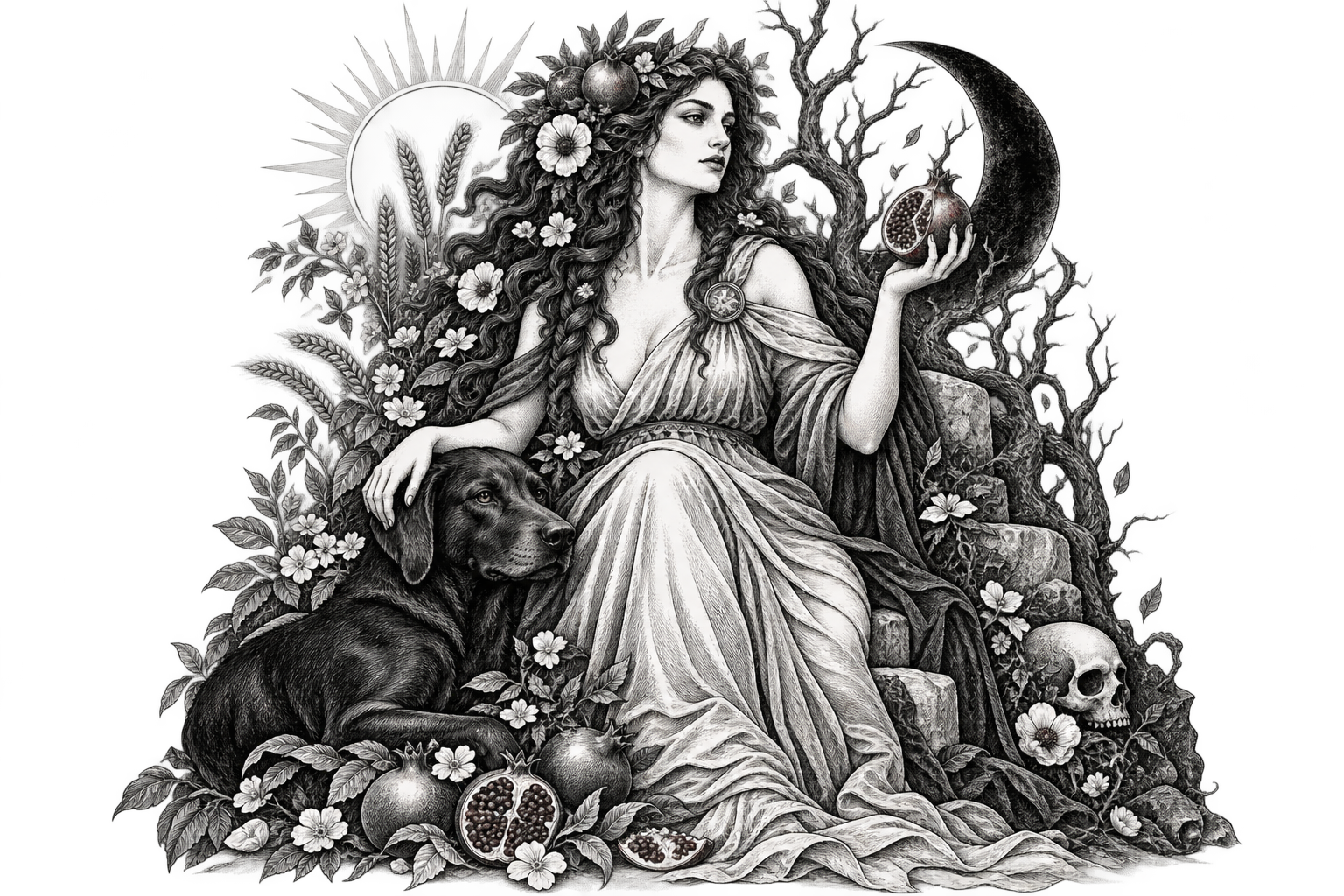
Return to entryChecking Persephone printable layout…
Deity Grimoire

Persephone

Greek queen of the Underworld

Domains

  • Underworld sovereignty
  • Agricultural return
  • Sacred mystery
  • Transition between realms

Symbols

  • Pomegranate
  • Torch
  • Crown or polos
  • Throne
  • Grain
  • Flowers

Offerings

  • Modern: pomegranate imagery
  • Grain or bread
  • Seasonal flowers
  • Clean water

Aspects

  • Kore — the Maiden
  • Queen beside Hades
  • Daughter of Demeter
  • Eleusinian goddess

Magical / Spiritual Work

  • Seasonal transition
  • Grief and reunion
  • Change and boundaries
  • Descent and return reflection
  • Remembrance

Important Context

The Homeric Hymn presents the taking as against Persephone’s will and gives one-third of the year below, two-thirds above.

Sacred Days / Festivals / Times

Eleusinian Mysteries — historically documented, with secret rites not reconstructed here · Autumn and descent; spring and return in modern seasonal practice

Devotional Approach

Use pomegranate, grain, flowers, prayer, study, remembrance, or seasonal garden work as clearly modern devotional choices.

Core Correspondences

Black · Deep red · Burgundy · White · Green · Gold — modern correspondences · Earth may be chosen in modern.

Deity Grimoire

Persephone

Greek queen of the Underworld

Mythology, History & Important Context

Historical & Cultural Context

Persephone is the daughter of Demeter and Zeus, wife of Hades, and queen of the Underworld. Kore means “the Maiden” or “Daughter” and is a title of Persephone, not a separate light goddess. Ancient cult linked her with agricultural return, death, sacred mystery, transition, and divine queenship. Cult evidence extends beyond Eleusis to Locri, Sicily, Southern Italy, and funerary settings.

Major Myths & Stories

In the Homeric Hymn to Demeter, Hades takes Persephone with Zeus’s authorization but without Demeter’s consent. Demeter’s grief halts agricultural growth. Hermes retrieves Persephone, but pomegranate seed binds her to return below. The hymn assigns one-third of the year in the Underworld and two-thirds above; later versions vary.

Later Interpretation / Important Context

Modern practice may use descent and return, seasonal thresholds, grief, transition, sovereignty, or dual roles as reflective themes. Modern crystals, colors, elements, tarot, chakras, and “dark feminine” language are contemporary correspondences, not an ancient Greek system.

Personal Notes

Worship & Historical Practice

Demeter and Persephone were central to the Eleusinian Mysteries.

Working With Persephone Today

Contemporary devotion may include pomegranate or grain, seasonal flowers, clean water, candlelight.