Return to entryChecking Blessed Thistle printable layout…
Herbs & Salts Grimoire

Blessed Thistle

Centaurea benedicta

Traditional Uses

Blessed thistle's intensely bitter aerial parts have a documented European history as an appetite and digestive herb. Medieval plague and panacea claims are historical beliefs, not evidence of effectiveness.

Folklore

Medieval Europeans treated blessed thistle as a protective panacea and plague remedy. Its ‘blessed’ name has been linked both to its former healing reputation and to Benedictine tradition, though the exact origin is uncertain.

Magical Associations

  • Protection
  • Purification
  • Boundaries
  • Courage

Core Correspondences

Element:
Fire
Planet:
Mars
Energy:
Protective · Fortifying
Chakra:
Solar

Witchcraft Uses

  • Protection sachets
  • Boundary charms
  • Purification altar work
  • Courage rituals
  • Banishing symbolism

Caution

Do not confuse blessed thistle with milk thistle or other thistles.

Educational purposes only. Not medical advice.

How to Work With

Keep correctly identified dried material sealed in a protection or boundary charm, or use its botanical image in courage and purification work.

Best Time to Harvest

Harvest correctly identified, unsprayed flowering aerial parts from cultivated plants as yellow flower heads open, using gloves and leaving.

Correspondences

Color: Yellow · Green • Season: Summer

Herbs & Salts Grimoire

Blessed Thistle

Centaurea benedicta

Botanical Profile

Plant FamilyAsteraceae
Common NamesBlessed thistle · St. Benedict's thistle
Alternate NamesHoly thistle · Spotted thistle · Blessed knapweed
Growth HabitSpiny, woolly annual herb with a low branching habit
Native RangeEurope eastward through western and central Asia to Xinjiang
HabitatDry sunny fields, roadsides, rocky ground, and disturbed soils
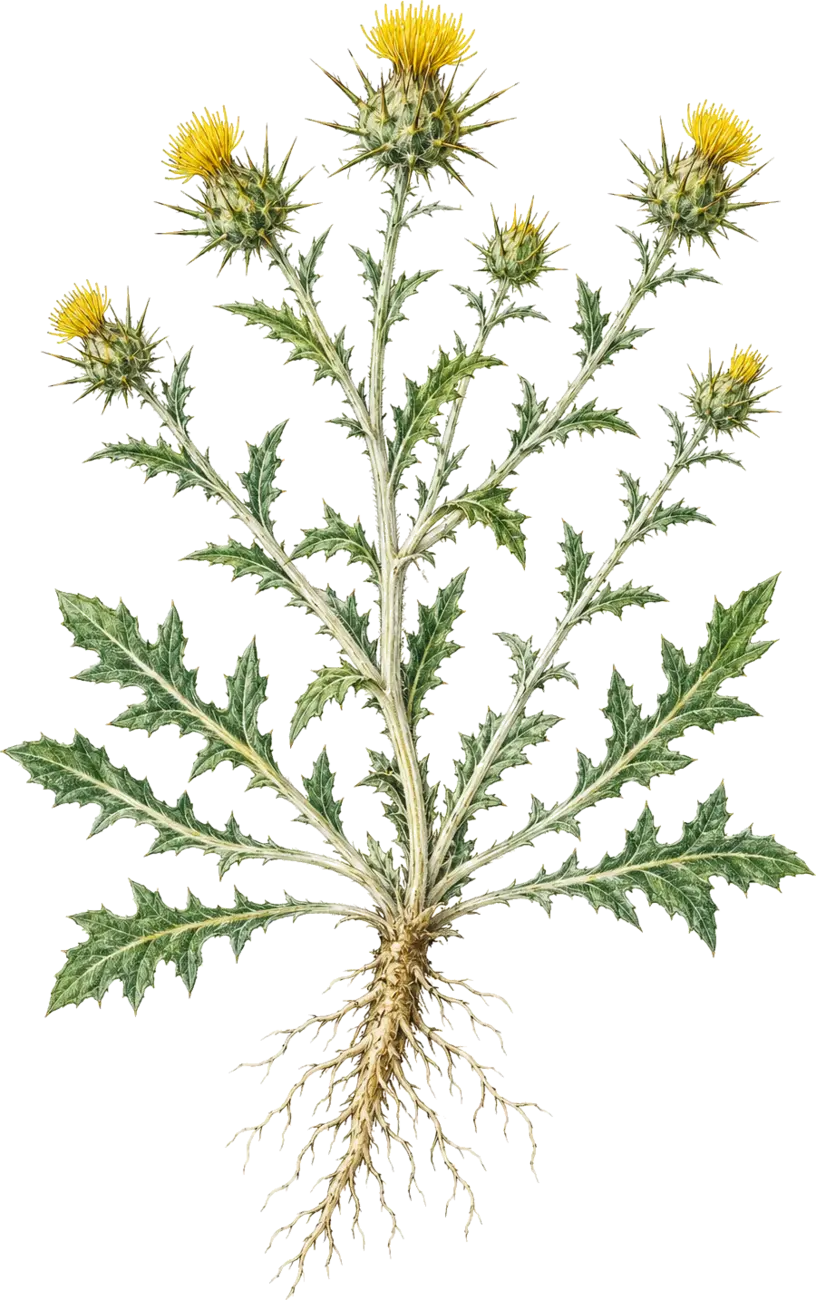
Identifying CharacteristicsA pale, softly woolly annual with branching stems, deeply lobed green leaves edged with small spines, and
Parts Traditionally UsedFlowering aerial parts

Traditional Uses & Modern Evidence

Blessed thistle entered medieval and early-modern European materia medica with an extravagant reputation, including now-discredited claims that it could prevent plague. Its more persistent traditional role comes from the bitter flowering aerial parts, used to stimulate appetite and address mild digestive complaints. The European Medicines Agency recognizes a traditional-use basis for temporary loss of appetite; this classification rests on long-standing use and does not establish broad medical efficacy.

Magical & Spiritual Practice

Blessed thistle's spiny bracts, bitter character, and medieval reputation as a blessed protective herb support modern correspondences of boundaries, courage, purification, and banishing. Its thorns provide clear symbolic language for defending personal limits, while the historical name lends itself to blessing work. Keep correctly identified dried material sealed in a protection charm or use the botanical image in boundary rituals. Do not burn or ingest it based on this entry.

Notes & Personal Connection

Add your own experiences, observations, and notes about working with this plant. How does it speak to you? What is your personal connection?

Safety & Caution

Do not confuse blessed thistle with milk thistle or other thistles.

Sources & Research Notes

Kew Science • European Medicines Agency • The Metropolitan Museum of Art