Herbs & Salts Grimoire
Blessed Thistle
Centaurea benedictaQuick Reference
Traditional Uses
Blessed thistle's intensely bitter aerial parts have a documented European history as an appetite and digestive herb. Medieval plague and panacea claims are historical beliefs, not evidence of effectiveness.
Magical Associations
- Protection
- Purification
- Boundaries
- Courage
- Strength
- Banishing
- Blessing
Folklore
Medieval Europeans treated blessed thistle as a protective panacea and plague remedy. Its ‘blessed’ name has been linked both to its former healing reputation and to Benedictine tradition, though the exact origin is uncertain.
Core Correspondences
Witchcraft Uses
- Protection sachets
- Boundary charms
- Purification altar work
- Courage rituals
- Banishing symbolism
⚠ Caution
Do not confuse blessed thistle with milk thistle or other thistles. It may trigger daisy-family allergy and high amounts can cause stomach irritation or vomiting; avoid during pregnancy, breastfeeding, and under age 18.
Educational purposes only. Not medical advice.How to Work With
Keep correctly identified dried material sealed in a protection or boundary charm, or use its botanical image in courage and purification work. Do not burn, brew, or ingest it based on this entry.
Best Time to Harvest
Harvest correctly identified, unsprayed flowering aerial parts from cultivated plants as yellow flower heads open, using gloves and leaving seed heads where naturalization is not a concern.
Correspondences
- Chakra
- Solar Plexus
- Season
- Summer
Page 2 of 2
Deeper Reading
Botanical Profile
- Plant Family
- Asteraceae
- Common Names
- St. Benedict's thistle
- Alternate Names
- Holy thistle · Spotted thistle · Blessed knapweed · Cnicus benedictus · Carduus benedictus
- Growth Habit
- Spiny, woolly annual herb with a low branching habit
- Native Range
- Europe eastward through western and central Asia to Xinjiang
- Habitat
- Dry sunny fields, roadsides, rocky ground, and disturbed soils
- Identifying Characteristics
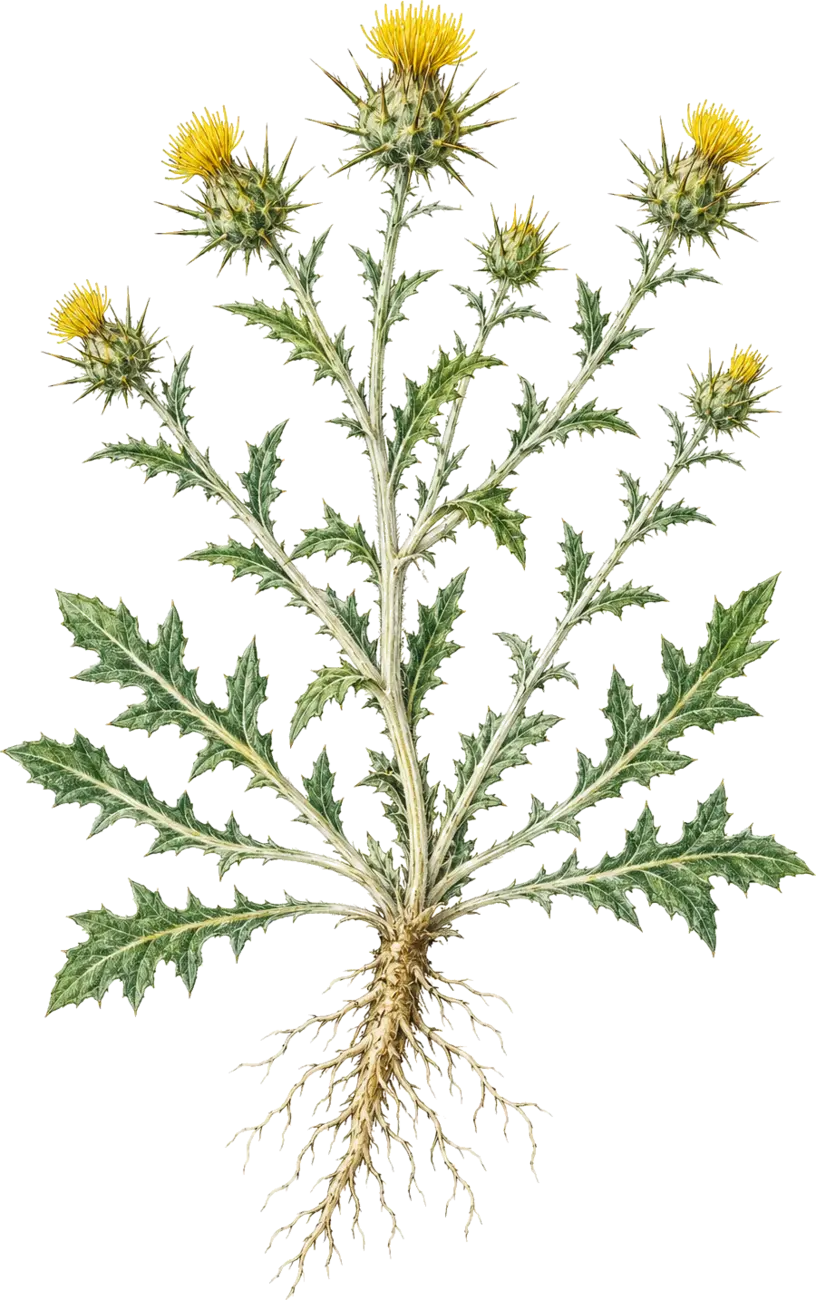
- A pale, softly woolly annual with branching stems, deeply lobed green leaves edged with small spines, and yellow flower heads surrounded by conspicuous long spiny bracts.
- Parts Traditionally Used
- Flowering aerial parts
Traditional & Historical Medicinal Uses
Blessed thistle entered medieval and early-modern European materia medica with an extravagant reputation, including now-discredited claims that it could prevent plague. Its more persistent traditional role comes from the bitter flowering aerial parts, used to stimulate appetite and address mild digestive complaints. The European Medicines Agency recognizes a traditional-use basis for temporary loss of appetite; this classification rests on long-standing use and does not establish broad medical efficacy. The widely repeated claim that it increases breast-milk supply remains unsupported and is especially inappropriate because EMA advises against use during pregnancy and breastfeeding.
Magical Uses
Blessed thistle's spiny bracts, bitter character, and medieval reputation as a blessed protective herb support modern correspondences of boundaries, courage, purification, and banishing. Its thorns provide clear symbolic language for defending personal limits, while the historical name lends itself to blessing work. Keep correctly identified dried material sealed in a protection charm or use the botanical image in boundary rituals. Do not burn or ingest it based on this entry.
Modern Evidence
Blessed thistle's historical reputation does not establish effectiveness, including for lactation. It can cause daisy-family allergy and gastrointestinal effects and is unsuitable during pregnancy, breastfeeding, and for children without qualified guidance.
Notes & Personal Connection
Add your own experiences, observations, and notes about working with this plant. How does it speak to you? What is your personal connection?
Keep This Grimoire Entry
Print Page 1 and Page 2 together, single-sided or front and back.
Download to Print