Herbs & Salts Grimoire
Nettle
Urtica dioicaQuick Reference
Traditional Uses
Nettle has long histories as food, fibre, and European herbal material. Leaf and aerial-part preparations were traditionally used for urinary complaints and minor joint discomfort; these uses do not establish modern efficacy.
Magical Associations
- Protection
- Boundaries
- Courage
- Strength
- Banishing
- Grounding
- Vitality
- Resilience
Folklore
Nettle appears in the Anglo-Saxon Nine Herbs Charm and in European proverbs about courage and danger. Later lore links the plant with thunder and protective boundaries.
Core Correspondences
Witchcraft Uses
- Boundary charms
- Protection sachets
- Courage altar work
- Banishing symbolism
- Resilience rituals
⚠ Caution
Fresh nettle stings skin. Medicinal preparations may be unsuitable with fluid restriction, pregnancy, breastfeeding, kidney or heart conditions, diabetes, or medicines; seek qualified guidance.
Educational purposes only. Not medical advice.How to Work With
Keep correctly identified dried leaf sealed in a boundary or courage charm, use the botanical image in protection work, or grow nettle responsibly for wildlife. Do not burn, bathe in, or ingest it based on this entry.
Page 2 of 2
Deeper Reading
Botanical Profile
- Plant Family
- Urticaceae
- Common Names
- Stinging nettle · Common nettle
- Alternate Names
- Burn nettle · Stinger · Nettle leaf · Urtica dioica
- Growth Habit
- Rhizomatous herbaceous perennial
- Native Range
- Europe to Siberia and western China, and northwestern Africa
- Habitat
- Moist nutrient-rich ground, woodland edges, riverbanks, hedges, fields, and disturbed sites
- Identifying Characteristics
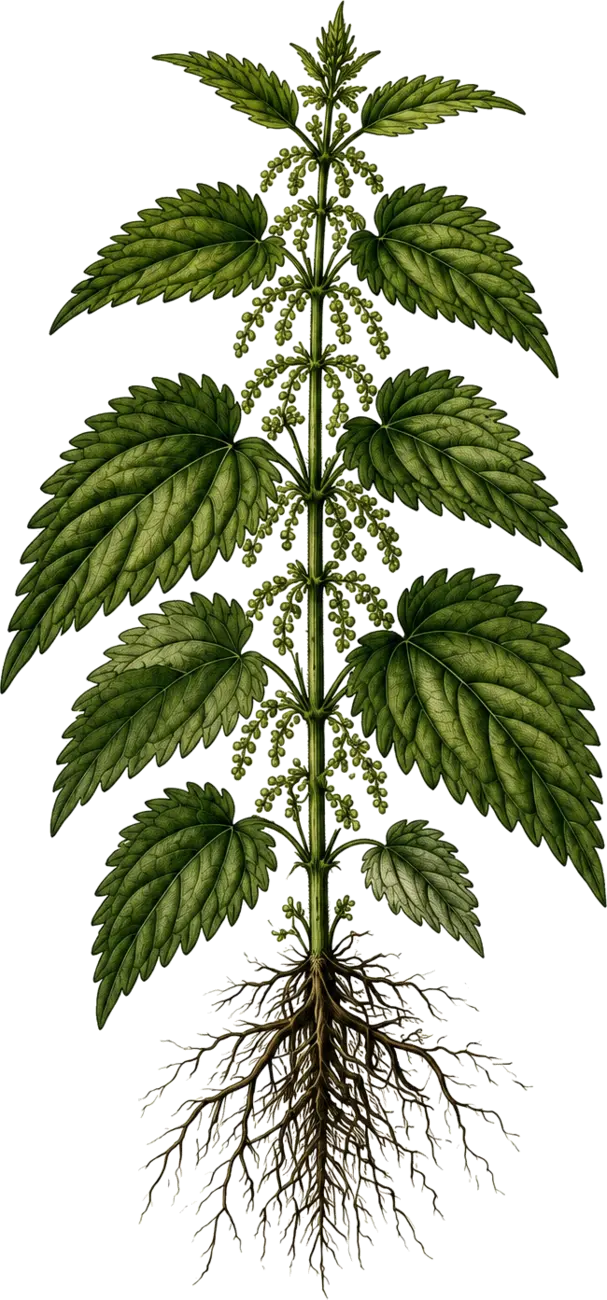
- Upright square-ish stems with opposite sharply serrated leaves, hanging green flower clusters, spreading yellow rhizomes, and hollow stinging hairs on leaves and stems.
- Parts Traditionally Used
- Leaves · Aerial parts · Roots
Traditional & Historical Medicinal Uses
Urtica dioica has served as food, textile fibre, dye, and herbal material for centuries. European traditions used leaves and aerial parts in spring foods and preparations associated with urinary flow, joint discomfort, and general nourishment; roots developed a separate history in urinary practice. EMA monographs recognize particular traditional-use contexts, but those conclusions do not prove effectiveness for disease. Plant part, species, processing, and personal health all matter.
Magical Uses
Nettle's sting and vigorous rhizomes make it a compelling modern symbol of boundaries, protection, courage, and resilient growth. European lore connects nettles with danger, strength, and thunder; some modern traditions assign the plant to Mars and Fire and associate it with Thor. Keep correctly identified dried material sealed in a boundary charm or use its image in courage work. Do not burn it or prepare baths or medicines from this entry.
Modern Evidence
Nettle's food and traditional-use history is separate from proof of clinical benefit. Fresh plants sting, and medicinal preparations may affect blood sugar, blood pressure, fluid balance, kidney or heart conditions, and medicines.
Notes & Personal Connection
Add your own experiences, observations, and notes about working with this plant. How does it speak to you? What is your personal connection?
Keep This Grimoire Entry
Print Page 1 and Page 2 together, single-sided or front and back.
Download to Print