Herbs & Salts Grimoire
Echinacea
Echinacea purpureaQuick Reference
Traditional Uses
Several Echinacea species have long histories in Indigenous North American medicine and later herbal practice. Modern research on colds is inconsistent and product-specific.
Magical Associations
- Protection
- Strength
- Endurance
- Healing symbolism
- Vitality
- Courage
- Resilience
Folklore
The genus name comes from a Greek word for hedgehog, referring to the prickly central cone. Modern folklore emphasizes endurance, protection, and the strength to recover.
Core Correspondences
Witchcraft Uses
- Protection sachets
- Strength and recovery altar work
- Courage charms
- Resilience spell jars
- Offerings of gratitude
⚠ Caution
Echinacea can cause allergic reactions, especially in people sensitive to daisy-family plants, and rashes have occurred in children. Product species and preparation matter; seek guidance during pregnancy, breastfeeding, autoimmune disease, or medication use.
Educational purposes only. Not medical advice.How to Work With
Use correctly identified dried material in a sealed protection or courage sachet, place its image on an altar for resilience, or grow it for pollinators. Do not ingest or prepare it medicinally based on this entry.
Best Time to Harvest
Prefer cultivated plants. Gather aerial parts from correctly identified, unsprayed plants during flowering while leaving ample blooms for pollinators; avoid digging wild roots and follow local conservation guidance.
Correspondences
- Chakra
- Solar PlexusHeart
- Season
- Summer
Page 2 of 2
Deeper Reading
Botanical Profile
- Plant Family
- Asteraceae
- Common Names
- Purple coneflower
- Alternate Names
- Eastern purple coneflower · Coneflower · Rudbeckia purpurea
- Growth Habit
- Clump-forming herbaceous perennial
- Native Range
- Central and eastern United States
- Habitat
- Open woods, prairies, meadows, and sunny cultivated borders
- Identifying Characteristics
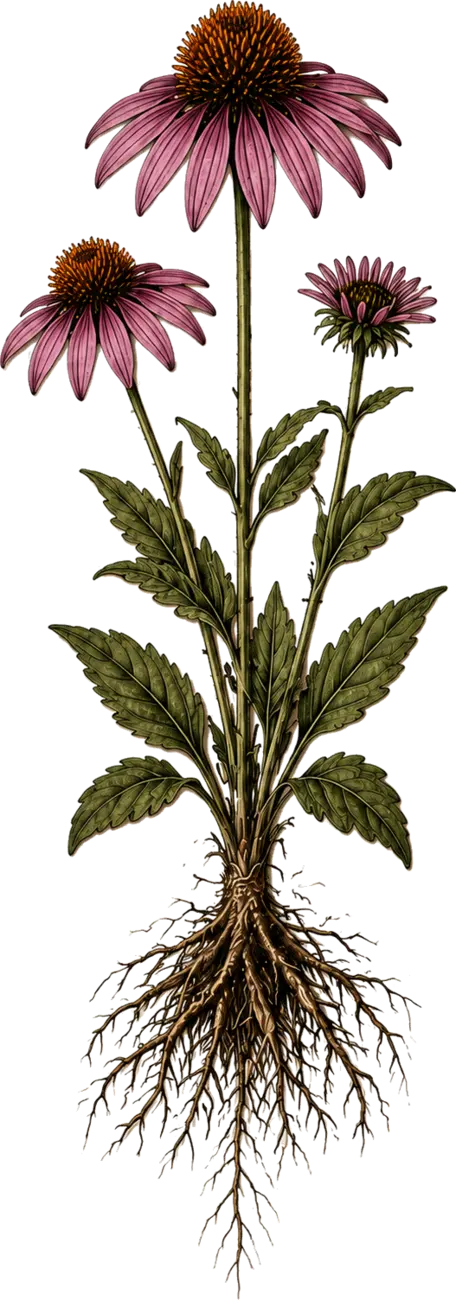
- Upright rough stems, toothed leaves, and large pink-purple ray florets drooping around a prominent spiny orange-brown central cone.
- Parts Traditionally Used
- Roots · Flowering aerial parts
Traditional & Historical Medicinal Uses
Echinacea species were used by several Indigenous peoples of the North American Plains and surrounding regions in distinct local healing traditions. European-American herbal practice later adopted Echinacea root and aerial parts, and commercial products became widely promoted for colds and immune support. NCCIH notes that studies use different species, plant parts, and preparations, making results difficult to compare; echinacea has not been convincingly shown to prevent or treat colds. Historical and cultural use should not be collapsed into a generalized efficacy claim.
Magical Uses
Echinacea's sturdy stems, persistent root crown, and spined central cone support contemporary symbolism of resilience, boundaries, courage, and recovery. The approved source links it with solar and fire imagery and with Apollo and Brigid; these are modern correspondence systems rather than universal Indigenous teachings. Dried material may be sealed in a protection or courage sachet, or the botanical image used on an altar for strength and recovery. Spiritual practice is symbolic and not medical treatment.
Modern Evidence
Echinacea products vary by species, plant part, extraction, and formulation. Evidence for colds is mixed and does not establish prevention or cure; allergy, autoimmune conditions, pregnancy, and medicine interactions need review.
Notes & Personal Connection
Add your own experiences, observations, and notes about working with this plant. How does it speak to you? What is your personal connection?
Keep This Grimoire Entry
Print Page 1 and Page 2 together, single-sided or front and back.
Download to Print