Herbs & Salts Grimoire
St. John's Wort
Hypericum perforatumQuick Reference
Traditional Uses
St. John's wort has a long history in European and other herbal traditions, including uses for mood, minor wounds, and digestive complaints. Historical use does not by itself establish medical effectiveness.
Magical Associations
- Light
- Protection
- Banishing
- Healing symbolism
- Happiness
- Hope
- Renewal
- Strength
- Clarity
Folklore
Its common name is linked to St. John the Baptist because the plant flowers near the midsummer feast day. European folk custom hung or carried it for protection, light, luck, and defense against harmful influences.
Core Correspondences
- Element
- Fire
- Planet
- Sun
- Gender
- Masculine
- Energy
- SolarUpliftingProtective
Witchcraft Uses
- Protection sachets and charm bags
- Doorway protection
- Cleansing and banishing rites
- Hope and renewal spellwork
- Solar altar offerings
⚠ Caution
St. John's wort has a high risk of serious medicine interactions, including with antidepressants, birth control, transplant, seizure, heart, HIV, cancer, and blood-thinning medicines. It can also increase sun sensitivity. Do not use medicinally without qualified clinical guidance.
Educational purposes only. Not medical advice.How to Work With
Use the plant symbolically in a sealed protection sachet, display a small correctly identified bundle near a doorway, or place its botanical image on a solar altar. Do not ingest, brew, burn, or apply it based on this entry.
Best Time to Harvest
Where lawful and ecologically appropriate, gather correctly identified flowering tops from clean, unsprayed plants as bloom begins in early to midsummer. Wear gloves if sensitive, avoid invasive-spread areas without local guidance, and leave ample flowers for wildlife and regeneration.
Correspondences
- Season
- Summer
Page 2 of 2
Deeper Reading
Botanical Profile
- Plant Family
- Hypericaceae
- Common Names
- Common St. John's wort
- Alternate Names
- Perforate St. John's wort · Klamath weed · Hypericum · St Johns Wort · Saint John's Wort
- Growth Habit
- Erect herbaceous perennial
- Native Range
- Europe to China and northwestern Africa; widely introduced elsewhere
- Habitat
- Open grassland, roadsides, field margins, disturbed ground, and other sunny temperate habitats
- Identifying Characteristics
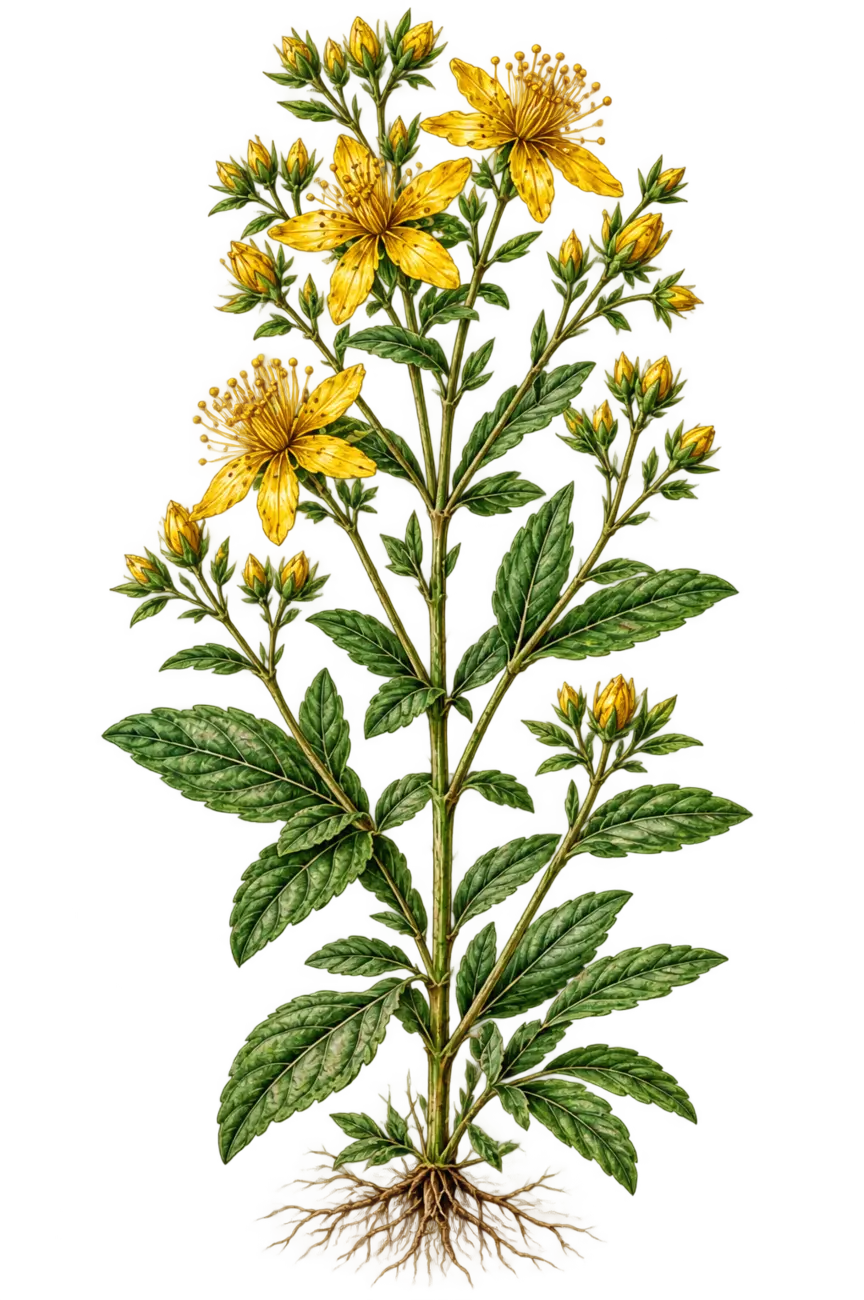
- Branching upright stems with opposite narrow leaves dotted by translucent oil glands and clusters of five-petaled yellow flowers whose margins bear dark glandular dots.
- Parts Traditionally Used
- Flowering aerial parts · Flowers · Leaves
Traditional & Historical Medicinal Uses
St. John's wort has been used in Greek, European, Islamic, and Chinese traditional medicine. Historical preparations of the flowering tops were used for mood-related complaints, minor wounds, digestive concerns, and other conditions. Modern studies have focused mainly on standardized extracts for mild to moderate depression, but results, products, doses, and regulatory contexts vary. This history should not be used to self-diagnose or replace mental-health or medical care, and the herb's unusually broad interaction profile makes unsupervised medicinal use inappropriate.
Magical Uses
St. John's wort's bright midsummer flowers and traditional association with the feast of St. John shaped its solar symbolism. In European folklore it was hung in homes or carried as a charm against misfortune and harmful influences. Contemporary practitioners may place the dried flowering tops in a sealed protection sachet, hang a small bundle above a doorway, use the plant symbolically in cleansing or banishing work, or offer its image on a solar altar. The approved Black Cat source associates it with Apollo, Lugh, and Brigid; these modern correspondence systems vary by tradition. These practices are symbolic and are not medical treatments.
Notes & Personal Connection
Add your own experiences, observations, and notes about working with this plant. How does it speak to you? What is your personal connection?
Keep This Grimoire Entry
Print Page 1 and Page 2 together, single-sided or front and back.
Download to Print