Herbs & Salts Grimoire
Mullein
Verbascum thapsusQuick Reference
Traditional Uses
Mullein flower has a long European herbal history for dry cough and sore-throat symptoms. EMA recognizes this only as a traditional-use indication based on longstanding use, not established clinical effectiveness.
Magical Associations
- Protection
- Courage
- Clarity
- Light
- Divination
- Spiritual strength
Folklore
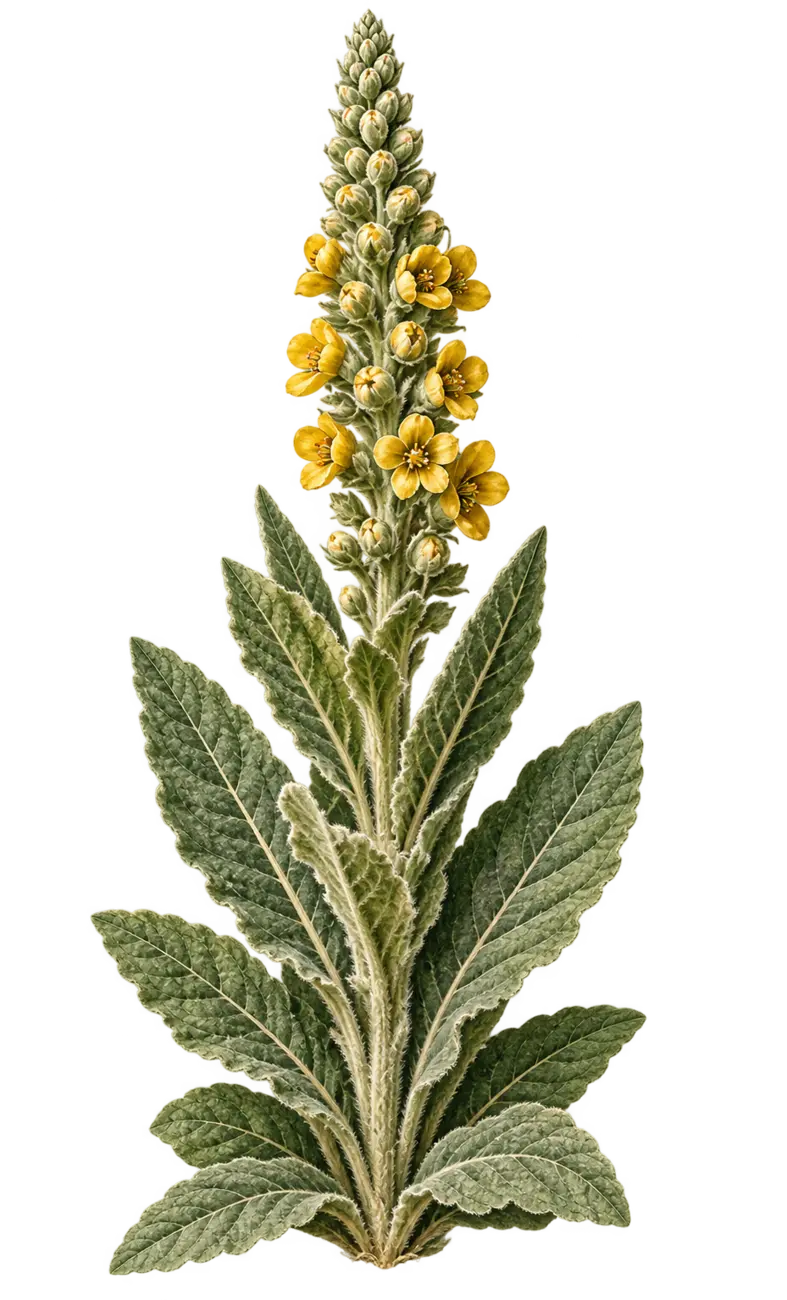
Its towering flower stalk inspired names such as Aaron's rod and folklore about torches, protection, and guiding light. The soft leaves also earned names such as flannel leaf and velvet plant.
Core Correspondences
Witchcraft Uses
- Protection sachets
- Courage charms
- Solar altar work
- Divination symbolism
- Boundary and clarity rituals
⚠ Caution
Fine leaf hairs may irritate skin, throat, or lungs. Do not inhale smoke. Pregnancy and breastfeeding safety is not established, and breathing difficulty, fever, or persistent cough requires medical care.
Educational purposes only. Not medical advice.How to Work With
Keep correctly identified dried mullein sealed in a protection or courage sachet, place its botanical image on a solar altar, or grow it as a symbol of guiding light. Do not burn, smoke, or ingest it based on this entry.
Best Time to Harvest
Where lawful and ecologically appropriate, gather newly opened flowers from correctly identified, unsprayed plants in dry weather. Wear gloves if the leaf hairs irritate your skin, leave ample flowers for insects and seed, and avoid spreading seed where mullein is invasive.
Correspondences
- Color
- YellowSilver-green
- Season
- Summer
Page 2 of 2
Deeper Reading
Botanical Profile
- Plant Family
- Scrophulariaceae
- Common Names
- Common mullein · Great mullein
- Alternate Names
- Aaron's rod · Flannel leaf · Velvet plant · Verbascum · Mullein flower
- Growth Habit
- Tall woolly biennial herb
- Native Range
- Europe, northern Africa, and temperate Asia; widely introduced elsewhere
- Habitat
- Dry open ground, roadsides, disturbed soils, banks, and sunny field margins
- Identifying Characteristics
- A first-year rosette of large, densely woolly gray-green leaves followed by a tall second-year flowering stalk bearing many small yellow flowers.
- Parts Traditionally Used
- Flowers · Leaves
Traditional & Historical Medicinal Uses
Mullein flowers and leaves have appeared in European household herbal practice for respiratory discomfort, especially dry cough and sore throat. The European Medicines Agency recognizes preparations of mullein flower for relief of sore-throat symptoms associated with dry cough and cold as a traditional-use indication, meaning the conclusion rests on longstanding use rather than strong clinical trials. Older household preparations were carefully strained because the plant's fine hairs can irritate. This history does not establish mullein as a treatment for respiratory disease, and breathing difficulty, fever, or persistent symptoms require medical evaluation.
Magical Uses
Mullein's tall torch-like flower spike and soft silver-green leaves have inspired modern associations with light, courage, protection, and clear sight. The approved source connects it with Apollo and Brigid; those links fit solar and flame symbolism but vary by tradition. A practitioner may keep correctly identified dried material sealed in a protection sachet, place the botanical image on a solar altar, or use the stalk's torch shape as a visual focus for clarity and courage. Burning and smoke-based uses are deliberately excluded here because inhaling plant smoke can irritate the lungs.
Modern Evidence
Mullein's traditional respiratory use does not establish that it treats infection or lung disease. Fine leaf hairs can irritate, smoke is harmful to lungs, and internal or concentrated preparations need qualified guidance.
Notes & Personal Connection
Add your own experiences, observations, and notes about working with this plant. How does it speak to you? What is your personal connection?
Keep This Grimoire Entry
Print Page 1 and Page 2 together, single-sided or front and back.
Download to Print