Herbs & Salts Grimoire
Rhodiola
Rhodiola roseaQuick Reference
Traditional Uses
Rhodiola root has a history of use in northern European and Asian traditions for fatigue, stamina, and coping with demanding conditions. Reliable evidence for health benefits remains insufficient.
Magical Associations
- Endurance
- Strength
- Resilience
- Adaptability
- Protection
- Mental clarity
- Vitality
Folklore
Known as roseroot for the rose-like scent of its cut rhizome, Rhodiola carries northern folklore of stamina, long life, and flourishing in harsh places.
Core Correspondences
- Planet
- Sun
Witchcraft Uses
- Endurance charms
- Resilience altar work
- Protection sachets
- Clarity meditation
- Threshold and transition rituals
⚠ Caution
Rhodiola may cause dizziness, headache, insomnia, dry mouth, or excessive saliva, and an interaction with losartan has been reported. Pregnancy and breastfeeding safety are unclear; seek qualified guidance before medicinal use.
Educational purposes only. Not medical advice.How to Work With
Use its botanical image in resilience or clarity work, or keep a small correctly identified root piece sealed in a non-ingestible endurance charm. Do not prepare or take it medicinally based on this entry.
Page 2 of 2
Deeper Reading
Botanical Profile
- Plant Family
- Crassulaceae
- Common Names
- Roseroot
- Alternate Names
- Golden root · Arctic root · Rose root · King's crown
- Growth Habit
- Clump-forming succulent perennial
- Native Range
- Subarctic and subalpine regions of the Northern Hemisphere
- Habitat
- Cold rocky slopes, cliffs, scree, and other well-drained alpine or coastal sites
- Identifying Characteristics
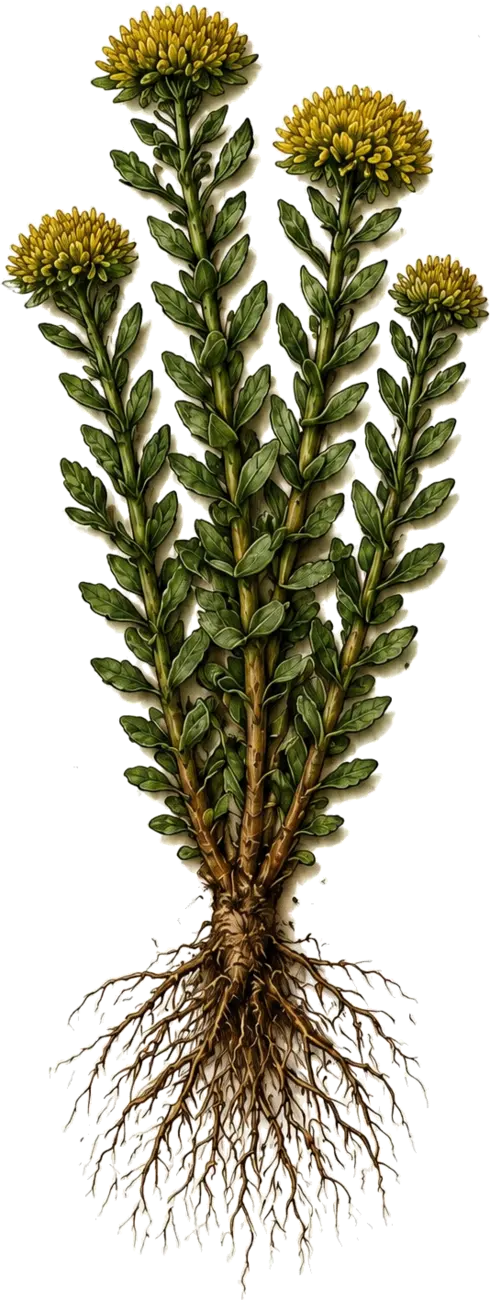
- A low perennial with fleshy blue-green leaves on clustered upright stems, terminal yellow flower heads, and a thick aromatic rhizome and root system.
- Parts Traditionally Used
- Rhizomes · Roots
Traditional & Historical Medicinal Uses
Rhodiola rosea grows across cold northern and alpine regions, where its aromatic rhizomes and roots entered several regional herbal traditions. Preparations were historically associated with stamina, fatigue, work at altitude, and resilience during difficult conditions. These traditions do not establish modern medical effectiveness. NCCIH reports that there is not enough reliable evidence to determine whether rhodiola is useful for any health-related purpose, and commercial products can vary in identity and composition.
Magical Uses
Rhodiola's ability to persist in exposed, cold, rocky places supports contemporary symbolism of endurance, adaptability, and strength under pressure. Its clustered golden flowers add solar imagery of vitality and clear purpose, while its deeply rooted perennial habit suggests steadiness through change. A correctly identified dried root piece may be sealed in a non-ingestible endurance charm, or its botanical image placed on an altar for resilience and mental clarity. These correspondences are symbolic and do not promise physical or psychological effects.
Notes & Personal Connection
Add your own experiences, observations, and notes about working with this plant. How does it speak to you? What is your personal connection?
Keep This Grimoire Entry
Print Page 1 and Page 2 together, single-sided or front and back.
Download to Print