Herbs & Salts Grimoire
Ashwagandha
Withania somniferaQuick Reference
Traditional Uses
Ashwagandha root has centuries of documented use in Ayurvedic and Unani traditions, where it has been valued as a rasayana and for strength, sleep, and resilience. Traditional use does not establish modern medical effectiveness.
Magical Associations
- Strength
- Stamina
- Resilience
- Adaptability
- Protection
- Grounding
- Endurance
- Inner stability
Folklore
In Ayurveda, ashwagandha is traditionally classed as a rasayana and valued for vitality and well-being. Its strong root and endurance in dry habitats have also inspired modern symbolism of resilience and grounded strength.
Core Correspondences
Witchcraft Uses
- Protection sachets and mojo bags
- Strength and endurance spellwork
- Carried-root symbolism
- Grounding rituals
- Resilience work during challenging times
⚠ Caution
Avoid during pregnancy and breastfeeding. Ashwagandha may cause drowsiness or digestive effects, has been linked to rare liver injury, and can interact with medicines or affect thyroid, autoimmune, blood-sugar, and blood-pressure conditions.
Educational purposes only. Not medical advice.How to Work With
Use a small correctly identified root piece in a sealed grounding or protection charm, or work with the botanical image in rituals for resilience and endurance. Do not ingest or prepare it medicinally based on this entry.
Best Time to Harvest
In cultivation, roots are generally lifted from mature plants after the aerial growth declines and the berries ripen, often in the cooler dry season. Wear gloves, label the species, and follow local cultivation and harvest guidance.
Correspondences
- Color
- GreenBrownOrange-red
- Season
- Autumn
Page 2 of 2
Deeper Reading
Botanical Profile
- Plant Family
- Solanaceae
- Alternate Names
- Indian ginseng · Winter cherry · Withania · Asgandh · Asgand
- Growth Habit
- Branched evergreen or deciduous subshrub
- Native Range
- Southern Europe to central China, and Africa to Myanmar
- Habitat
- Dry subtropical scrub, open ground, rocky slopes, and cultivated fields
- Identifying Characteristics
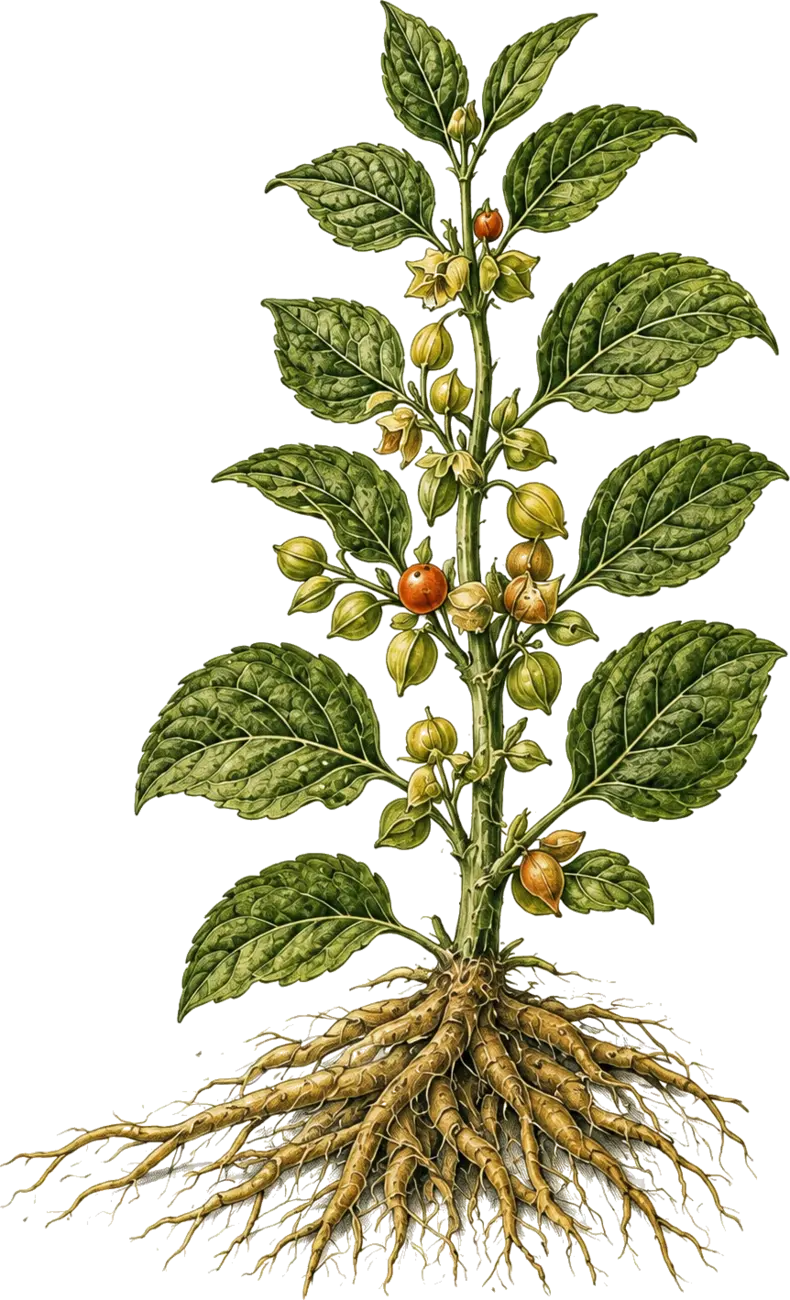
- A softly hairy branching subshrub with broad oval leaves, small greenish-yellow bell-shaped flowers, orange-red berries enclosed by papery calyces, and a thick branching root system.
- Parts Traditionally Used
- Roots · Leaves
Traditional & Historical Medicinal Uses
Ashwagandha is an important plant in Ayurvedic and Unani medical traditions. The root is commonly described within Ayurveda as a rasayana, a category concerned with nourishment, resilience, and healthy longevity, and historical uses include support during weakness, stress, sleep disturbance, and convalescence. Modern studies have examined standardized extracts for stress, anxiety, and sleep, but preparations and evidence vary, and long-term safety is not established. Traditional knowledge should be represented respectfully and should not be reduced to a substitute for individualized medical care.
Magical Uses
Contemporary magical use often draws on ashwagandha's longstanding reputation for strength and restoration. Practitioners may keep a small piece of correctly identified root sealed in a grounding charm, include it in a protection sachet, or use its image during ritual work for endurance and steadiness. The approved Black Cat source associates the plant with Shiva, Durga, and Hecate; these links are tradition-specific, and Hecate in particular belongs to a modern cross-cultural correspondence rather than a universal historical Ayurvedic teaching. Spiritual use is symbolic and not a medical treatment.
Notes & Personal Connection
Add your own experiences, observations, and notes about working with this plant. How does it speak to you? What is your personal connection?
Keep This Grimoire Entry
Print Page 1 and Page 2 together, single-sided or front and back.
Download to Print