Herbs & Salts Grimoire
Horehound
Marrubium vulgareQuick Reference
Traditional Uses
White horehound has a long history in European herbal practice, especially in preparations for coughs and mild digestive complaints. These traditional uses do not establish medical effectiveness.
Magical Associations
- Protection
- Courage
- Strength
- Banishing
- Health symbolism
- Purification
- Boundaries
- Clearing negativity
Folklore
Horehound was carried or hung in homes and stables in protective folk custom. Its pronounced bitterness helped shape the idea that it could drive away illness, unwanted influence, and what no longer served.
Core Correspondences
Witchcraft Uses
- Protection charms and amulets
- Floor washes for sacred-space cleansing
- Boundary jars
- Banishing rites
- Protective offerings
⚠ Caution
Reliable safety information is limited. Avoid medicinal use during pregnancy or breastfeeding and seek qualified guidance if you take medicines, have heart or blood-pressure concerns, or are considering concentrated preparations.
Educational purposes only. Not medical advice.How to Work With
Use correctly identified dried horehound in a sealed protection charm, boundary jar, or symbolic threshold-cleansing practice. Do not ingest, brew, or burn it based on this entry.
Best Time to Harvest
Gather correctly identified flowering aerial parts from clean, unsprayed plants in early bloom, where collection is lawful and ecologically appropriate. Avoid roadside pollution and leave enough flowers and stems for wildlife and regeneration.
Correspondences
- Color
- WhiteGray-green
- Season
- Summer
Page 2 of 2
Deeper Reading
Botanical Profile
- Plant Family
- Lamiaceae
- Common Names
- White horehound
- Alternate Names
- Common horehound · Marrubium · Hoarhound
- Growth Habit
- Woolly herbaceous perennial
- Native Range
- Macaronesia, Europe, the Mediterranean region to the central Himalaya
- Habitat
- Dry open ground, roadsides, pastures, waste places, and disturbed sunny sites
- Identifying Characteristics
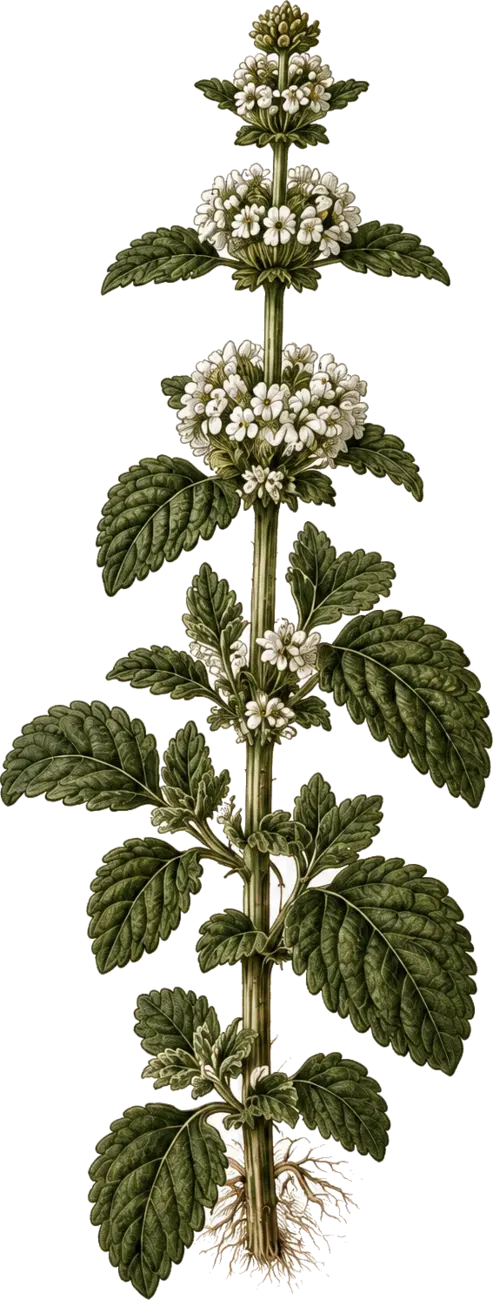
- Square woolly stems, opposite wrinkled gray-green leaves with rounded teeth, and dense whorls of small white flowers at the leaf nodes.
- Parts Traditionally Used
- Flowering aerial parts · Leaves · Stems
Traditional & Historical Medicinal Uses
The intensely bitter flowering aerial parts of white horehound have been used in European traditional medicine. Historical preparations included teas, syrups, and lozenges used for coughs associated with colds and as bitter preparations for temporary loss of appetite or mild digestive discomfort. The European Medicines Agency recognizes specific traditional-use indications based on longstanding use, not strong clinical proof. Products, doses, and individual risks vary, so this history should not be treated as a prescription or as evidence that a homemade preparation is safe or effective.
Magical Uses
Horehound's bitterness, pale woolly leaves, and old household reputation contribute to modern associations with protection, strength, purification, and firm boundaries. Practitioners may keep correctly identified dried material sealed in a protection charm, add it to a non-ingestible boundary jar, or use a strained external wash for symbolic cleansing of thresholds. The approved Black Cat source associates it with Hekate, Odin, Pan, and Brigid; these deity and planetary links belong to modern correspondence systems and vary by tradition. Spiritual use is symbolic and is not a treatment for illness.
Notes & Personal Connection
Add your own experiences, observations, and notes about working with this plant. How does it speak to you? What is your personal connection?
Keep This Grimoire Entry
Print Page 1 and Page 2 together, single-sided or front and back.
Download to Print