Herbs & Salts Grimoire
Black Himalayan Salt
Halite / Sodium Chloride (NaCl)Quick Reference
History & Tradition
Black rock salt has a longstanding cultural history in South Asian culinary traditions and systems of traditional medicine. This entry distinguishes that history from later Western witchcraft correspondences.
Magical Associations
- Protection
- Grounding
- Banishing
- Warding
- Boundaries
- Cleansing
- Release
- Absorption symbolism
Folklore
Salt has broad historical associations with purification, preservation, hospitality, protection, blessing, and ritual cleansing. Black Himalayan Salt's specific warding and banishing correspondences belong to later modern witchcraft practice.
Core Correspondences
Witchcraft Uses
- Protection bowls and jars
- Household wards
- Threshold workings
- Banishing and release rituals
- Grounding practices
- Boundary-setting workings
- Protective spell bottles
- Contained altar arrangements and sachets
⚠ Caution
Black Himalayan Salt is primarily sodium chloride. Do not present trace minerals as extraordinary therapy, and never assume a ritual preparation remains food-safe after contact with herbs, oils, ash, charcoal, altar materials, or other non-food-safe ingredients.
Educational purposes only. Not medical advice.How to Work With
Use contained salt in protection bowls or jars, household wards, threshold workings, grounding practices, boundary-setting, cleansing, banishing, or release rituals. Keep it in a bowl, bottle, jar, or sachet rather than scattering substantial quantities.
Storage & Handling
Store in a dry, sealed container. Avoid scattering substantial quantities into gardens, flower beds, or around living plants because excess salt can damage vegetation and soil.
Correspondences
Page 2 of 2
Deeper Reading
Material Profile
- Category
- Mineral / Ritual Salt
- Common Names
- Himalayan Black Salt · Black Rock Salt
- Alternate Names
- Himalayan black rock salt · Mineral salt · Halite · Kala namak
- Material Type
- Rock Salt
- Regional Association
- Associated with the Himalayan and surrounding South Asian region
- Composition
- Halite / Sodium Chloride (NaCl)
- Identifying Characteristics
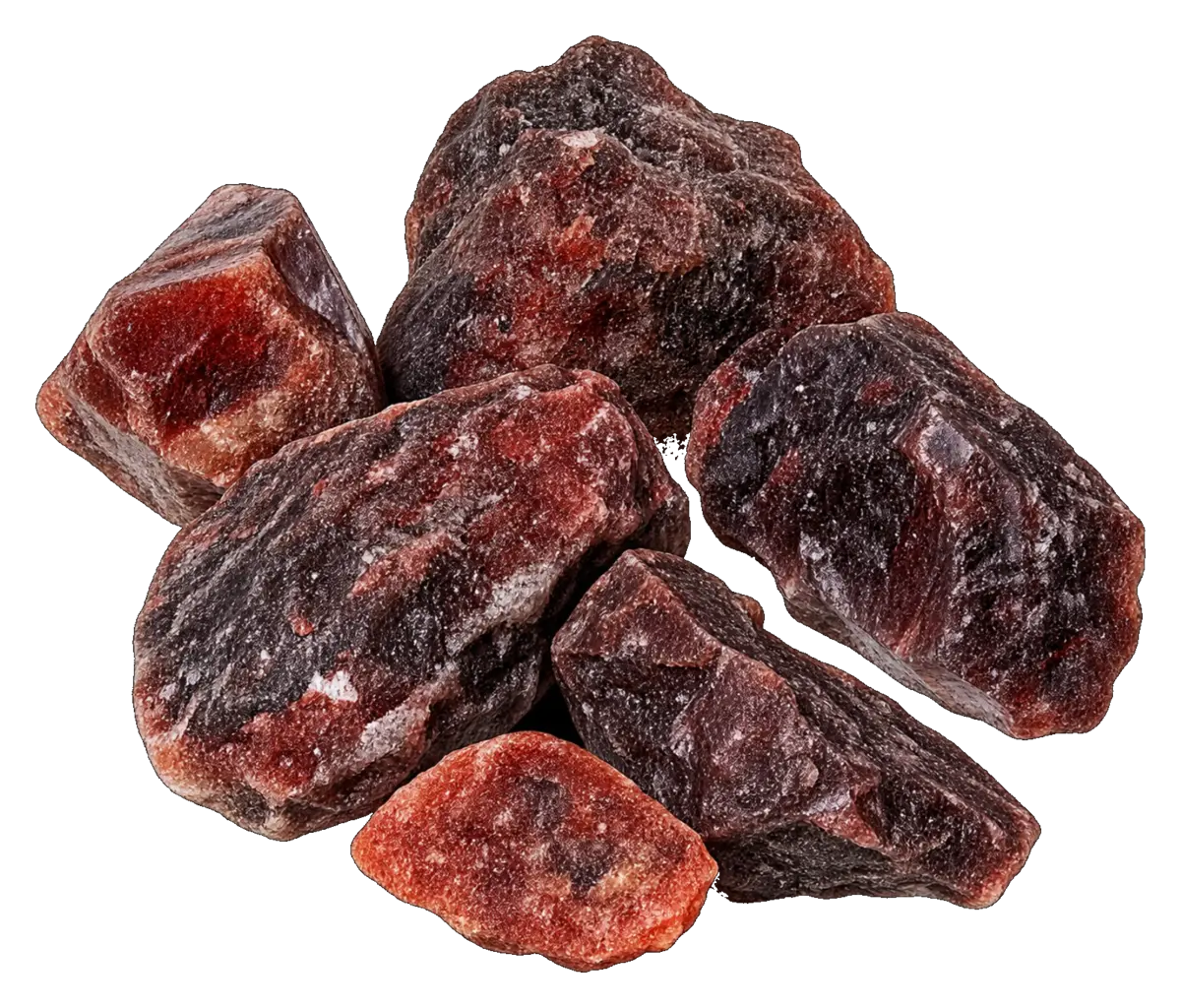
- Dark violet, purple-brown, reddish-black to black mineral salt. Terminology and composition vary; processed kala namak is particularly recognizable for its sulfurous aroma.
- Material
- Mineral rock salt
History & Tradition
Black Himalayan Salt is a mineral-rich rock salt associated with the Himalayan and surrounding South Asian region and composed primarily of sodium chloride with additional naturally occurring mineral components. Black rock salt has a longstanding cultural history in South Asia, particularly in culinary traditions and systems of traditional medicine. Salt more broadly has extensive religious, ritual, folkloric, and symbolic histories involving purification, preservation, hospitality, protection, covenant, blessing, and ritual cleansing. Historical Himalayan black salt must be distinguished from the later Western witchcraft system that particularly associates black-colored salt with banishing, warding, and protection. The material has genuine cultural and historical significance; its contemporary witchcraft correspondences are an additional layer rather than an ancient universal tradition.
Magical Uses
Earth is the strongest elemental correspondence because salt is literally a mineral material from geological deposits, lending symbolism of grounding, stability, foundation, endurance, physical boundaries, security, and structure. Saturn is an appropriate modern occult correspondence through themes of boundaries, restriction, structure, protection, discipline, endings, limitations, and permanence; it is not presented as an ancient attribution specific to Himalayan black salt. Modern practice may incorporate the material into protection bowls, household wards, threshold work, banishing, grounding, cleansing, boundary-setting, and release rituals. Keeping salt contained in a bowl, bottle, jar, or sachet is generally preferable to scattering it. Black's association with absorbing or containing unwanted energy is a magical correspondence, not a scientifically demonstrated physical property.
Modern Evidence
Black Himalayan salt is primarily sodium chloride. Trace minerals do not establish special therapeutic value, and culinary kala namak must remain distinct from non-food ritual black-salt mixtures.
Notes & Personal Connection
Add your own experiences, observations, and notes about working with this material. How does it speak to you? What is your personal connection?
Keep This Grimoire Entry
Print Page 1 and Page 2 together, single-sided or front and back.
Download to Print