Herbs & Salts Grimoire
Burdock Root
Arctium lappaQuick Reference
Traditional Uses
Greater burdock root has long food and herbal histories in East Asia and Europe. Traditional preparations were associated with digestion, skin complaints, and urinary flow, but these uses do not establish modern medical efficacy.
Magical Associations
- Protection
- Purification
- Grounding
- Boundaries
- Release
- Resilience
- Healing symbolism
Folklore
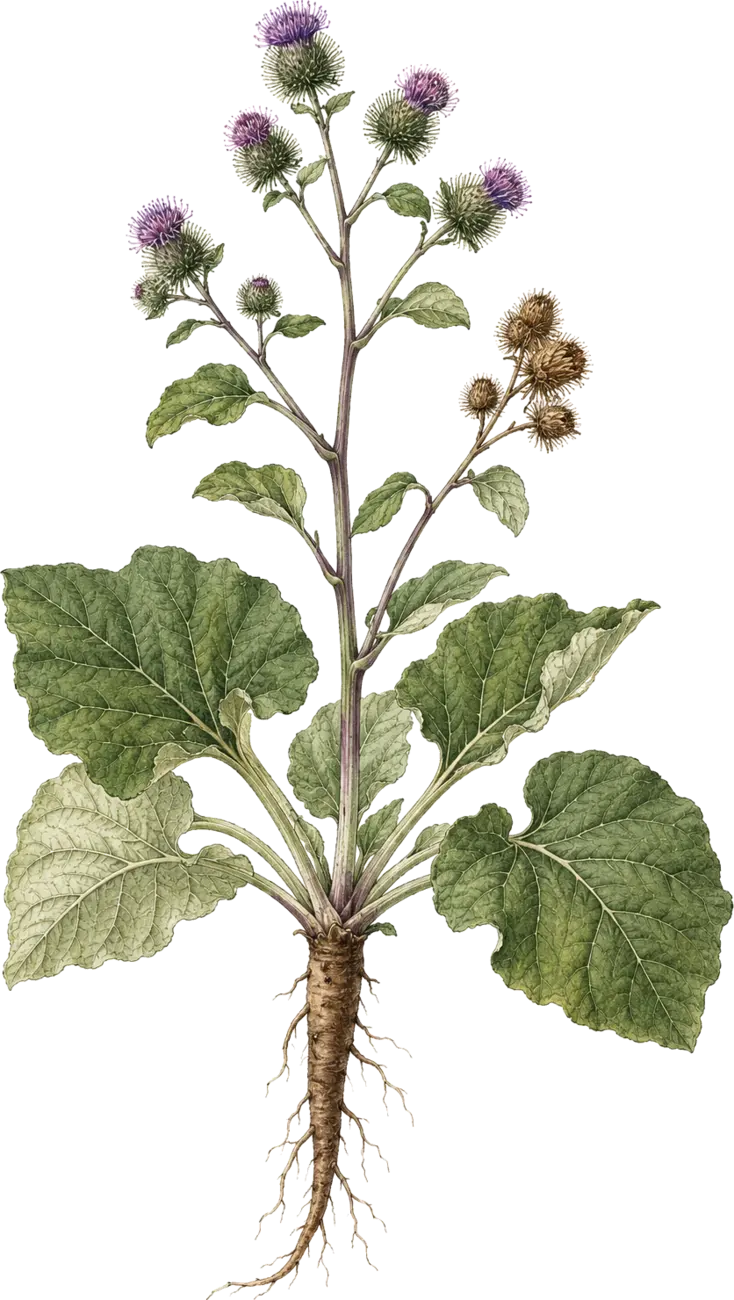
Burdock burrs have long clung to clothing and animal fur. Their microscopic hooks famously inspired George de Mestral's development of the hook-and-loop fastener later known as VELCRO®.
Core Correspondences
- Element
- Earth
Witchcraft Uses
- Protection charms
- Grounding sachets
- Boundary rituals
- Release work
- Purification altar work
⚠ Caution
Do not confuse greater burdock with other burr-bearing plants. Daisy-family allergy is possible, and concentrated products may interact with medicines or be unsuitable during pregnancy, breastfeeding, diabetes, or fluid-balance conditions.
Educational purposes only. Not medical advice.How to Work With
Keep a correctly identified dried root piece sealed in a grounding or protection charm, use its botanical image in boundary and release work, or grow it responsibly. Do not prepare or ingest it medicinally based on this entry.
Best Time to Harvest
Prefer cultivated plants and confirm the species. Culinary roots are generally lifted during the first growing season before the flowering stalk develops; avoid contaminated roadsides and leave wild populations undisturbed.
Correspondences
- Chakra
- Root
Page 2 of 2
Deeper Reading
Botanical Profile
- Plant Family
- Asteraceae
- Common Names
- Burdock · Greater burdock
- Alternate Names
- Great burdock · Gobo · Beggar's buttons · Arctium lappa root · Edible burdock
- Growth Habit
- Large taprooted herb, commonly behaving as a biennial
- Native Range
- Temperate Eurasia
- Habitat
- Roadsides, field edges, waste ground, woodland margins, and other nutrient-rich disturbed soils
- Identifying Characteristics
- A large plant with a first-year rosette of broad heart-shaped leaves, pale woolly leaf undersides, a tall branching second-year stem, purple flower heads enclosed by hooked burr bracts, and a long brown taproot.
- Parts Traditionally Used
- Roots · Fruits and seeds · Leaves
Traditional & Historical Medicinal Uses
Arctium lappa root is eaten as a vegetable, especially as gobo in Japanese cooking, and has also appeared in European and Asian herbal traditions. Historical preparations of the root, fruit, or leaves were used in distinct traditions for digestive complaints, skin conditions, urinary flow, and general nourishment. The European Medicines Agency concluded that the available evidence was insufficient to establish a European Union herbal monograph for burdock root. Food history and long-standing use therefore should not be presented as proof that supplements or home remedies treat disease.
Magical Uses
Burdock's deep taproot and clinging hooked burrs give modern practice strong symbols of grounding, persistence, protection, and deliberate release. The root suggests stability and drawing strength from the earth, while the burr offers a useful image for examining what is being held and what should be let go. Keep a correctly identified dried root piece sealed in a non-ingestible charm or use the botanical image in boundary and release work. These are modern symbolic practices, not medical treatment.
Notes & Personal Connection
Add your own experiences, observations, and notes about working with this plant. How does it speak to you? What is your personal connection?
Keep This Grimoire Entry
Print Page 1 and Page 2 together, single-sided or front and back.
Download to Print