Herbs & Salts Grimoire
Plantain
Plantago majorQuick Reference
Traditional Uses
Plantain leaves have centuries of documented folk use in poultices and washes for minor wounds, stings, and irritated skin, while other traditions used leaf or seed preparations for respiratory and digestive complaints. Historical use is not proof of effectiveness.
Magical Associations
- Healing symbolism
- Protection
- Grounding
- Resilience
- Safe travel
- Courage
- Restoration
- Release
Folklore
After European colonization, the plant spread widely along roads and settlements in North America and became known in some accounts as ‘white man's footstep,’ reflecting both its ecology and a history of colonial disturbance.
Core Correspondences
- Element
- Earth
Witchcraft Uses
- Travel-protection charms
- Grounding sachets
- Resilience altar work
- Release rituals
- Restoration symbolism
⚠ Caution
Correct identification and a clean collection site are essential. Plantain may cause allergy, and wild leaves can carry contaminants; pregnancy, breastfeeding, medication use, or medicinal preparations require qualified guidance.
Educational purposes only. Not medical advice.How to Work With
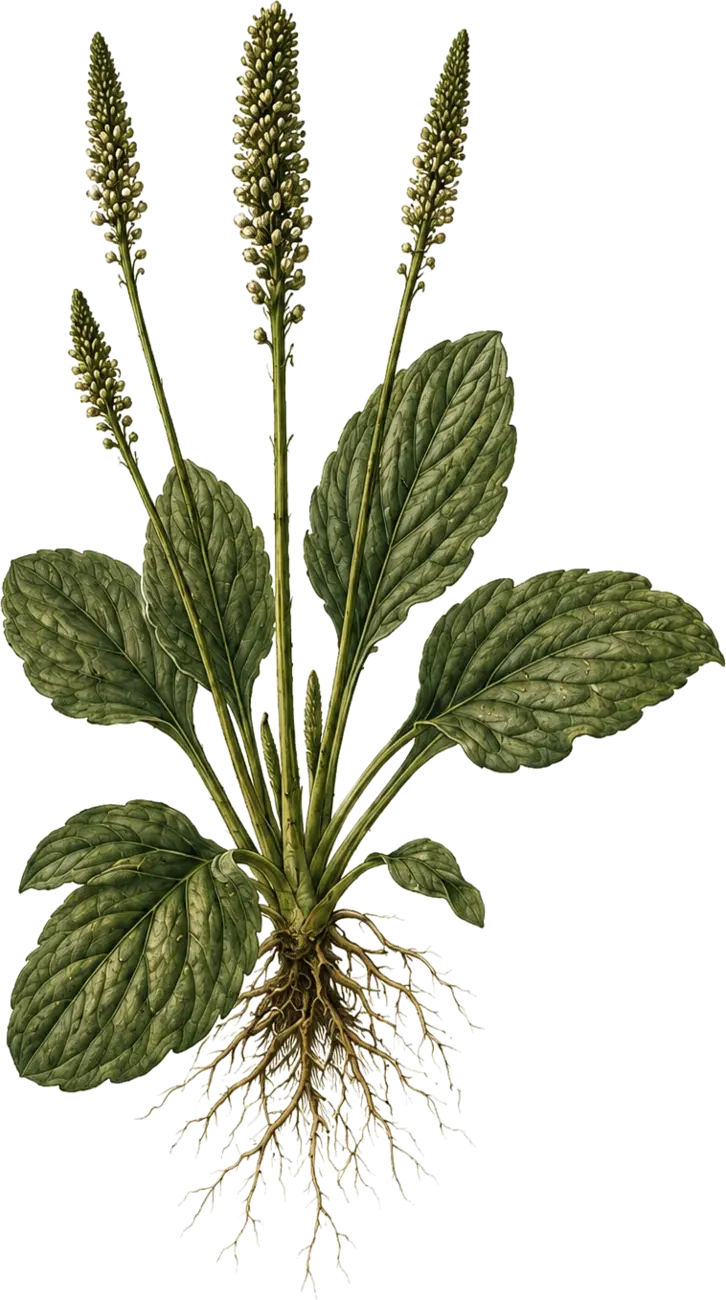
Keep a correctly identified dried leaf sealed in a travel-protection or grounding charm, use the botanical image in resilience work, or observe the living plant as a symbol of restoration. Do not prepare medicinal remedies based on this entry.
Best Time to Harvest
Where lawful, gather only correctly identified, unsprayed leaves from clean sites away from roads, animal waste, and contaminated ground. Take sparingly before seed set and leave enough for the plant and local ecology.
Correspondences
- Color
- GreenEarth brown
- Chakra
- Root
Page 2 of 2
Deeper Reading
Botanical Profile
- Plant Family
- Plantaginaceae
- Common Names
- Broadleaf plantain · Greater plantain
- Alternate Names
- Common plantain · Waybread · White man's footstep · Plantago major · Broad-leaved plantain · Healing blade
- Growth Habit
- Basal-rosette herbaceous perennial
- Native Range
- Temperate Eurasia to the Arabian Peninsula, Macaronesia, and northern and southern Africa
- Habitat
- Lawns, paths, field margins, roadsides, and other compacted or disturbed temperate ground
- Identifying Characteristics
- A low rosette of broad oval leaves with five to nine strong parallel-curving veins; small green-brown flowers and seeds form on upright, narrow spikes above the leaves.
- Parts Traditionally Used
- Leaves · Seeds · Roots
Traditional & Historical Medicinal Uses
Plantago major has an unusually broad ethnobotanical history. European, Persian, and other regional traditions used the leaves externally in poultices or washes for minor wounds, sores, stings, and inflamed skin; historical materia medica also records preparations for cough, digestive complaints, bleeding, and urinary concerns. Reviews confirm the longevity and geographic breadth of these practices but do not establish that a home preparation safely or effectively treats any condition. Species identification and preparation matter, and serious or infected wounds require appropriate medical care.
Magical Uses
Plantain thrives where feet, wheels, and disturbance press the earth, giving modern practice a vivid symbolic language of resilience, grounding, safe passage, and restoration. Its long-standing reputation as a roadside helper reinforces protective and journey-oriented correspondences. A correctly identified dried leaf may be kept sealed in a travel or grounding charm, or its botanical image used in resilience and release work. These are symbolic practices, not medical protection or treatment.
Notes & Personal Connection
Add your own experiences, observations, and notes about working with this plant. How does it speak to you? What is your personal connection?
Keep This Grimoire Entry
Print Page 1 and Page 2 together, single-sided or front and back.
Download to Print