Herbs & Salts Grimoire
Angelica
Angelica archangelica L.Quick Reference
Traditional Uses
Historically an aromatic bitter and European folk herb, especially in digestive/respiratory contexts; stems have also been candied and used as flavoring. Historical use is not proof of clinical efficacy.
Magical Associations
- protection
- purification
- blessing
- courage
- spiritual guardianship
- boundaries
- guidance
Folklore
Angelica has a long northern/central European history as food, flavoring and herbal material. Angelica species have substantial traditional-medicine records; A. archangelica became prominent in European herbals. Later European naming/folklore connected it with angels and archangels; present this as regional/later tradition, not universal ancient belief.
Core Correspondences
⚠ Caution
Apiaceae allergy is possible. Angelica contains furanocoumarins; plant material/some preparations may increase UV-related photosensitivity/photodermatitis risk. Concentrated preparations and essential oil need additional caution. Pregnancy/lactation and medication questions require qualified guidance.
Educational purposes only. Not medical advice.How to Work With
Commonly used symbolically for protection, blessing, purification, courage, spiritual guardianship and firm boundaries. Angelic naming/history also lends itself to guidance/protection symbolism.
Page 2 of 2
Deeper Reading
Botanical Profile
- Plant Family
- Apiaceae
- Common Names
- Garden angelica · archangel · wild celery
- Growth Habit
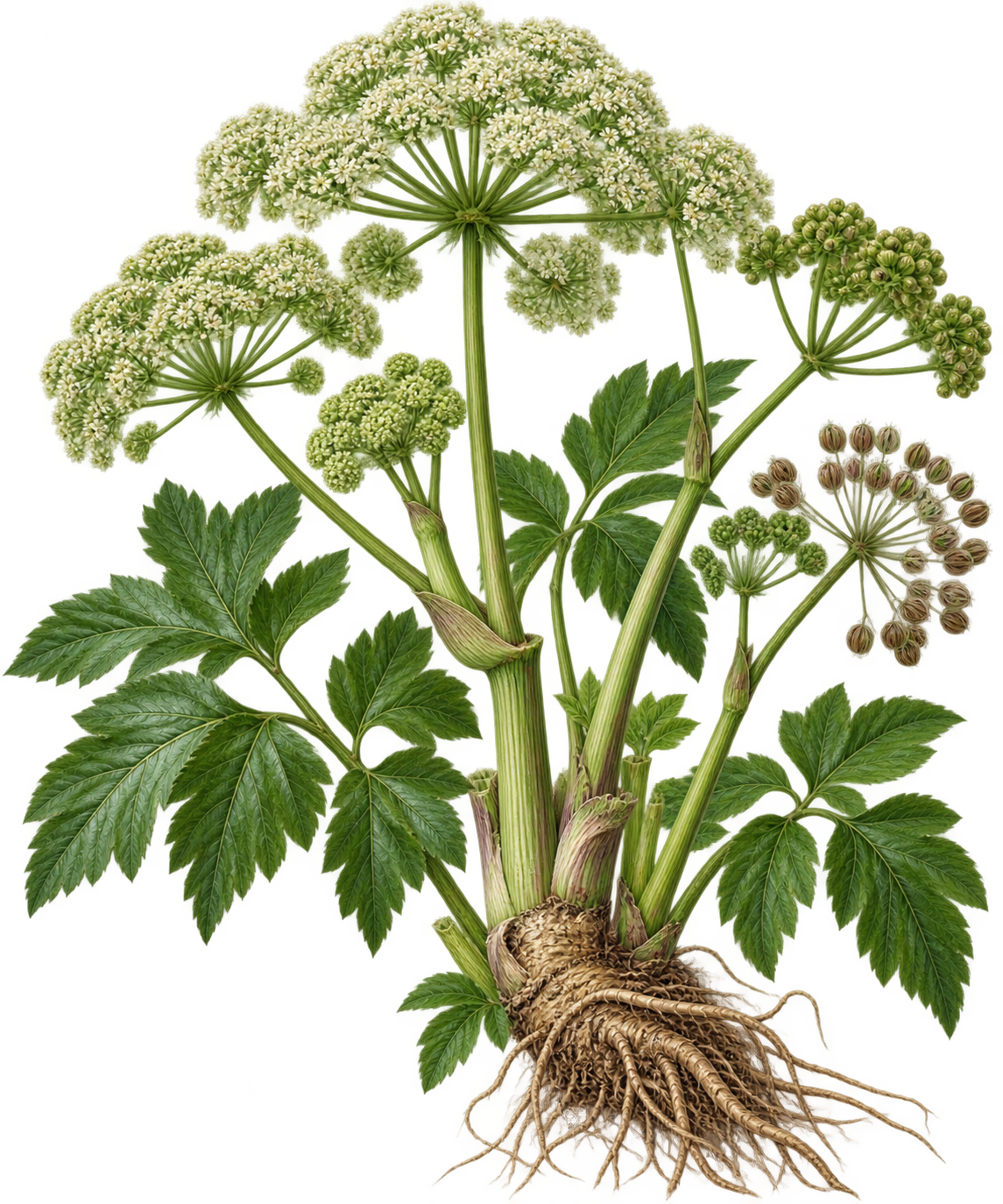
- Tall aromatic biennial/perennial with hollow grooved stems, large divided leaves and rounded umbels of greenish-white flowers. Roots, stems, leaves and fruits/seeds have all been used historically, but preparations are not interchangeable.
- Native Range
- Angelica has a long northern/central European history as food, flavoring and herbal material. Angelica species have substantial traditional-medicine records; A. archangelica became prominent in European herbals. Later European naming/folklore connected it with angels and archangels; present this as regional/later tradition, not universal ancient belief.
- Habitat
- Tall aromatic biennial/perennial with hollow grooved stems, large divided leaves and rounded umbels of greenish-white flowers. Roots, stems, leaves and fruits/seeds have all been used historically, but preparations are not interchangeable.
- Identifying Characteristics
- Tall aromatic biennial/perennial with hollow grooved stems, large divided leaves and rounded umbels of greenish-white flowers. Roots, stems, leaves and fruits/seeds have all been used historically, but preparations are not interchangeable.
Traditional & Historical Medicinal Uses
Historically an aromatic bitter and European folk herb, especially in digestive/respiratory contexts; stems have also been candied and used as flavoring. Historical use is not proof of clinical efficacy.
Magical Uses
Commonly used symbolically for protection, blessing, purification, courage, spiritual guardianship and firm boundaries. Angelic naming/history also lends itself to guidance/protection symbolism.
Modern Evidence
Historical use and laboratory research do not establish angelica as a treatment for disease. Species identity matters, and concentrated products may interact with medicines or be unsuitable in pregnancy; seek qualified guidance for medicinal use.
Notes & Personal Connection
Add your own experiences, observations, and notes about working with this plant. How does it speak to you? What is your personal connection?
Keep This Grimoire Entry
Print Page 1 and Page 2 together, single-sided or front and back.
Download to Print