Herbs & Salts Grimoire
Clove
Syzygium aromaticum (L.) Merr. & L.M.PerryQuick Reference
Traditional Uses
Clove is among the oldest globally traded spices. It has been used as a culinary seasoning, breath freshener, aromatic, incense ingredient, preservative spice, and component of traditional household and medicinal preparations. Eugenol is a major constituent of clove oil and contributes strongly to its characteristic aroma.
Magical Associations
- Protection
- prosperity
- friendship
- courage
- banishing
- purification
- warmth
- luck
- attraction
- stopping gossip
- strengthening boundaries.
Folklore
For centuries, the Maluku Islands were the world’s principal clove source, making cloves exceptionally valuable in long-distance trade. European competition for control of the spice trade dramatically reshaped clove cultivation and distribution. In later folk-magic traditions, the spice’s sharp aroma and trade value helped support associations with protection, prosperity, friendship, and keeping harmful influence away.
Core Correspondences
- Element
- Fire
- Gender
- Masculine
Witchcraft Uses
- Protection sachets and bowls
- prosperity work
- incense
- candle dressing
- friendship and reconciliation work
- banishing/clearing
- household protection
- seasonal spice blends
- simmer pots.
⚠ Caution
Dried culinary cloves are not equivalent to concentrated clove essential oil. Essential oil is potent and requires proper dilution and handling. Keep whole spices away from unattended flames. Do not intentionally inhale smoke from large quantities.
Educational purposes only. Not medical advice.How to Work With
Use whole dried cloves in simmer pots, protection bowls, charm bags, or incense blends. Their strong scent allows a small amount to carry a blend. Whole cloves can be arranged around candles without touching the flame, or combined with cinnamon and orange peel in prosperity or household-warming work.
Best Time to Harvest
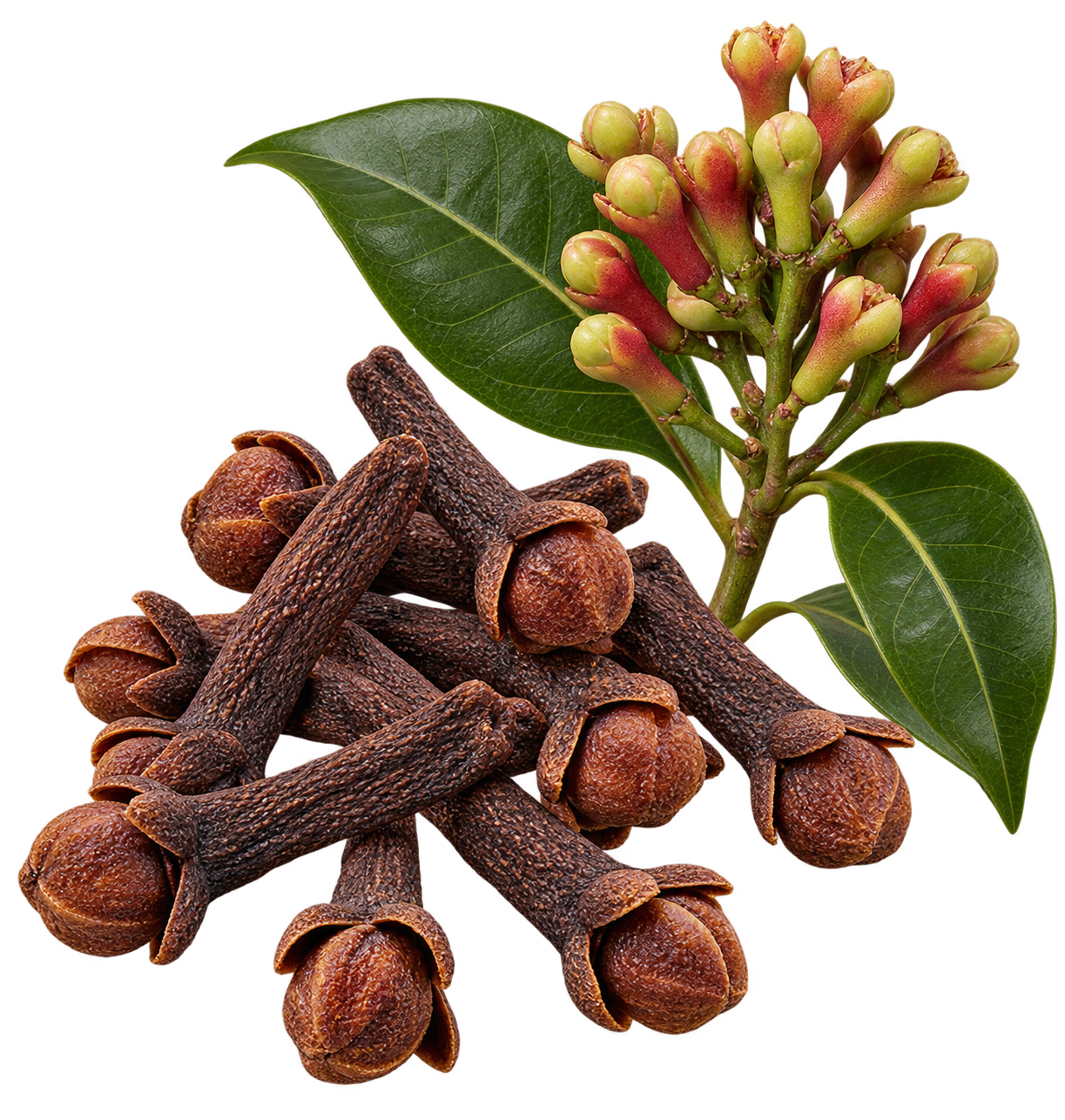
Harvest flower buds before they open, typically when they have developed full size and begin changing color toward pink/red. Commercial trees usually do not begin meaningful harvest until several years old. Buds are then dried until dark brown.
Correspondences
Page 2 of 2
Deeper Reading
Botanical Profile
- Plant Family
- Myrtaceae
- Common Names
- clove bud · Eugenia caryophyllata · Eugenia caryophyllus
- Growth Habit
- Bushy evergreen tropical tree, commonly about 8–20 m tall.
- Native Range
- Native to the Maluku Islands of Indonesia. Historical spice trade spread cultivation to other tropical regions including Zanzibar, Madagascar, Sri Lanka, parts of the Caribbean, and elsewhere.
- Habitat
- Wet tropical conditions. Kew notes clove grows well on lower-elevation tropical mountain slopes and in mixed-forest settings in its native region.
- Identifying Characteristics
- Glossy, aromatic, opposite elliptical leaves. Flower buds develop in clusters and change from pale to green and then reddish as they mature. The familiar dried spice is the unopened flower bud, with a narrow stem-like lower portion and rounded head.
- Parts Traditionally Used
- Unopened flower buds, dried as the spice clove. Leaves and stems also contain aromatic oils, but the buds are the primary culinary and ritual material.
Traditional & Historical Medicinal Uses
Clove has a long history in traditional oral and digestive remedies and as an aromatic used for tooth discomfort and breath. Eugenol-containing clove preparations are still important in dentistry and pharmacology, but concentrated clove oil is much stronger than dried spice and can irritate or injure tissue if misused. Keep historical use distinct from modern treatment advice.
Magical Uses
Protection sachets and bowls; prosperity work; incense; candle dressing; friendship and reconciliation work; banishing/clearing; household protection; seasonal spice blends; simmer pots.
Modern Evidence
Clove's culinary and traditional-use histories do not establish treatment benefits. Clove oil is highly concentrated and can injure tissue or cause poisoning; bleeding risk, children, pregnancy, and medicine interactions require caution.
Notes & Personal Connection
Add your own experiences, observations, and notes about working with this plant. How does it speak to you? What is your personal connection?
Keep This Grimoire Entry
Print Page 1 and Page 2 together, single-sided or front and back.
Download to Print