Herbs & Salts Grimoire
Nutmeg
Myristica fragrans Houtt.Quick Reference
Traditional Uses
Nutmeg has a long history as a culinary spice, preservative flavoring, fragrance, and trade commodity. It became extraordinarily valuable in early modern global trade and was central to colonial competition over the Banda Islands.
Magical Associations
- Luck
- prosperity
- abundance
- confidence
- warmth
- attraction
- protection
- success
- travel fortune.
Folklore
Because nutmeg was rare, expensive, portable, and aromatic, it accumulated associations with wealth, luck, protection, and status in European folk traditions.
Core Correspondences
Witchcraft Uses
- Prosperity work
- luck charms
- money bowls
- travel charms
- incense
- seasonal blends
- kitchen witchcraft
- success work.
⚠ Caution
Nutmeg is safe as a normal culinary spice but dangerous in large doses. High intake can cause serious poisoning. Essential oils and concentrated extracts require separate safety guidance. Keep away from pets and children.
Educational purposes only. Not medical advice.How to Work With
Use a small amount of culinary nutmeg in food-safe kitchen magic, prosperity blends, or seasonal baking. Whole nutmeg can be carried symbolically in luck charms or placed in prosperity bowls. Ground spice may be used sparingly in incense blends where safe ventilation is available.
Best Time to Harvest
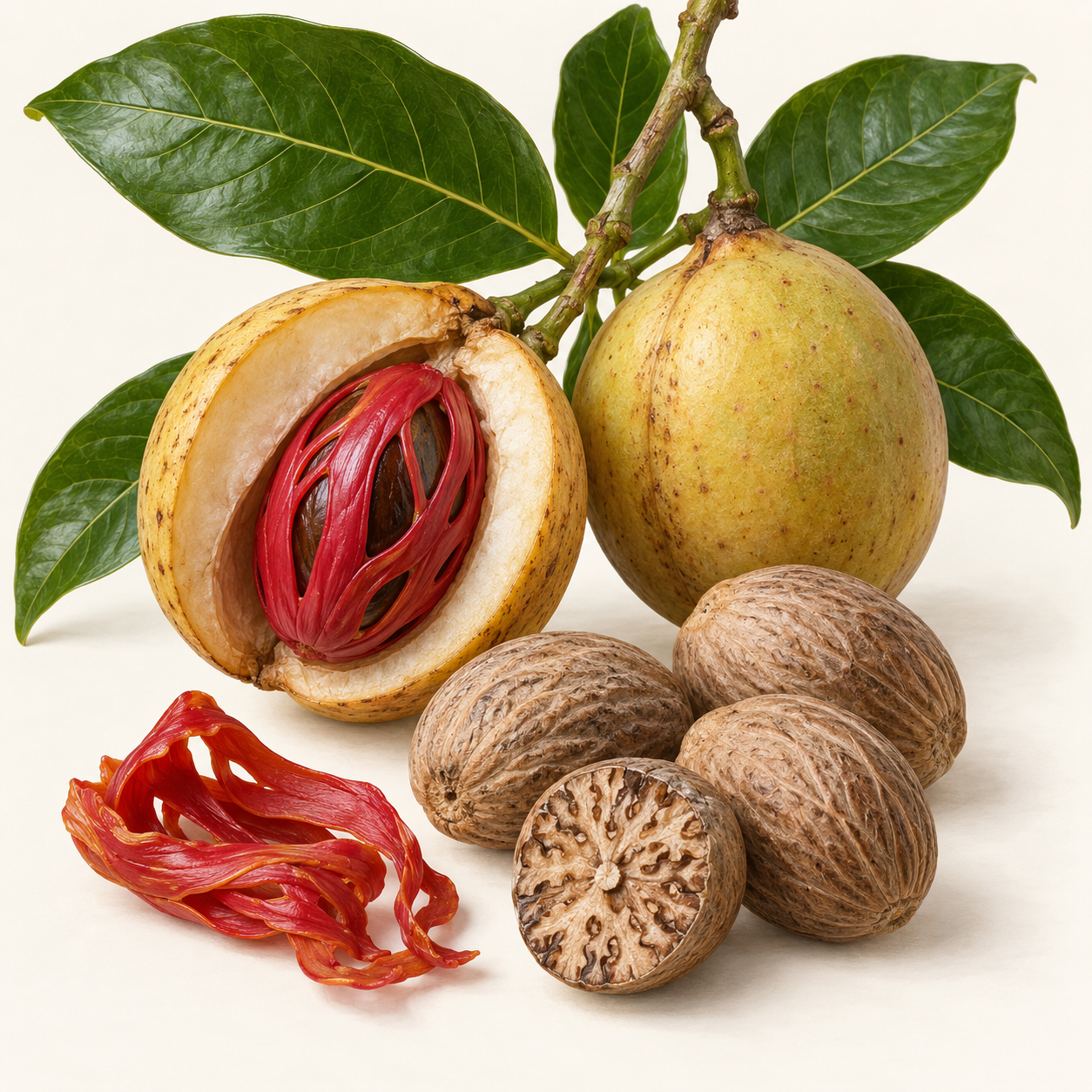
Fruit is collected when mature and naturally splits open. The aril is removed and dried separately as mace; the seed is dried before the shell is cracked and the nutmeg kernel removed.
Correspondences
- Color
- Brown, warm gold
Page 2 of 2
Deeper Reading
Botanical Profile
- Plant Family
- Myristicaceae
- Common Names
- true nutmeg. The red aril surrounding the seed is the separate spice mace.
- Growth Habit
- Evergreen tropical tree, commonly 10–20 m tall in cultivation, with separate male and female flowers usually occurring on different trees.
- Native Range
- Native to the Banda Islands in Maluku, Indonesia.
- Habitat
- Wet tropical climates with consistent warmth and rainfall. Widely cultivated in tropical regions beyond its native range.
- Identifying Characteristics
- Glossy evergreen leaves; small pale flowers; yellowish fleshy fruit that splits at maturity to reveal a dark brown seed wrapped in a bright red lacy aril. The seed becomes nutmeg; the aril becomes mace.
- Parts Traditionally Used
- Seed/kernel as nutmeg · aril as mace · oils and extracts in commercial flavoring and fragrance.
History & Cultural Context
Nutmeg and mace come from Myristica fragrans and were central to the history of the Banda Islands and the colonial spice trade. Historical culinary and medicinal use does not support dangerous high-dose experimentation.
Traditional & Historical Medicinal Uses
Nutmeg has appeared historically in digestive, warming, and sleep-related remedies across several medical traditions. High-dose nutmeg can be toxic and psychoactive, so historical use must never be presented as encouragement to self-dose.
Magical Uses
Prosperity work; luck charms; money bowls; travel charms; incense; seasonal blends; kitchen witchcraft; success work.
Modern Evidence
Normal culinary quantities are distinct from high-dose exposure. Nutmeg intoxication can cause serious neurologic, cardiovascular, and psychiatric effects; this record does not describe or endorse misuse, and historical use is not evidence of therapeutic benefit.
Notes & Personal Connection
Add your own experiences, observations, and notes about working with this plant. How does it speak to you? What is your personal connection?
Keep This Grimoire Entry
Print Page 1 and Page 2 together, single-sided or front and back.
Download to Print