Herbs & Salts Grimoire
Orange Peel
Sweet orange: Citrus × sinensis (L.) Osbeck; Kew currently treats this name within Citrus × aurantium f. aurantium.Quick Reference
Traditional Uses
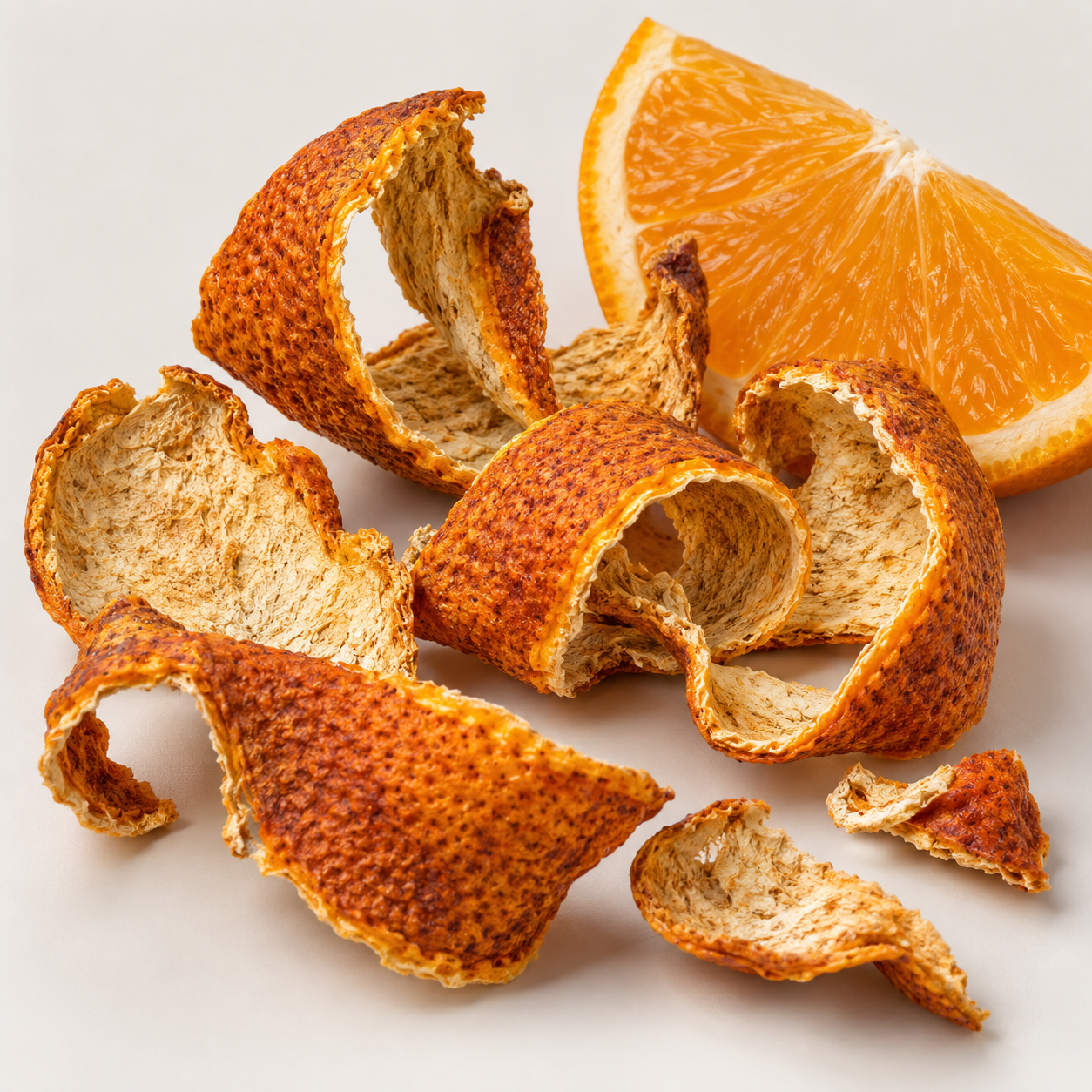
Orange peel has long been used as a culinary aromatic in cakes, confectionery, marmalade, candied peel, syrups, liqueurs, spice blends, and household fragrance. The peel’s essential-oil-rich outer layer is especially valued for aroma and flavor.
Magical Associations
- Joy
- vitality
- success
- prosperity
- attraction
- confidence
- warmth
- optimism
- road opening
- household blessing
- creativity
- solar energy.
Folklore
Citrus fruits traveled through long trade networks from Asia into the Mediterranean and later the Americas. In Europe, oranges became associated with luxury, winter festivity, hospitality, and prosperity because they were once costly imports and prized greenhouse fruits. Orange blossom developed its own strong wedding symbolism, while the fruit and peel became seasonal symbols of brightness during winter.
Core Correspondences
Witchcraft Uses
- Prosperity work
- road-opening work
- confidence and success rituals
- attraction work
- home blessing
- simmer pots
- incense
- ritual oils
- seasonal winter work
- solar magic
- offerings where appropriate.
⚠ Caution
Use food-grade peel for food and drink. Citrus essential oils and peel compounds can irritate sensitive skin; concentrated essential oils require separate dilution and phototoxicity guidance depending on extraction method. Keep simmer pots attended.
Educational purposes only. Not medical advice.How to Work With
Use dried peel in simmer pots, loose incense blends, charm bags, prosperity bowls, or ritual oils made by safe infusion methods. Fresh zest may be used in food rituals when the fruit is food-grade. Pair with cinnamon or clove for warmth and momentum, or with rosemary for a bright household-cleansing blend.
Best Time to Harvest
Harvest peel from mature, sound fruit when the orange has developed full color and aroma. For dried peel, use clean food-grade fruit and dry the peel thoroughly before storage.
Correspondences
- Color
- Orange, gold, yellow
Page 2 of 2
Deeper Reading
Botanical Profile
- Plant Family
- Rutaceae
- Common Names
- Sweet orange peel · orange rind · orange zest · dried orange peel.
- Growth Habit
- Broadleaf evergreen citrus tree, often 8–10 m tall when mature, though cultivated trees vary.
- Native Range
- Sweet orange is an ancient cultivated hybrid with ancestry from mandarin- and pummelo-related citrus. Recent genomic research supports domestication in southern China. It is now cultivated throughout tropical and subtropical regions worldwide.
- Habitat
- Warm tropical to subtropical climates; full sun; well-drained soil; frost tender. Commercial trees are commonly grafted.
- Identifying Characteristics
- Evergreen tree with glossy aromatic leaves, fragrant white flowers, and round to oval orange fruit. The peel has an orange outer flavedo rich in aromatic oil glands and a paler spongy inner pith.
- Parts Traditionally Used
- Fruit peel/rind and zest · fruit and juice. For this Grimoire entry, focus specifically on the peel.
History & Cultural Context
Sweet orange developed through long citrus cultivation and trade in Asia before spreading widely through global horticulture and cuisine. Dried peel has distinct culinary and traditional histories; these are not evidence for modern disease-treatment claims.
Traditional & Historical Medicinal Uses
Different Citrus species have distinct medicinal traditions, so sweet orange peel should not be conflated with every citrus materia medica. Sweet orange peel has been used as an aromatic and digestive household ingredient, while aged mandarin peel has a separate formal history in Chinese medicine.
Magical Uses
Prosperity work; road-opening work; confidence and success rituals; attraction work; home blessing; simmer pots; incense; ritual oils; seasonal winter work; solar magic; offerings where appropriate.
Modern Evidence
Sweet orange peel is a food and flavoring with traditional-use history. Evidence does not establish it as a disease treatment, and concentrated peel extracts or essential oils are not equivalent to culinary peel and require separate safety guidance.
Notes & Personal Connection
Add your own experiences, observations, and notes about working with this plant. How does it speak to you? What is your personal connection?
Keep This Grimoire Entry
Print Page 1 and Page 2 together, single-sided or front and back.
Download to Print