Return to entryChecking Chicory printable layout…
Herbs & Salts Grimoire

Chicory

Cichorium intybus L.

Traditional Uses

Chicory has a long history as food and bitter herb.

Folklore

Chicory has been cultivated as a food plant for centuries. Kew notes cultivation as food dating back to antiquity and explains that roasted chicory root became important as a coffee substitute or additive from the late eighteenth century onward.

Magical Associations

  • Road opening
  • Removing obstacles
  • Freedom
  • Resilience

Core Correspondences

Element:
Earth
Planet:
Sun and · use as
Energy:
resilience · opening roads

Witchcraft Uses

  • Road-opening work
  • “Get to the root” reflection
  • Resilience charms
  • Career/opportunity rituals
  • Release from stagnation

Caution

Chicory is in Asteraceae; people with allergies to members of the daisy family may need caution.

Educational purposes only. Not medical advice.

How to Work With

Keep a dried root piece in a labeled bowl for road-opening symbolism. Use blue flower imagery in a journal or altar for persistence.

Best Time to Harvest

Young leaves: spring before they become very bitter Roots: typically after a season of growth, often autumn for root.

Correspondences

Color: clear blue · green • Season: summer flowers · autumn root

Herbs & Salts Grimoire

Chicory

Cichorium intybus L.

Botanical Profile

Plant FamilyAsteraceae
Common NamesChicory · Common chicory · wild chicory
Alternate NamesCommon chicory · wild chicory · succory
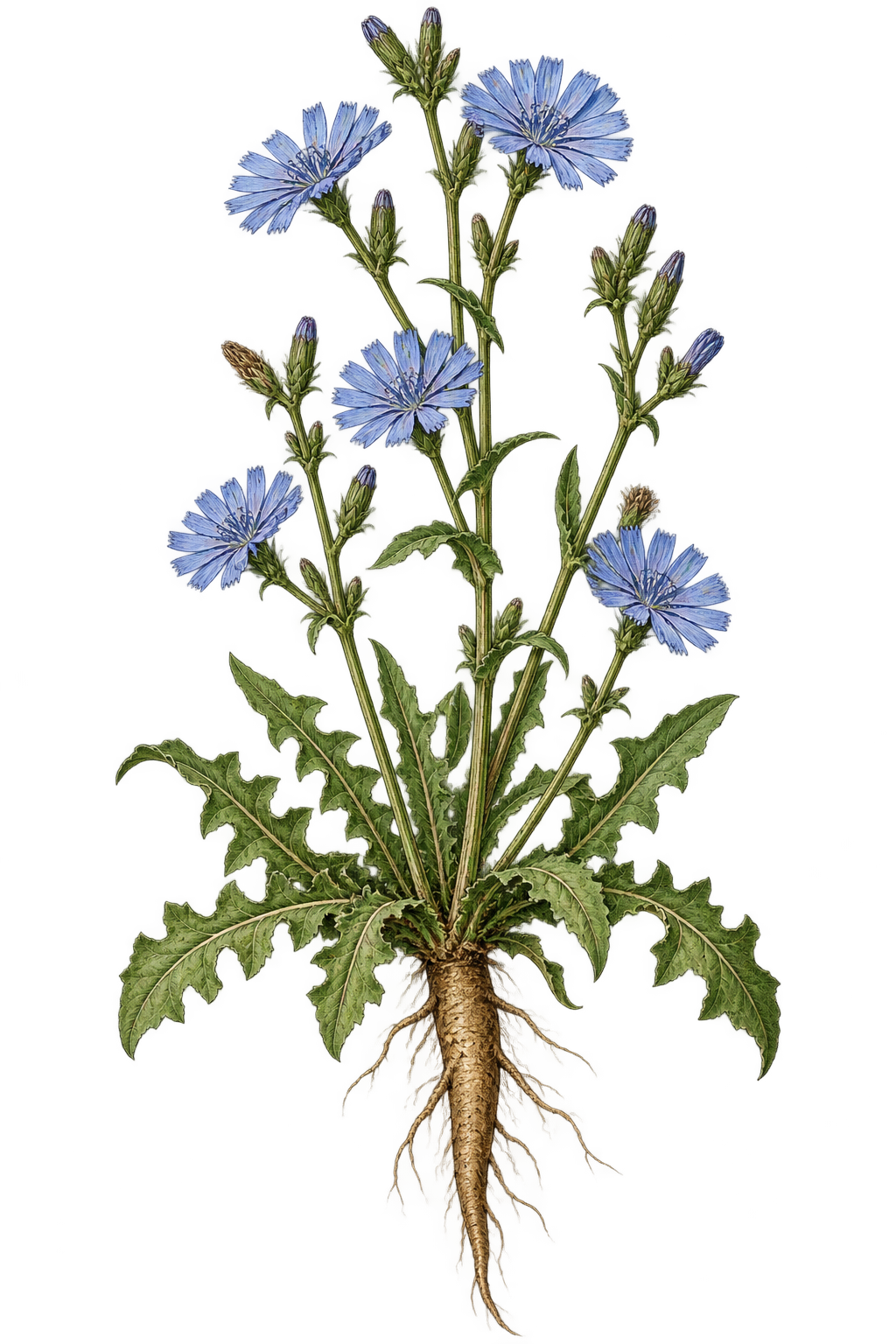
Growth HabitPerennial herb with a stout taproot and branching stems, often 30–120 cm
Native RangeKew lists chicory as native across Europe into Central Asia and the
HabitatChicory commonly appears in roadsides, disturbed ground, pastures, field edges, and open sunny soils
Identifying CharacteristicsTypical wild chicory features: Stiff, branching stems Deep taproot Basal leaves often lobed, somewhat dandelion-like Upper leaves
Parts Traditionally UsedRoot · Leaves

Traditional Uses & Modern Evidence

Historical/traditional use — not a statement of proven modern effectiveness. The European Medicines Agency recognizes long-standing traditional use of chicory root for mild digestive complaints such as fullness, flatulence, and slow digestion, and for temporary loss of appetite. The basis is traditional use rather than strong modern clinical-trial evidence. Chicory root contains inulin and other compounds of modern nutritional and research interest.

Magical & Spiritual Practice

Road opening Removing obstacles Freedom Resilience Persistence Clarity Bitter truth Root work Independence Opportunity Endurance Road-opening work “Get to the root” reflection Resilience charms Career/opportunity rituals Release from stagnation Bitter-truth or clarity work Threshold work Grounding through long-term persistence Prosperity work focused on opportunity rather than guaranteed wealth Keep a dried root piece in a labeled bowl for road-opening symbolism. Use blue flower imagery in a journal or altar for persistence.

Notes & Personal Connection

Add your own experiences, observations, and notes about working with this plant. How does it speak to you? What is your personal connection?

Safety & Caution

Chicory is in Asteraceae; people with allergies to members of the daisy family may need caution.

Sources & Research Notes

Royal Botanic Gardens, Kew • European Medicines Agency