Herbs & Salts Grimoire
Chicory
Cichorium intybus L.Quick Reference
Traditional Uses
Chicory has a long history as food and bitter herb.
Magical Associations
- Road opening
- Removing obstacles
- Freedom
- Resilience
- Persistence
- Clarity
- Bitter truth
- Root work
- Independence
- Opportunity
- Endurance
Folklore
Chicory has been cultivated as a food plant for centuries. Kew notes cultivation as food dating back to antiquity and explains that roasted chicory root became important as a coffee substitute or additive from the late eighteenth century onward.
Core Correspondences
- Element
- Earth
Witchcraft Uses
- Road-opening work
- “Get to the root” reflection
- Resilience charms
- Career/opportunity rituals
- Release from stagnation
- Bitter-truth or clarity work
- Threshold work
- Grounding through long-term persistence
- Prosperity work focused on opportunity rather than guaranteed wealth
⚠ Caution
Chicory is in Asteraceae; people with allergies to members of the daisy family may need caution. Medicinal use in pregnancy, breastfeeding, children, or alongside medications should be discussed with an appropriate healthcare professional. High-inulin foods can cause gas, bloating, or digestive discomfort in some people.
Educational purposes only. Not medical advice.How to Work With
Keep a dried root piece in a labeled bowl for road-opening symbolism. Use blue flower imagery in a journal or altar for persistence. Pair chicory with a practical plan when working on opportunities. Write an obstacle on paper and place it beneath a symbolic key and chicory root. Work with the prompt: What obstacle actually needs removing, and what skill do I need to build to pass through it? If using culinary chicory, let bitterness symbolize truth or discernment without assuming bitterness is medicinally necessary.
Best Time to Harvest
Young leaves: spring before they become very bitter Roots: typically after a season of growth, often autumn for root use Flowers: during active flowering if used symbolically or decoratively Do not harvest roadside plants where soil, herbicide, exhaust, or animal contamination is a concern.
Correspondences
Page 2 of 2
Deeper Reading
Botanical Profile
- Plant Family
- Asteraceae
- Common Names
- Common chicory · wild chicory · succory · blue daisy · blue sailors · cultivated forms include radicchio and witloof/endive-type chicories
- Growth Habit
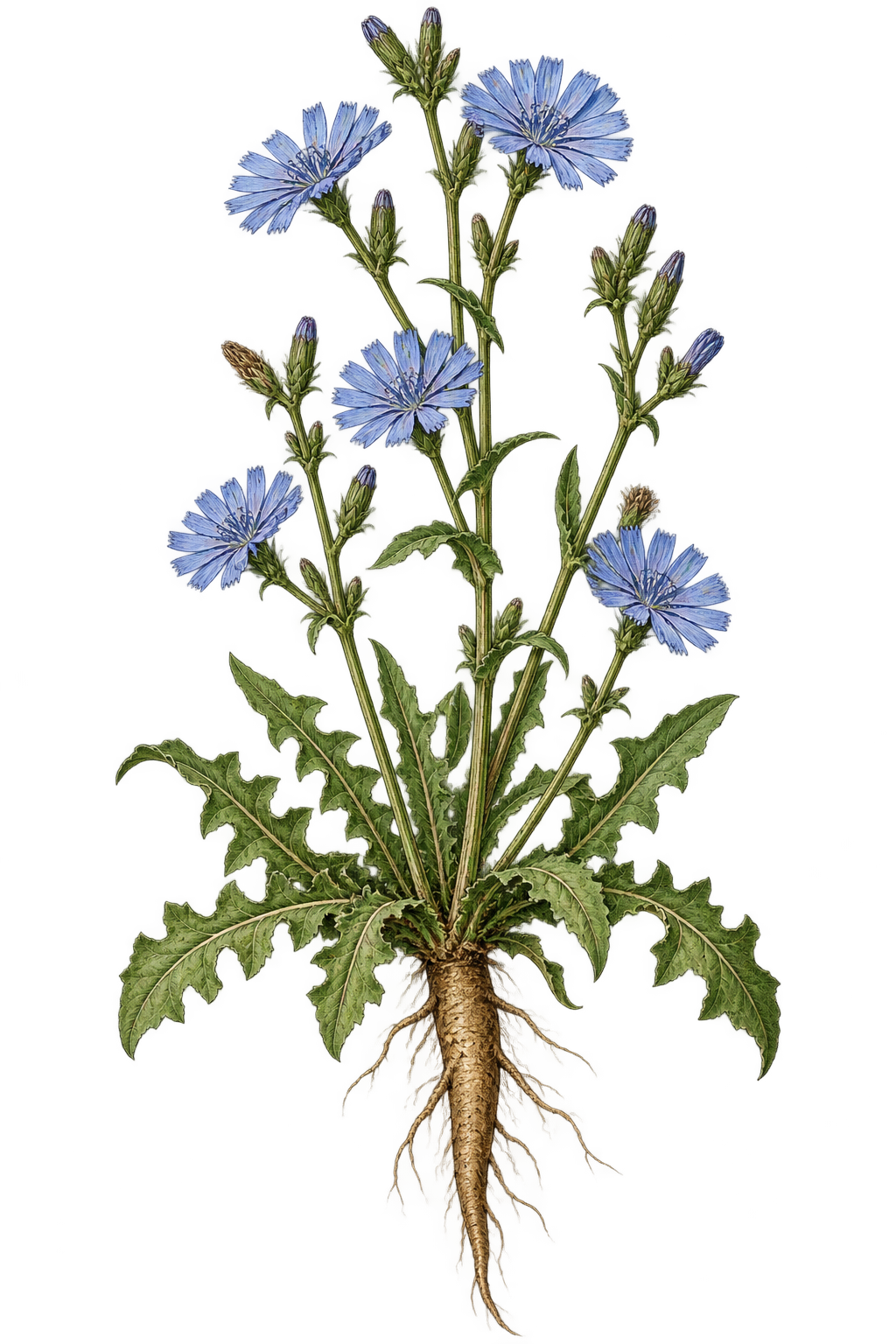
- Perennial herb with a stout taproot and branching stems, often 30–120 cm tall depending on conditions.
- Native Range
- Kew lists chicory as native across Europe into Central Asia and the western Himalaya, and from Macaronesia into North Africa. It is now widely naturalized elsewhere.
- Habitat
- Chicory commonly appears in roadsides, disturbed ground, pastures, field edges, and open sunny soils. Cultivated forms are grown for: Leaves Radicchio-type heads Blanched chicons Roots used as coffee flavoring/substitute It prefers full sun and well-drained soil and is notably tolerant once established.
- Identifying Characteristics
- Typical wild chicory features: Stiff, branching stems Deep taproot Basal leaves often lobed, somewhat dandelion-like Upper leaves smaller and clasping the stem Bright sky-blue flower heads, occasionally pink or white Flower heads often open for only part of the day and each head is short-lived Do not identify it from flower color alone.
- Parts Traditionally Used
- Root · Leaves · Young shoots · Flowers less commonly in food/folk preparations
Taxonomic Note
Chicory (C. intybus) should not be confused with true endive, Cichorium endivia, although common names overlap in culinary use.
History & Cultural Context
Chicory has been cultivated as a food plant for centuries. Kew notes cultivation as food dating back to antiquity and explains that roasted chicory root became important as a coffee substitute or additive from the late eighteenth century onward. Modern folk-magic sources sometimes give chicory associations with opening obstacles, freedom, favor, protection, road-opening, and endurance. Those magical meanings are best treated as later folk/occult correspondences rather than documented universal ancient beliefs. The blue roadside flower also makes a strong modern symbol of persistence in difficult places.
Traditional & Historical Medicinal Uses
Historical/traditional use — not a statement of proven modern effectiveness. The European Medicines Agency recognizes long-standing traditional use of chicory root for mild digestive complaints such as fullness, flatulence, and slow digestion, and for temporary loss of appetite. The basis is traditional use rather than strong modern clinical-trial evidence.
Magical Uses
Road opening Removing obstacles Freedom Resilience Persistence Clarity Bitter truth Root work Independence Opportunity Endurance Road-opening work “Get to the root” reflection Resilience charms Career/opportunity rituals Release from stagnation Bitter-truth or clarity work Threshold work Grounding through long-term persistence Prosperity work focused on opportunity rather than guaranteed wealth Keep a dried root piece in a labeled bowl for road-opening symbolism. Use blue flower imagery in a journal or altar for persistence. Pair chicory with a practical plan when working on opportunities. Write an obstacle on paper and place it beneath a symbolic key and chicory root. Work with the prompt: What obstacle actually needs removing, and what skill do I need to build to pass through it? If using culinary chicory, let bitterness symbolize truth or discernment without assuming bitterness is medicinally necessary.
Modern Evidence
Chicory root contains inulin and other compounds of modern nutritional and research interest. However, this Grimoire should not turn prebiotic research or traditional bitter-herb use into a claim that chicory treats gastrointestinal disease. The EMA’s conclusion is specifically a traditional-use assessment.
Notes & Personal Connection
Add your own experiences, observations, and notes about working with this plant. How does it speak to you? What is your personal connection?
Keep This Grimoire Entry
Print Page 1 and Page 2 together, single-sided or front and back.
Download to Print