Return to entryChecking Damiana printable layout…
Herbs & Salts Grimoire

Damiana

Turnera diffusa Willd. ex Schult.

Traditional Uses

Damiana has a substantial ethnobotanical record in Mexico, Central America, and elsewhere in the Americas.

Folklore

Damiana’s cultural history is strongest in Mexico, Central America, the Caribbean, and the southern parts of North America.

Magical Associations

  • Desire
  • Sensuality
  • Attraction
  • Confidence

Core Correspondences

Element:
Fire is · Air may
Planet:
Venus is · Mars may
Energy:
desire · pleasure

Witchcraft Uses

  • Self-confidence rituals
  • Attraction work that emphasizes consent rather than
  • Sensuality and embodiment practices
  • Reclaiming desire after shame or disconnection
  • Relationship reflection

Caution

Human clinical evidence is limited. Traditional use does not establish safety for every person or every preparation.

Educational purposes only. Not medical advice.

How to Work With

Use dried damiana in a labeled ritual bowl or sachet. Add it symbolically to self-confidence or desire-focused altar work.

Best Time to Harvest

Where grown and positively identified, leafy aerial growth is generally collected during active growth, often around flowering, then dried.

Correspondences

Color: warm green · gold • Season: warm-season / sun-associated

Herbs & Salts Grimoire

Damiana

Turnera diffusa Willd. ex Schult.

Botanical Profile

Plant FamilyPassifloraceae
Common NamesDamiana · genuine damiana
Alternate NamesDamiana · genuine damiana
Growth HabitLow, densely branched shrub or subshrub, often under about 1–1
Native RangeKew lists T
HabitatDamiana is associated with warm, dry, seasonally dry tropical and subtropical environments
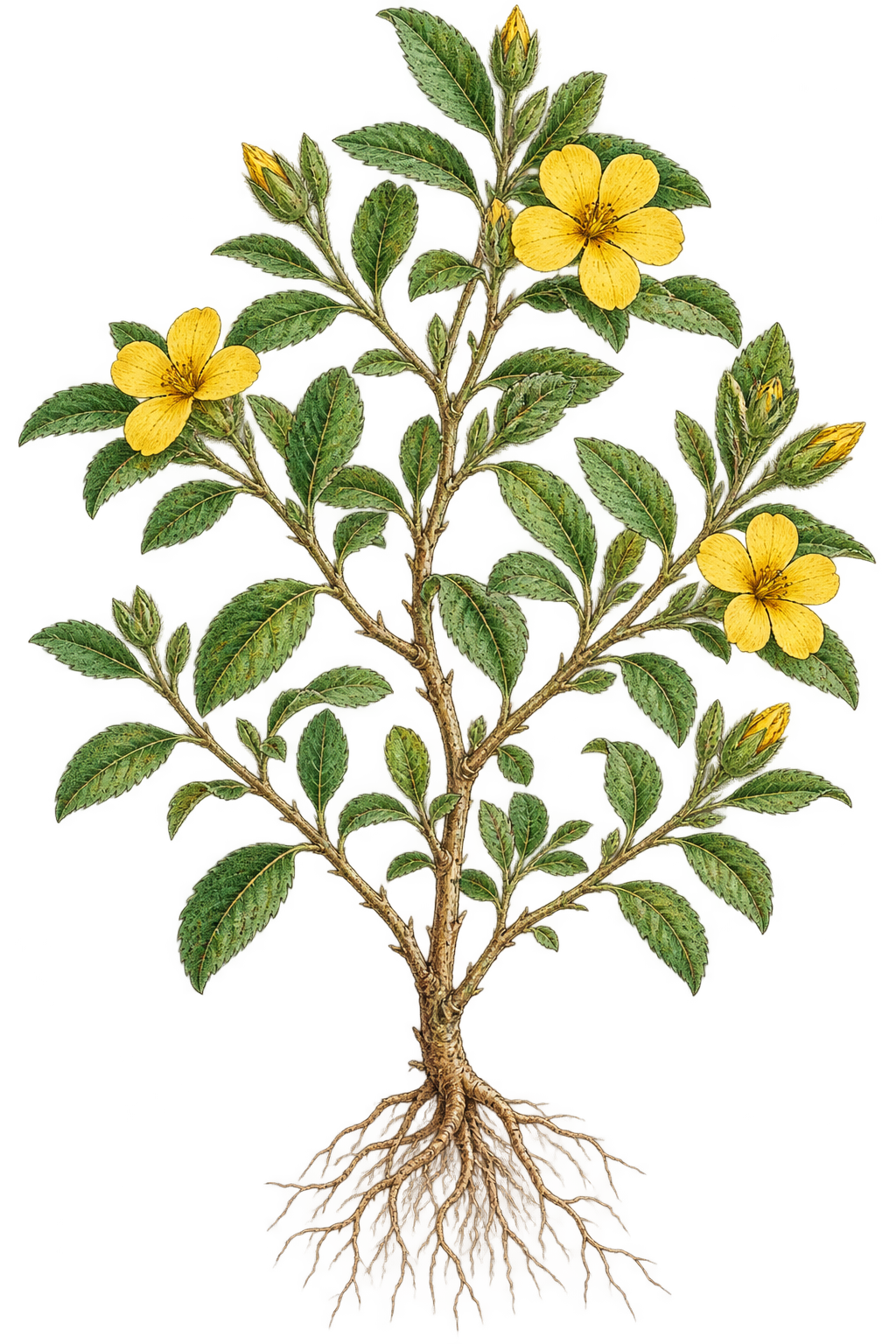
Identifying CharacteristicsTypical features include: Highly branched woody shrub Small aromatic leaves Leaves often obovate to oblanceolate with toothed
Parts Traditionally UsedLeaves · Aerial parts

Traditional Uses & Modern Evidence

Historical/traditional use — not a statement of proven modern effectiveness. Ethnobotanical reviews document traditional use as tonic, aphrodisiac, stimulant, digestive aid, and in various urinary, menstrual, respiratory, and weakness-related complaints in different regional traditions. The breadth of reported uses reflects multiple folk traditions and historical sources; it should not be treated as one standardized medical system. A major 2014 review found that much damiana research is chemical, cell-based, or animal research.

Magical & Spiritual Practice

Desire Sensuality Attraction Confidence Vitality Pleasure Self-possession Sexual agency Charisma Creative heat Relationship work grounded in consent Self-confidence rituals Attraction work that emphasizes consent rather than control Sensuality and embodiment practices Reclaiming desire after shame or disconnection Relationship reflection Creative inspiration Fire-element work Glamour work centered on presence and confidence rather than manipulation Use dried damiana in a labeled ritual bowl or sachet. Add it symbolically to self-confidence or desire-focused altar work.

Notes & Personal Connection

Add your own experiences, observations, and notes about working with this plant. How does it speak to you? What is your personal connection?

Safety & Caution

Human clinical evidence is limited. Traditional use does not establish safety for every person or every preparation.

Sources & Research Notes

Royal Botanic Gardens, Kew • Szewczyk & Zidorn, 2014, Journal of • 2023 open-access review of Turnera bioactivity