Herbs & Salts Grimoire
Damiana
Turnera diffusa Willd. ex Schult.Quick Reference
Traditional Uses
Damiana has a substantial ethnobotanical record in Mexico, Central America, and elsewhere in the Americas.
Magical Associations
- Desire
- Sensuality
- Attraction
- Confidence
- Vitality
- Pleasure
- Self-possession
- Sexual agency
- Charisma
- Creative heat
- Relationship work grounded in consent
Folklore
Damiana’s cultural history is strongest in Mexico, Central America, the Caribbean, and the southern parts of North America.
Core Correspondences
Witchcraft Uses
- Self-confidence rituals
- Attraction work that emphasizes consent rather than control
- Sensuality and embodiment practices
- Reclaiming desire after shame or disconnection
- Relationship reflection
- Creative inspiration
- Fire-element work
- Glamour work centered on presence and confidence rather than manipulation
⚠ Caution
Human clinical evidence is limited. Traditional use does not establish safety for every person or every preparation. Published reviews note cyanogenic glycosides among constituents reported in Turnera species; concentrated or poorly characterized products deserve caution.
Educational purposes only. Not medical advice.How to Work With
Use dried damiana in a labeled ritual bowl or sachet. Add it symbolically to self-confidence or desire-focused altar work. Pair it with journaling about what you actually want, not what you think you should want. Use it in relationship work only where the intention respects another person’s autonomy. Work with the question: What do I desire when I stop performing desire for someone else? If scent is comfortable, use the dried herb as an aromatic altar botanical rather than assuming ingestion is necessary.
Best Time to Harvest
Where grown and positively identified, leafy aerial growth is generally collected during active growth, often around flowering, then dried promptly in good airflow. For ritual work, purchasing correctly identified plant material from a reputable source is often more practical than wild harvesting.
Correspondences
- Color
- warm greengoldyellow
Page 2 of 2
Deeper Reading
Botanical Profile
- Plant Family
- Passifloraceae
- Common Names
- genuine damiana
- Growth Habit
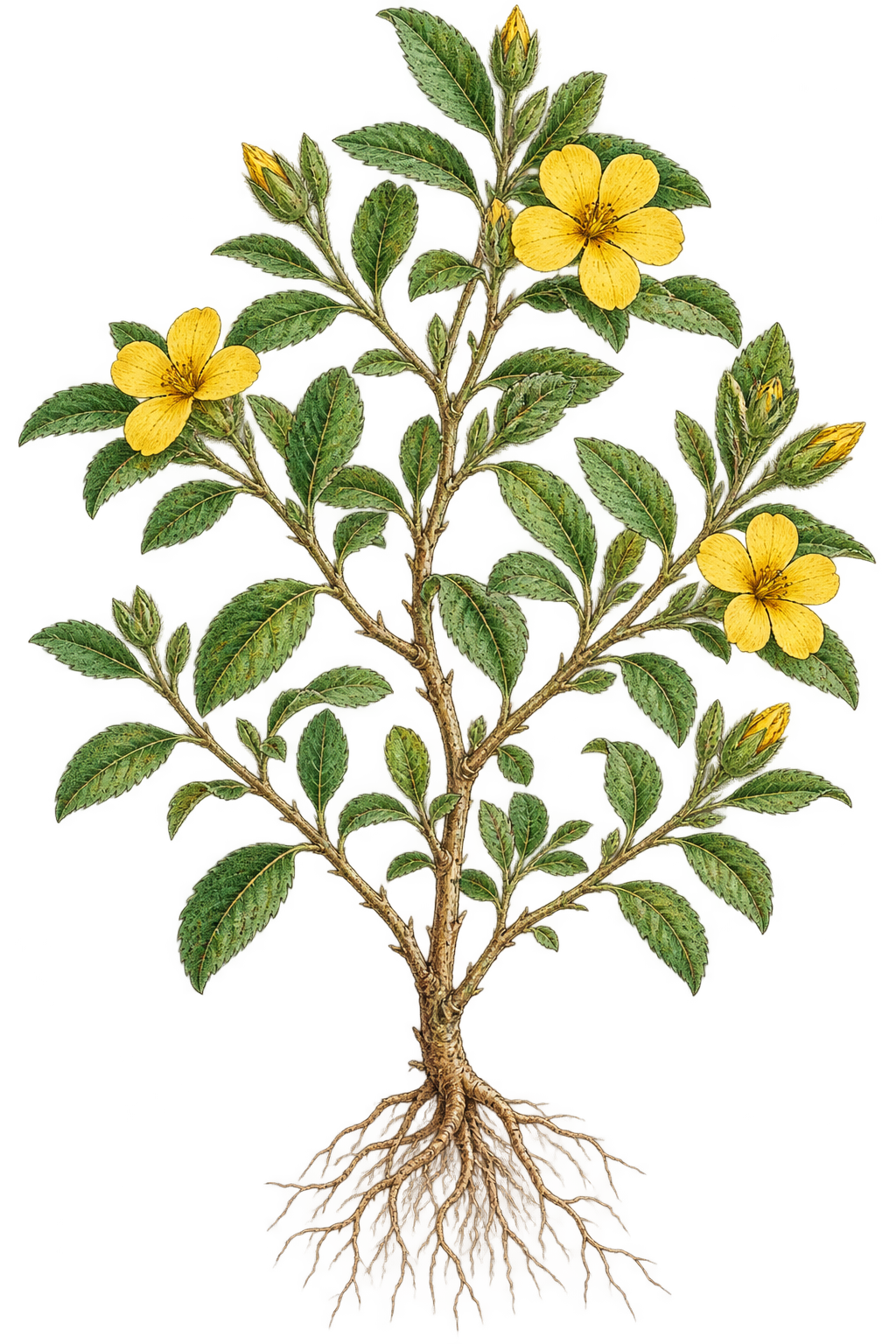
- Low, densely branched shrub or subshrub, often under about 1–1.5 meters depending on conditions.
- Native Range
- Kew lists T. diffusa as native from southern Texas through Mexico and Central America, parts of the Caribbean, and eastern Brazil. This is a plant of the Americas, not a generic “European witch herb.” Cultural and ethnobotanical framing should reflect that.
- Habitat
- Damiana is associated with warm, dry, seasonally dry tropical and subtropical environments. Cultivation generally favors: Strong sun Warm temperatures Fast-draining soil Protection from hard frost Moderation rather than constant wet soil Outside warm climates, it may require container culture or protected overwintering.
- Identifying Characteristics
- Typical features include: Highly branched woody shrub Small aromatic leaves Leaves often obovate to oblanceolate with toothed margins Yellow five-petaled flowers Small capsule-like fruits Noticeable fragrance when foliage is handled Accurate identification matters because dried commercial herbs can be difficult to verify visually.
- Parts Traditionally Used
- Leaves · Aerial parts
Taxonomic Note
Older literature may place Turnera in Turneraceae. Current Kew taxonomy places Turnera diffusa in Passifloraceae.
History & Cultural Context
Damiana’s cultural history is strongest in Mexico, Central America, the Caribbean, and the southern parts of North America. Modern occult sources often compress that history into “love herb” or “lust herb.” A more respectful approach is to acknowledge that its sensual/aphrodisiac reputation grew from regional ethnobotanical use and later commercial herbalism, while avoiding fabricated claims about a single ancient ritual tradition. The plant also entered commercial patent medicines, tonics, liqueurs, and sexual-health marketing in the nineteenth and twentieth centuries.
Traditional & Historical Medicinal Uses
Historical/traditional use — not a statement of proven modern effectiveness. Ethnobotanical reviews document traditional use as tonic, aphrodisiac, stimulant, digestive aid, and in various urinary, menstrual, respiratory, and weakness-related complaints in different regional traditions. The breadth of reported uses reflects multiple folk traditions and historical sources; it should not be treated as one standardized medical system.
Magical Uses
Desire Sensuality Attraction Confidence Vitality Pleasure Self-possession Sexual agency Charisma Creative heat Relationship work grounded in consent Self-confidence rituals Attraction work that emphasizes consent rather than control Sensuality and embodiment practices Reclaiming desire after shame or disconnection Relationship reflection Creative inspiration Fire-element work Glamour work centered on presence and confidence rather than manipulation Use dried damiana in a labeled ritual bowl or sachet. Add it symbolically to self-confidence or desire-focused altar work. Pair it with journaling about what you actually want, not what you think you should want. Use it in relationship work only where the intention respects another person’s autonomy. Work with the question: What do I desire when I stop performing desire for someone else? If scent is comfortable, use the dried herb as an aromatic altar botanical rather than assuming ingestion is necessary.
Modern Evidence
A major 2014 review found that much damiana research is chemical, cell-based, or animal research. Human studies involving sexual function or weight-related outcomes often used multi-ingredient formulas, making it difficult to attribute effects to damiana alone. A 2023 review similarly concluded that several biological activities appear promising in preclinical research but that more clinical trials are needed. So: Its reputation as an aphrodisiac is historically well established. Evidence for a reliable clinical aphrodisiac effect in humans remains insufficient.
Notes & Personal Connection
Add your own experiences, observations, and notes about working with this plant. How does it speak to you? What is your personal connection?
Keep This Grimoire Entry
Print Page 1 and Page 2 together, single-sided or front and back.
Download to Print