Herbs & Salts Grimoire
Cacao / Cocoa Nibs
Theobroma cacao L.Quick Reference
Traditional Uses
Cacao has long been used as food, beverage, trade good, ceremonial ingredient, and luxury commodity. Processed forms include drinking chocolate, cocoa, nibs, chocolate, and various culinary preparations.
Magical Associations
- Love
- pleasure
- comfort
- abundance
- attraction
- hospitality
- celebration
- sensuality
- creativity
- warmth
- devotion to the heart.
Folklore
Cacao held ceremonial, social, and economic importance in several Indigenous American cultures, including among the Maya and Mexica/Aztec, and it has a deeper history reaching back beyond them. It functioned as ritual beverage, status good, and in some settings a form of tribute or currency. In later global history, chocolate became associated with pleasure, luxury, courtship, comfort, and hospitality.
Core Correspondences
Witchcraft Uses
- Self-love and comfort rituals
- abundance work
- offerings
- feast and holiday rites
- heart-centered altar work
- love and friendship workings
- devotional treats
- journaling or shadow-work support through ritual beverage making.
⚠ Caution
Use only food-grade cacao for consumption. Chocolate and cacao products are unsafe for many pets, especially dogs. Caffeine and theobromine may not be suitable for everyone. Ritual use does not override allergy, stimulant, or dietary considerations.
Educational purposes only. Not medical advice.How to Work With
Use food-grade cacao or nibs in ritual drinks, offerings, simmered beverages, baked goods for feast days, or self-love practices centered on intention and comfort. Nibs can also be added symbolically to abundance bowls, gratitude altars, or offerings where food is appropriate and can be handled respectfully.
Best Time to Harvest
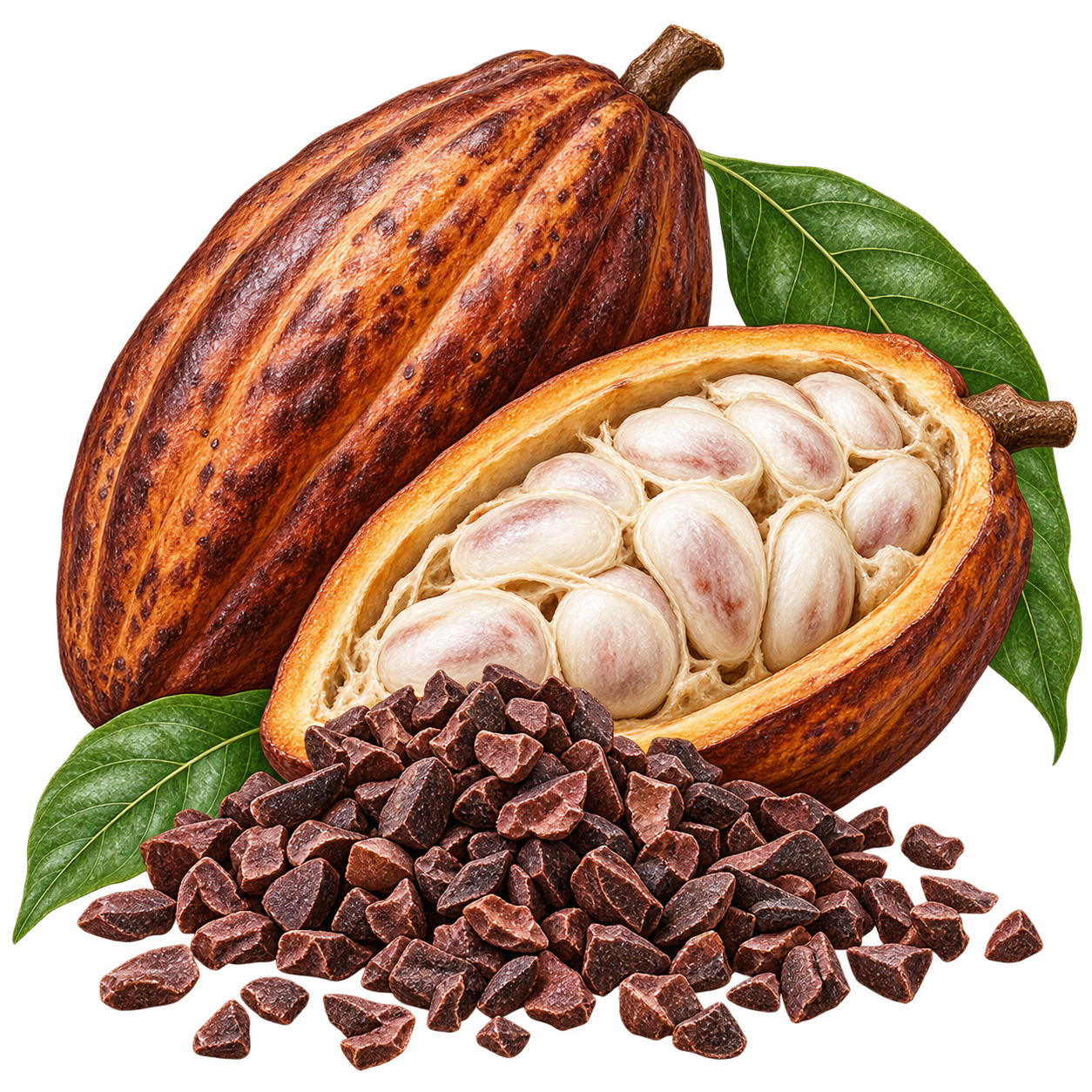
Pods are harvested when fully mature, usually when they change color according to cultivar. Seeds are removed, fermented, dried, and often roasted before becoming nibs or other cacao products.
Correspondences
Page 2 of 2
Deeper Reading
Botanical Profile
- Plant Family
- Malvaceae
- Common Names
- Cacao · cocoa · cocoa nibs · cacao beans · chocolate tree.
- Growth Habit
- Small tropical evergreen tree, usually cultivated as an understory crop in humid forest systems.
- Native Range
- Theobroma cacao is native to the American tropics. Research places early domestication and long cultural development within tropical regions of Central and South America, with especially important deep history in Mesoamerican and other Indigenous American traditions.
- Habitat
- Warm, humid tropical environments with shade, rainfall, and rich well-drained soil. The tree produces cauliflorous flowers and pods directly on the trunk and older branches.
- Identifying Characteristics
- Glossy evergreen leaves, small flowers borne on trunk or larger branches, and ribbed pods that contain rows of seeds surrounded by sweet mucilage. “Cocoa nibs” are broken pieces of fermented, dried, roasted cacao seeds.
- Parts Traditionally Used
- Seeds/beans, nibs, paste, powder, butter, husk, and beverages derived from processed cacao.
Traditional & Historical Medicinal Uses
Historical cacao preparations have appeared in household and medicinal contexts, and modern research discusses cacao’s flavanols, theobromine, and related constituents.
Magical Uses
Self-love and comfort rituals; abundance work; offerings; feast and holiday rites; heart-centered altar work; love and friendship workings; devotional treats; journaling or shadow-work support through ritual beverage making.
Modern Evidence
Cacao is a food with extensive Mesoamerican history. Research on cocoa constituents does not validate broad ceremonial or medical claims, and modern spiritual cacao practice should not be presented as an unchanged ancient tradition.
Notes & Personal Connection
Add your own experiences, observations, and notes about working with this plant. How does it speak to you? What is your personal connection?
Keep This Grimoire Entry
Print Page 1 and Page 2 together, single-sided or front and back.
Download to Print