Herbs & Salts Grimoire
Honey
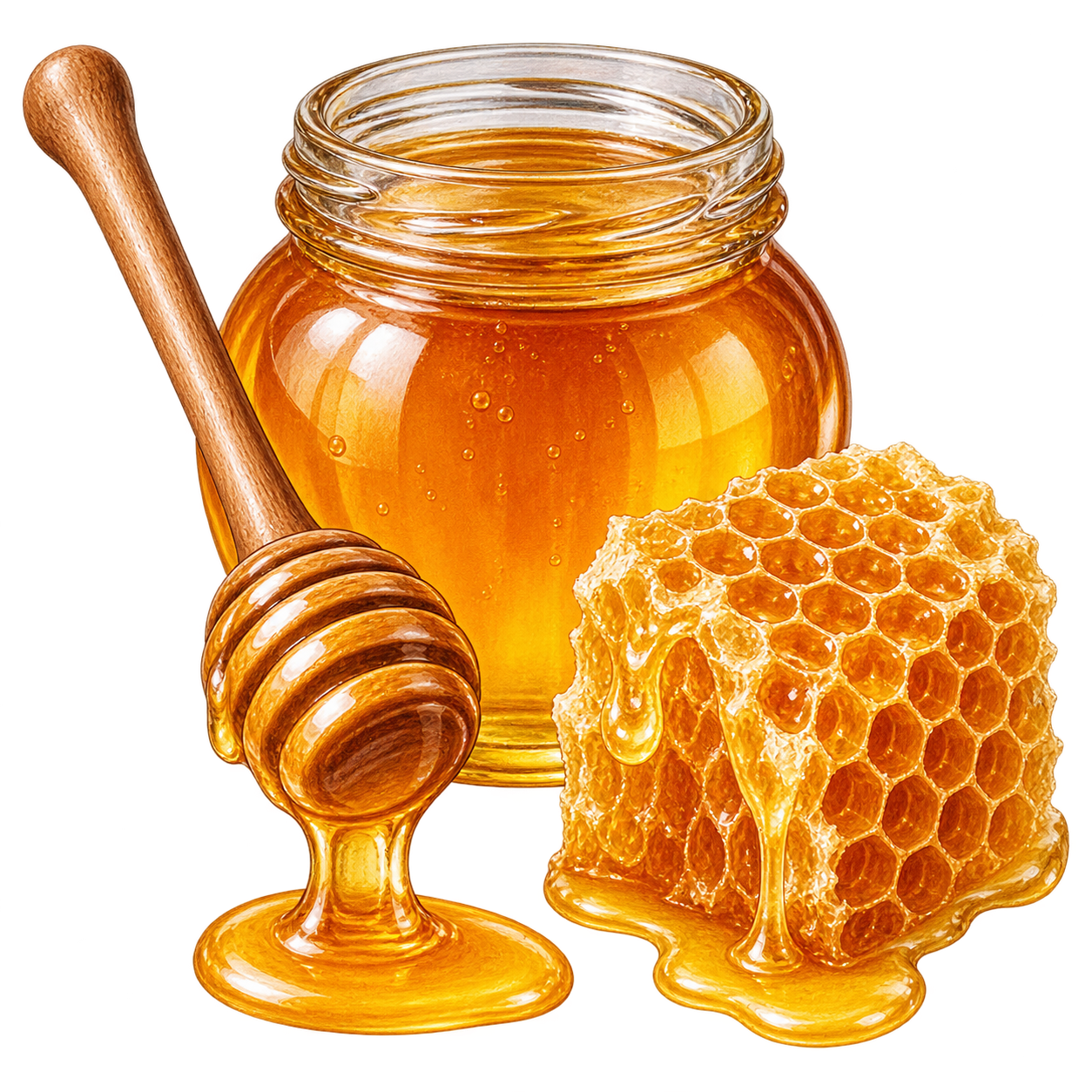
Honey is a bee-made sweetener produced from floral nectar or honeydew, most commonly by the Western honey bee, Apis mellifera. The exact floral source varies widely.Quick Reference
Traditional Uses
Honey has been used for sweetening, preserving, mead making, offerings, confections, and household remedies for millennia. It also serves as a base for herbal honeys and infused preparations.
Magical Associations
- Sweetening
- attraction
- love
- harmony
- prosperity
- blessing
- hospitality
- friendship
- eloquence
- abundance
- devotion.
Folklore
Honey appears in foodways, offerings, love symbolism, and sacred hospitality across many cultures. It has associations with blessing, sweetness, prosperity, eloquence, and divine favor. Mead and honey offerings appear in numerous historical traditions, but those traditions should not be collapsed into one universal magical meaning.
Core Correspondences
Witchcraft Uses
- Sweetening jars
- offerings
- libations
- feast rites
- love and friendship work
- prosperity work
- devotional use
- tea and kitchen magic
- self-love and comfort practices.
⚠ Caution
Use food-grade honey only. Do not feed honey to infants under one year of age. People with allergies, sensitivities, or dietary restrictions should use care. Herbal or ritual additions may change safety and shelf stability. Sticky spills may attract insects.
Educational purposes only. Not medical advice.How to Work With
Use food-grade honey in teas, ritual drinks, offerings, honey jars, sweetening work, devotional recipes, or kitchen witchcraft. Honey can also be placed symbolically on the altar in a sealed jar, used to dress the rim of offering bowls where appropriate, or added to infused honeys when done with safe food-handling practices.
Best Time to Harvest
Honey is harvested after bees have ripened and capped the comb. Timing varies by local nectar flows, climate, and beekeeping practice.
Correspondences
- Color
- Gold, amber
Page 2 of 2
Deeper Reading
Botanical Profile
- Plant Family
- Not a plant-family material. Bee product / animal-derived food substance. Floral source varies.
- Common Names
- raw honey · blossom honey · wildflower honey · infused honey when botanicals are added after harvest.
- Growth Habit
- Viscous natural sweetener produced and stored by honey bees in wax comb. Commercial and artisanal honeys vary by floral source, filtration, and handling.
- Native Range
- Honey is globally used and produced wherever beekeeping or wild honey gathering occurs. Human use of honey is ancient and widespread across many cultures.
- Habitat
- Produced by honey bees from collected nectar or honeydew. Finished honey characteristics vary by region, season, floral source, and processing method.
- Identifying Characteristics
- Golden to amber, cream, or darker syrup-like substance with floral sweetness. Texture may be runny, thick, or crystallized depending on source and storage. Aroma and flavor vary by blossoms visited by bees.
- Parts Traditionally Used
- The honey itself.
Traditional & Historical Medicinal Uses
Honey has a substantial history in traditional household and medicinal use and remains a subject of modern scientific study. Those facts do not authorize broad treatment claims on a ritual page. Present historical or nutritional context carefully and keep all language non-medical.
Magical Uses
Sweetening jars; offerings; libations; feast rites; love and friendship work; prosperity work; devotional use; tea and kitchen magic; self-love and comfort practices.
Modern Evidence
Honey is a food and traditional material. Specific medical-grade products have limited clinical uses, but ordinary honey is not equivalent to them and must never be given to infants under twelve months because of botulism risk.
Notes & Personal Connection
Add your own experiences, observations, and notes about working with this plant. How does it speak to you? What is your personal connection?
Keep This Grimoire Entry
Print Page 1 and Page 2 together, single-sided or front and back.
Download to Print