Return to entryChecking Elderberry printable layout…
Herbs & Salts Grimoire

Elderberry

Sambucus nigra L.

Traditional Uses

Elderflowers and elderberries have long-standing histories in European food and traditional herbal preparations. Elderflowers have been used in traditional common-cold preparations; elderberry fruit has long been used in syrups, wines, preserves, and folk remedies.

Folklore

One of elder’s best-known folkloric figures is the Elder Mother, a protective tree spirit in English and Scandinavian folklore. Some traditions warned against cutting or burning elder without permission, while other traditions planted elder near homes for protection.

Magical Associations

  • Protection
  • Boundaries
  • Transformation
  • Ancestral remembrance

Core Correspondences

Element:
Water is
Planet:
Moon is
Energy:
Protective · boundary-conscious
Chakra:
Third

Witchcraft Uses

  • Keep dried elderflowers on an ancestor or
  • Use elderberry imagery or safely prepared dried
  • Add elderflower to charm bags or sachets
  • Work with elder symbolism when marking endings
  • Use elder in threshold rituals centered on

Caution

Raw or unripe elderberries and other parts such as leaves and stems contain cyanide-producing substances that can cause nausea, vomiting, and severe.

Educational purposes only. Not medical advice.

How to Work With

Elder is especially suited to boundary and ancestor work because its folklore centers as much on relationship and respect as on “properties.

Best Time to Harvest

Harvest flower clusters in late spring or early summer when fully open and dry, leaving enough flowers on the.

Correspondences

Color: Cream-white · deep purple • Tarot: The High Priestess • Metal: Silver is a • Season: Late summer through

Herbs & Salts Grimoire

Elderberry

Sambucus nigra L.

Botanical Profile

Plant FamilyViburnaceae
Common NamesElderberry
Alternate NamesBlack Elder · European Elder · Common Elder
Growth HabitEuropean elder is a vigorous deciduous large shrub or small tree, often
Native RangeSambucus nigra is native across much of Europe and extends eastward into
HabitatElder commonly grows in hedgerows, woodland margins, scrub, disturbed ground, roadsides, and waste places
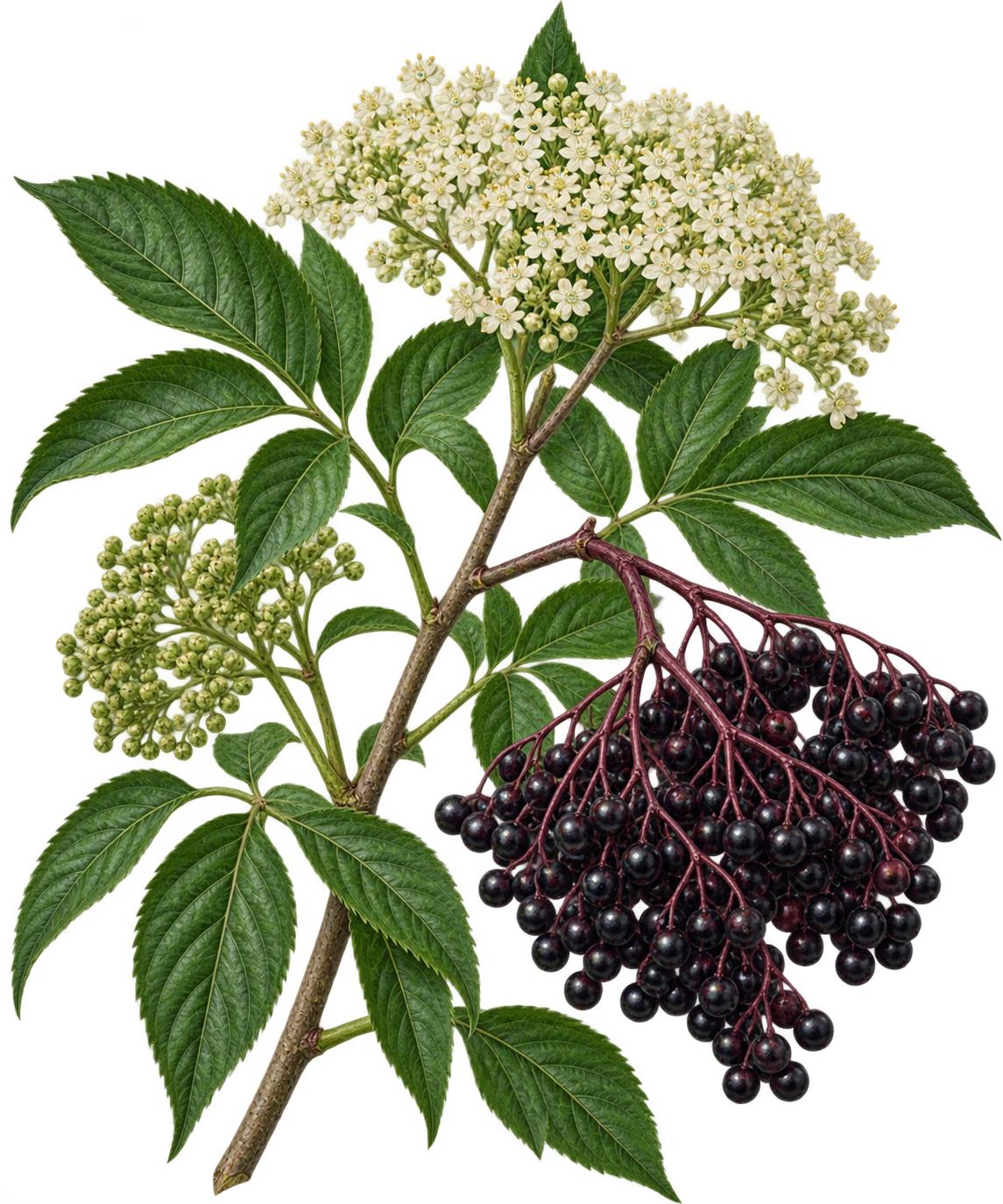
Identifying CharacteristicsDeciduous shrub or small tree with soft-pithed young stems Pinnate leaves usually made of 5–7 toothed leaflets
Parts Traditionally UsedFlowers and ripe cooked berries are

Traditional Uses & Modern Evidence

European folk medicine has used elderflower and elderberry in respiratory/cold-season contexts. Different plant parts were historically used for other purposes as well, but leaf, bark, stem, flower, and fruit should not be treated as identical materials. These are traditional/historical uses. They do not establish elderberry as a proven treatment for influenza, COVID-19, immune disorders, or other diseases.

Magical & Spiritual Practice

Elder is especially suited to boundary and ancestor work because its folklore centers as much on relationship and respect as on “properties. ” Rather than treating it as a generic ingredient, begin by deciding whether you are working with the flower, the ripe cooked berry, or the living tree symbolism.

Notes & Personal Connection

Add your own experiences, observations, and notes about working with this plant. How does it speak to you? What is your personal connection?

Safety & Caution

Raw or unripe elderberries and other parts such as leaves and stems contain cyanide-producing substances that can cause.

Sources & Research Notes

Royal Botanic Gardens, Kew • NCCIH