Herbs & Salts Grimoire
Elderberry
Sambucus nigra L.Quick Reference
Traditional Uses
Elderflowers and elderberries have long-standing histories in European food and traditional herbal preparations. Elderflowers have been used in traditional common-cold preparations; elderberry fruit has long been used in syrups, wines, preserves, and folk remedies. The EMA recognizes traditional elderflower preparations for relief of early symptoms of the common cold based on long-standing use. For elderberry fruit, the EMA did not adopt an EU herbal monograph, and modern evidence remains limited.
Magical Associations
- Protection
- Boundaries
- Transformation
- Ancestral remembrance
- Liminal work
- Release
- Seasonal transition
- Divination
- Household guardianship
Folklore
One of elder’s best-known folkloric figures is the Elder Mother, a protective tree spirit in English and Scandinavian folklore. Some traditions warned against cutting or burning elder without permission, while other traditions planted elder near homes for protection. Because elder flowers, fruits, and bare branches mark strong seasonal transitions, modern practitioners also use elder symbolically for boundaries, endings, transformation, ancestry, protection, and liminal work. The Elder Mother should be presented as a folkloric spirit figure, not flattened into a universal goddess or deity correspondence.
Core Correspondences
Witchcraft Uses
- Keep dried elderflowers on an ancestor or remembrance altar.
- Use elderberry imagery or safely prepared dried fruit in seasonal transition work.
- Add elderflower to charm bags or sachets for boundaries and household protection.
- Work with elder symbolism when marking endings, grief, release, or new beginnings.
- Use elder in threshold rituals centered on home, ancestry, protection, or liminal spaces.
- Honor the Elder Mother folklore by approaching living elder plants respectfully and harvesting only what is needed.
- Use the plant’s seasonal cycle — flowers, fruit, bare winter branches — as a meditation on transformation and continuity.
⚠ Caution
Raw or unripe elderberries and other parts such as leaves and stems contain cyanide-producing substances that can cause nausea, vomiting, and severe diarrhea.
Educational purposes only. Not medical advice.How to Work With
Elder is especially suited to boundary and ancestor work because its folklore centers as much on relationship and respect as on “properties.” Rather than treating it as a generic ingredient, begin by deciding whether you are working with the flower, the ripe cooked berry, or the living tree symbolism. For a threshold practice, place dried elderflowers in a small bowl near an entryway and name the qualities you want welcomed into the home and the behaviors you want left outside. For ancestor work, elder can be used as a seasonal symbol beside photographs or offerings without ingesting or burning the plant.
Best Time to Harvest
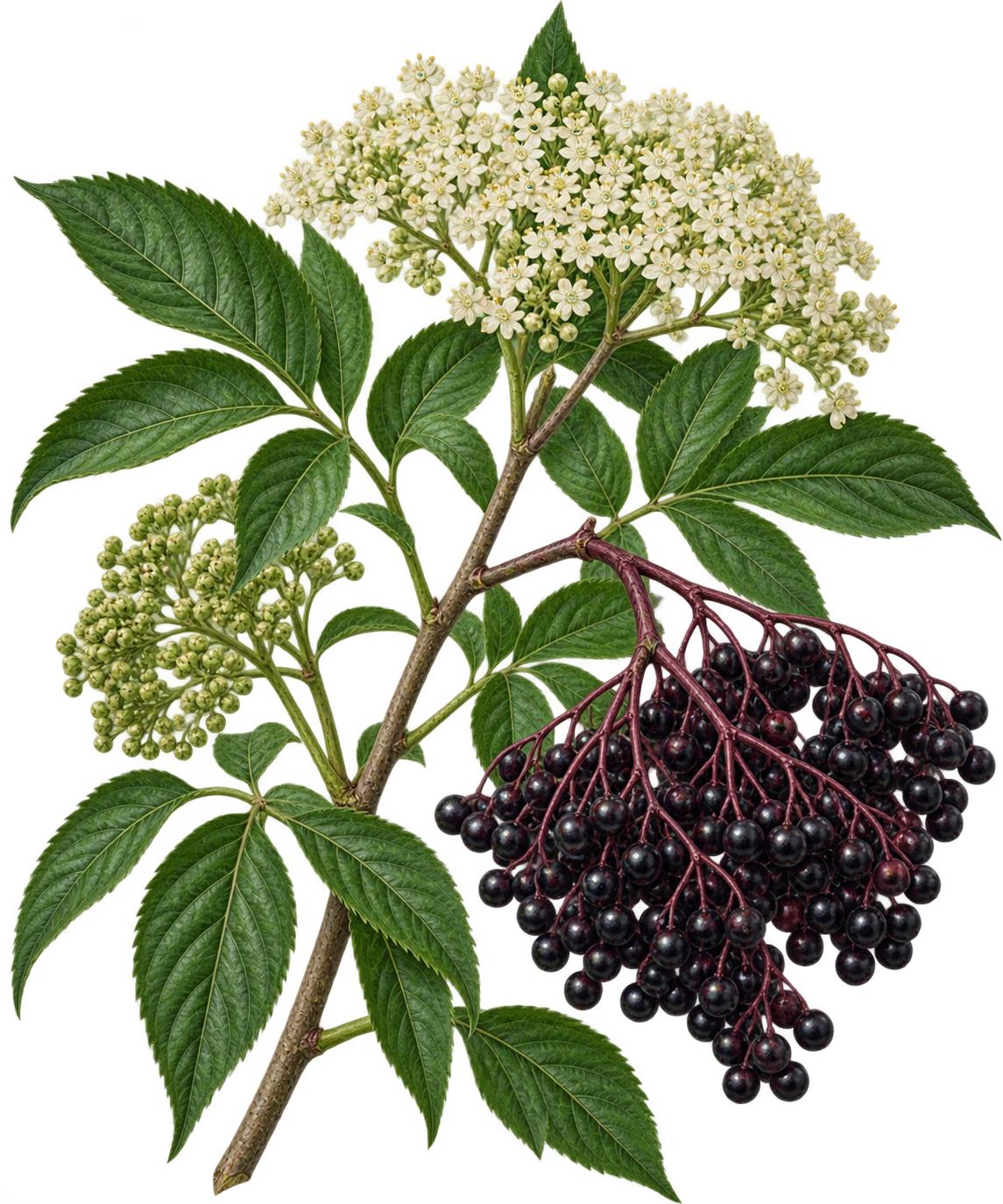
Harvest flower clusters in late spring or early summer when fully open and dry, leaving enough flowers on the plant to support fruit development and wildlife. Harvest berry clusters in late summer to autumn only when fully ripe and dark purple-black. Ripe berries intended for food or internal herbal use should be cooked appropriately.
Correspondences
Page 2 of 2
Deeper Reading
Botanical Profile
- Plant Family
- Viburnaceae
- Alternate Names
- Black Elder · European Elder · Common Elder · Black Elderberry · Elder · Adoxaceae
- Growth Habit
- European elder is a vigorous deciduous large shrub or small tree, often reaching 4–8 m under garden conditions and sometimes larger. It grows quickly and readily regenerates after pruning.
- Native Range
- Sambucus nigra is native across much of Europe and extends eastward into western Asia, with related populations and long cultivation beyond that range. Kew places its native range from the Azores and Europe to western Iran.
- Habitat
- Elder commonly grows in hedgerows, woodland margins, scrub, disturbed ground, roadsides, and waste places. In gardens it tolerates a wide range of soils and grows in sun or partial shade. It is valued by wildlife: flowers feed insects and fruits feed birds and mammals.
- Identifying Characteristics
- Deciduous shrub or small tree with soft-pithed young stems Pinnate leaves usually made of 5–7 toothed leaflets Large flat-topped clusters of tiny cream-white fragrant flowers in late spring/early summer Hanging clusters of small purple-black berries in late summer to autumn Twigs and crushed foliage have a distinctive odor
- Parts Traditionally Used
- Flowers and ripe cooked berries are the principal food and traditional herbal materials. Leaves, stems, bark, and unripe fruit have different safety profiles and should not be treated as interchangeable with prepared elderflower or cooked ripe elderberry.
History & Cultural Context
Elder has a long European relationship with people as food, household material, traditional medicine, dye plant, and folklore tree. Hollow young stems were historically used to make pipes and other small implements. Elderflowers and berries have long been made into cordials, wines, preserves, syrups, and other preparations. The plant also accumulated unusually rich and sometimes contradictory folklore. Oxford’s Plants 400 notes stories connecting elder with Christian legends, household protection, taboos around burning the wood, and a recurring belief that permission should be asked from the elder or its resident spirit before harvesting.
Traditional & Historical Medicinal Uses
European folk medicine has used elderflower and elderberry in respiratory/cold-season contexts. Different plant parts were historically used for other purposes as well, but leaf, bark, stem, flower, and fruit should not be treated as identical materials. These are traditional/historical uses. They do not establish elderberry as a proven treatment for influenza, COVID-19, immune disorders, or other diseases.
Magical Uses
Elder is especially suited to boundary and ancestor work because its folklore centers as much on relationship and respect as on “properties.” Rather than treating it as a generic ingredient, begin by deciding whether you are working with the flower, the ripe cooked berry, or the living tree symbolism. For a threshold practice, place dried elderflowers in a small bowl near an entryway and name the qualities you want welcomed into the home and the behaviors you want left outside. For ancestor work, elder can be used as a seasonal symbol beside photographs or offerings without ingesting or burning the plant.
Modern Evidence
NCCIH reports that only a small number of human studies have evaluated elderberry for colds, flu, and other upper respiratory infections. Some preliminary research suggests elderberry may relieve symptoms of some upper respiratory infections, but the evidence remains limited and there is not enough information to support other health uses. There is no good evidence supporting elderberry as a prevention or treatment for COVID-19. The Grimoire must not use “immune booster” language as though it were a proven clinical effect.
Notes & Personal Connection
Add your own experiences, observations, and notes about working with this plant. How does it speak to you? What is your personal connection?
Keep This Grimoire Entry
Print Page 1 and Page 2 together, single-sided or front and back.
Download to Print