Return to entryChecking Hawthorn printable layout…
Herbs & Salts Grimoire

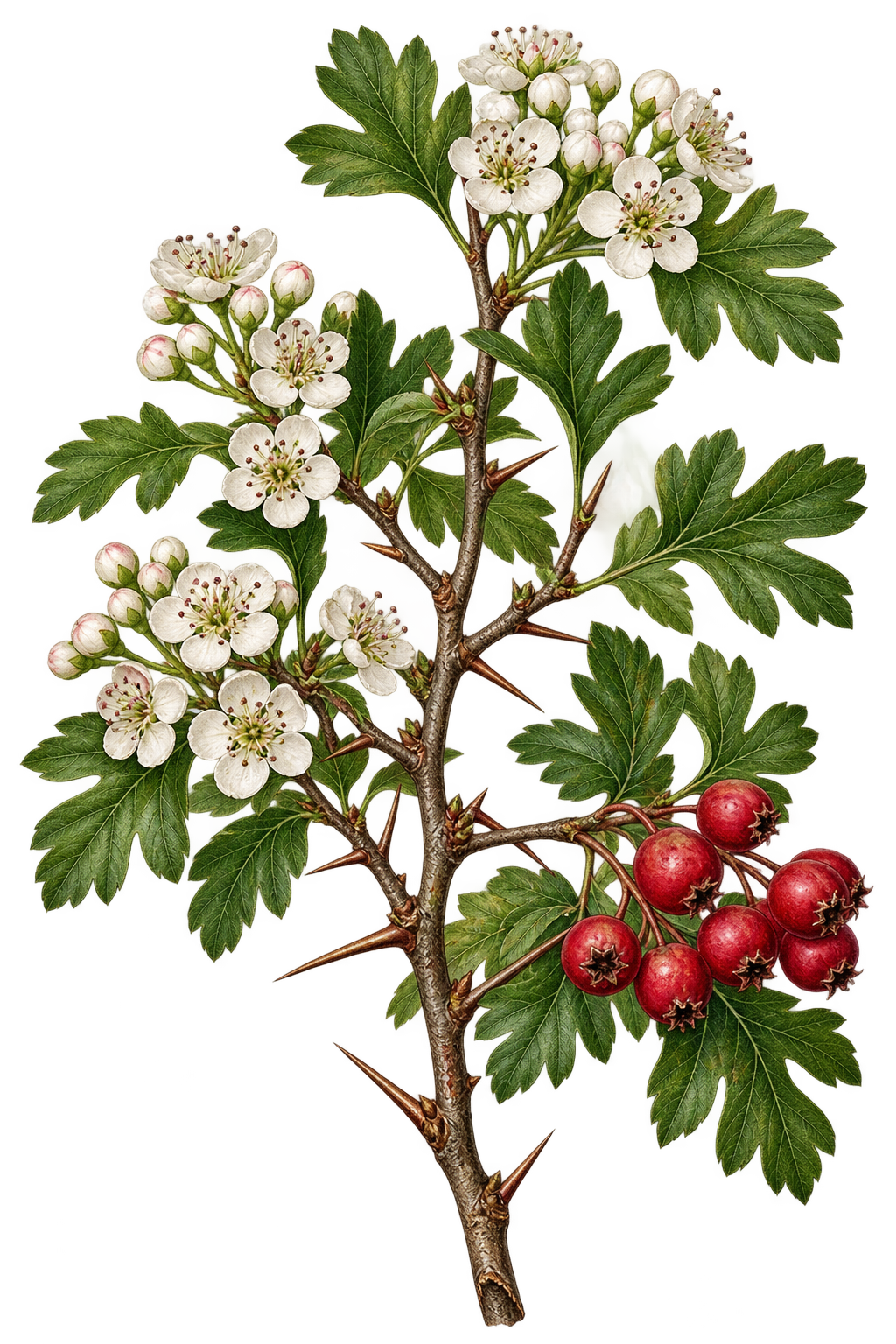
Hawthorn

Crataegus monogyna Jacq.

Traditional Uses

Hawthorn has been used traditionally in European herbal practice for circulatory and heart-related complaints, digestive complaints, and as a general tonic. Modern regulated herbal monographs focus most clearly on hawthorn leaf and flower.

Folklore

Hawthorn carries especially strong folklore in Britain and Ireland.

Magical Associations

  • Protection
  • Boundaries
  • Thresholds
  • Love

Core Correspondences

Element:
Earth · Air may
Planet:
Venus is · Mars may
Energy:
protection · love

Witchcraft Uses

  • Boundary and threshold work
  • Protective charms using ethically gathered thorns or
  • Beltane/May seasonal observances
  • Love or commitment rituals that emphasize healthy
  • Ancestor or land-spirit reflection where culturally appropriate

Caution

Hawthorn thorns can cause puncture wounds; handle branches carefully.

Educational purposes only. Not medical advice.

How to Work With

Keep a naturally fallen twig near an entryway as a boundary symbol. Use a drawing or photograph of hawthorn instead of harvesting live branches.

Best Time to Harvest

Where legal and appropriate: Leaves and flowering tops: spring, around flowering Flowers: when freshly open and dry from surface.

Correspondences

Color: white · green • Season: Spring into early · autumn for the

Herbs & Salts Grimoire

Hawthorn

Crataegus monogyna Jacq.

Botanical Profile

Plant FamilyRosaceae
Common NamesHawthorn · Common hawthorn · one-seed hawthorn
Alternate NamesCommon hawthorn · one-seed hawthorn · whitethorn
Growth HabitA deciduous, densely branched shrub or small tree
Native RangeCrataegus monogyna is native across much of Europe into the Caucasus and
HabitatHawthorn thrives in temperate hedgerows, scrub, woodland edges, field margins, roadsides, and open sunny ground
Identifying CharacteristicsTypical C
Parts Traditionally UsedLeaf and flower · Fruit/haws

Traditional Uses & Modern Evidence

Historical/traditional use — not a statement of proven modern effectiveness. The European Medicines Agency recognizes long-standing traditional use of hawthorn leaf and flower preparations for temporary heart complaints associated with nervousness, mild symptoms of mental stress, and support for sleep in specific regulated preparations. NCCIH notes a broader history of traditional use for heart disease, circulation, digestion, and kidney/bladder complaints.

Magical & Spiritual Practice

Protection Boundaries Thresholds Love Fertility Marriage Seasonal transition Heart-centered reflection Guardianship Liminal places Respect for the unseen or unknown Boundary and threshold work Protective charms using ethically gathered thorns or fallen twigs Beltane/May seasonal observances Love or commitment rituals that emphasize healthy boundaries rather than possession Ancestor or land-spirit reflection where culturally appropriate Seasonal altars using fallen material, blossom imagery, or haws “Heart” work framed symbolically rather than medically Protection of home, property, garden.

Notes & Personal Connection

Add your own experiences, observations, and notes about working with this plant. How does it speak to you? What is your personal connection?

Safety & Caution

Hawthorn thorns can cause puncture wounds; handle branches carefully.

Sources & Research Notes

Royal Botanic Gardens, Kew • European Medicines Agency • NCCIH