Herbs & Salts Grimoire
Hawthorn
Crataegus monogyna Jacq.Quick Reference
Traditional Uses
Hawthorn has been used traditionally in European herbal practice for circulatory and heart-related complaints, digestive complaints, and as a general tonic. Modern regulated herbal monographs focus most clearly on hawthorn leaf and flower.
Magical Associations
- Protection
- Boundaries
- Thresholds
- Love
- Fertility
- Marriage
- Seasonal transition
- Heart-centered reflection
- Guardianship
- Liminal places
- Respect for the unseen or unknown
Folklore
Hawthorn carries especially strong folklore in Britain and Ireland.
Core Correspondences
Witchcraft Uses
- Boundary and threshold work
- Protective charms using ethically gathered thorns or fallen twigs
- Beltane/May seasonal observances
- Love or commitment rituals that emphasize healthy boundaries rather than possession
- Ancestor or land-spirit reflection where culturally appropriate
- Seasonal altars using fallen material, blossom imagery, or haws
- “Heart” work framed symbolically rather than medically
- Protection of home, property, garden, or personal space
⚠ Caution
Hawthorn thorns can cause puncture wounds; handle branches carefully. Internal herbal use deserves medical caution, especially for anyone with cardiovascular disease or who takes medication. NCCIH advises people taking medicines to discuss herbal products with a healthcare professional because interactions are possible.
Educational purposes only. Not medical advice.How to Work With
Keep a naturally fallen twig near an entryway as a boundary symbol. Use a drawing or photograph of hawthorn instead of harvesting live branches. Add hawthorn imagery to a protection or commitment ritual. Work with the white blossom in spring symbolism and red haws in autumn symbolism. Journal on the question: What deserves welcome, and what requires a boundary? If using thorns, keep them contained and treat them as sharp objects.
Best Time to Harvest
Where legal and appropriate: Leaves and flowering tops: spring, around flowering Flowers: when freshly open and dry from surface moisture Haws: autumn, when fully colored and mature Harvesting from wild hedges should be conservative. Leave abundant flowers and fruit for wildlife and never strip a single plant.
Correspondences
Page 2 of 2
Deeper Reading
Botanical Profile
- Plant Family
- Rosaceae
- Common Names
- Common hawthorn · one-seed hawthorn · whitethorn · may · mayblossom · may tree
- Growth Habit
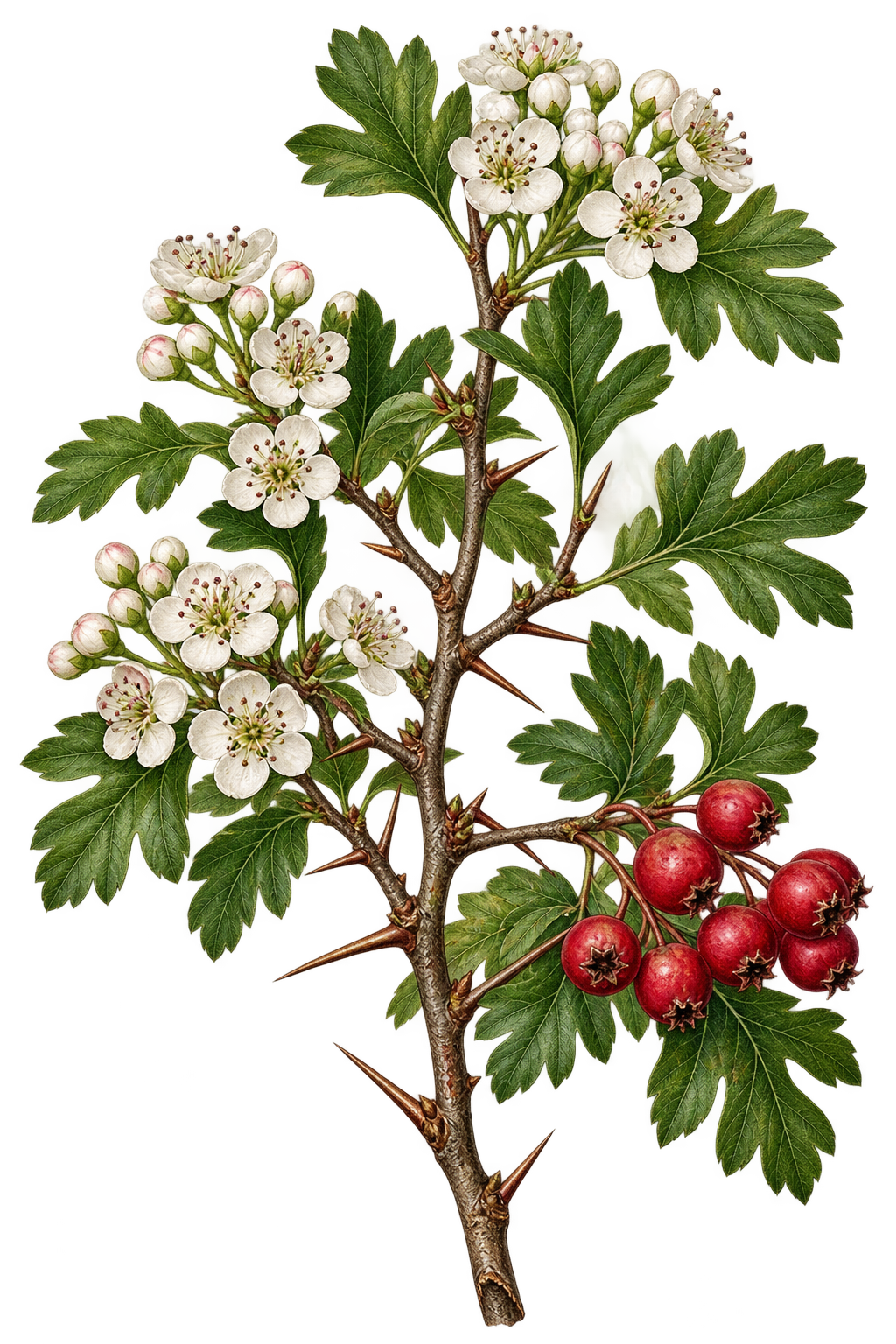
- A deciduous, densely branched shrub or small tree. Mature plants can form formidable thorny hedges and may grow into small trees when unmanaged.
- Native Range
- Crataegus monogyna is native across much of Europe into the Caucasus and parts of North Africa and western Asia. It has been introduced to other temperate regions.
- Habitat
- Hawthorn thrives in temperate hedgerows, scrub, woodland edges, field margins, roadsides, and open sunny ground. It tolerates a wide range of soils and is famous for its value as a hedge plant. For garden cultivation: Full sun to partial shade is suitable. Established plants tolerate exposure and pruning well. Thorny branches make placement important near paths and play areas. Hawthorn supports pollinators, birds, and other wildlife. In regions where introduced hawthorn behaves invasively, follow local guidance and prefer responsible cultivation.
- Identifying Characteristics
- Typical C. monogyna features include: Deeply lobed green leaves Sharp woody thorns on branches Clusters of five-petaled white flowers in spring Red haws in autumn Haws commonly containing a single seed, reflected in the name “monogyna” Do not identify a medicinal plant from a single feature. Hawthorn species hybridize and can be difficult to distinguish.
- Parts Traditionally Used
- Leaf and flower · Fruit/haws · Historically, other parts have appeared in regional folk practice, but leaf/flower and fruit are the most relevant for a modern Grimoire record.
Taxonomic Note
“Hawthorn” is used for many Crataegus species. This record centers Crataegus monogyna, while noting that traditional herbal preparations may also use C. laevigata and other Crataegus species. Species identity matters.
History & Cultural Context
Hawthorn carries especially strong folklore in Britain and Ireland. It is closely associated with: May blossom and May Day customs Seasonal transition from spring toward summer Protection and supernatural boundaries Love and fertility symbolism Warnings or taboos around cutting particular hawthorns or bringing blossom indoors Woodland Trust notes hawthorn’s long association with May garlands and May Day customs and describes its supernatural reputation in British folklore. Kew’s Grow Wild material also identifies hawthorn as a traditional symbol of love, fertility, and protection. Folklore varies by region. It is better to say “in British and Irish folklore” than to present these beliefs as universal.
Traditional & Historical Medicinal Uses
Historical/traditional use — not a statement of proven modern effectiveness. The European Medicines Agency recognizes long-standing traditional use of hawthorn leaf and flower preparations for temporary heart complaints associated with nervousness, mild symptoms of mental stress, and support for sleep in specific regulated preparations. NCCIH notes a broader history of traditional use for heart disease, circulation, digestion, and kidney/bladder complaints.
Magical Uses
Protection Boundaries Thresholds Love Fertility Marriage Seasonal transition Heart-centered reflection Guardianship Liminal places Respect for the unseen or unknown Boundary and threshold work Protective charms using ethically gathered thorns or fallen twigs Beltane/May seasonal observances Love or commitment rituals that emphasize healthy boundaries rather than possession Ancestor or land-spirit reflection where culturally appropriate Seasonal altars using fallen material, blossom imagery, or haws “Heart” work framed symbolically rather than medically Protection of home, property, garden, or personal space Keep a naturally fallen twig near an entryway as a boundary symbol. Use a drawing or photograph of hawthorn instead of harvesting live branches. Add hawthorn imagery to a protection or commitment ritual. Work with the white blossom in spring symbolism and red haws in autumn symbolism. Journal on the question: What deserves welcome, and what requires a boundary? If using thorns, keep them contained and treat them as sharp objects.
Modern Evidence
Modern evidence is mixed and does not justify presenting hawthorn as a proven treatment for heart disease. NCCIH reports conflicting evidence in heart failure and insufficient evidence for several other cardiovascular claims. Hawthorn should never be used as a substitute for evaluation of chest pain, palpitations, fainting, shortness of breath, or other cardiovascular symptoms.
Notes & Personal Connection
Add your own experiences, observations, and notes about working with this plant. How does it speak to you? What is your personal connection?
Keep This Grimoire Entry
Print Page 1 and Page 2 together, single-sided or front and back.
Download to Print