Herbs & Salts Grimoire
Lady’s Mantle
Alchemilla vulgaris L.Quick Reference
Traditional Uses
Lady’s mantle has a long history in European folk herbal practice, especially in connection with women’s reproductive and gynecological complaints.
Magical Associations
- Alchemy
- Transformation
- Mystery
- Water
- Purity
- Self-possession
- Protection
- Healing symbolism
- Feminine archetypes
- Receptivity
- Hidden knowledge
- Reflection
Folklore
Lady’s mantle has one of the clearest plant-name connections to alchemy.
Core Correspondences
Witchcraft Uses
- Transformation rituals
- Self-worth and self-possession work
- Water or dew symbolism
- Protective work centered on soft boundaries rather than aggression
- Reflection on receptivity versus over-absorption
- Feminine archetype work, when that language fits the practitioner
- Alchemical symbolism: turning experience into knowledge
- Rituals about holding, receiving, and releasing
⚠ Caution
Species identity matters because several Alchemilla species share the common name. Modern clinical evidence for medicinal use is limited. Pregnancy, breastfeeding, medication interactions, and long-term safety are not sufficiently established for casual medicinal recommendations.
Educational purposes only. Not medical advice.How to Work With
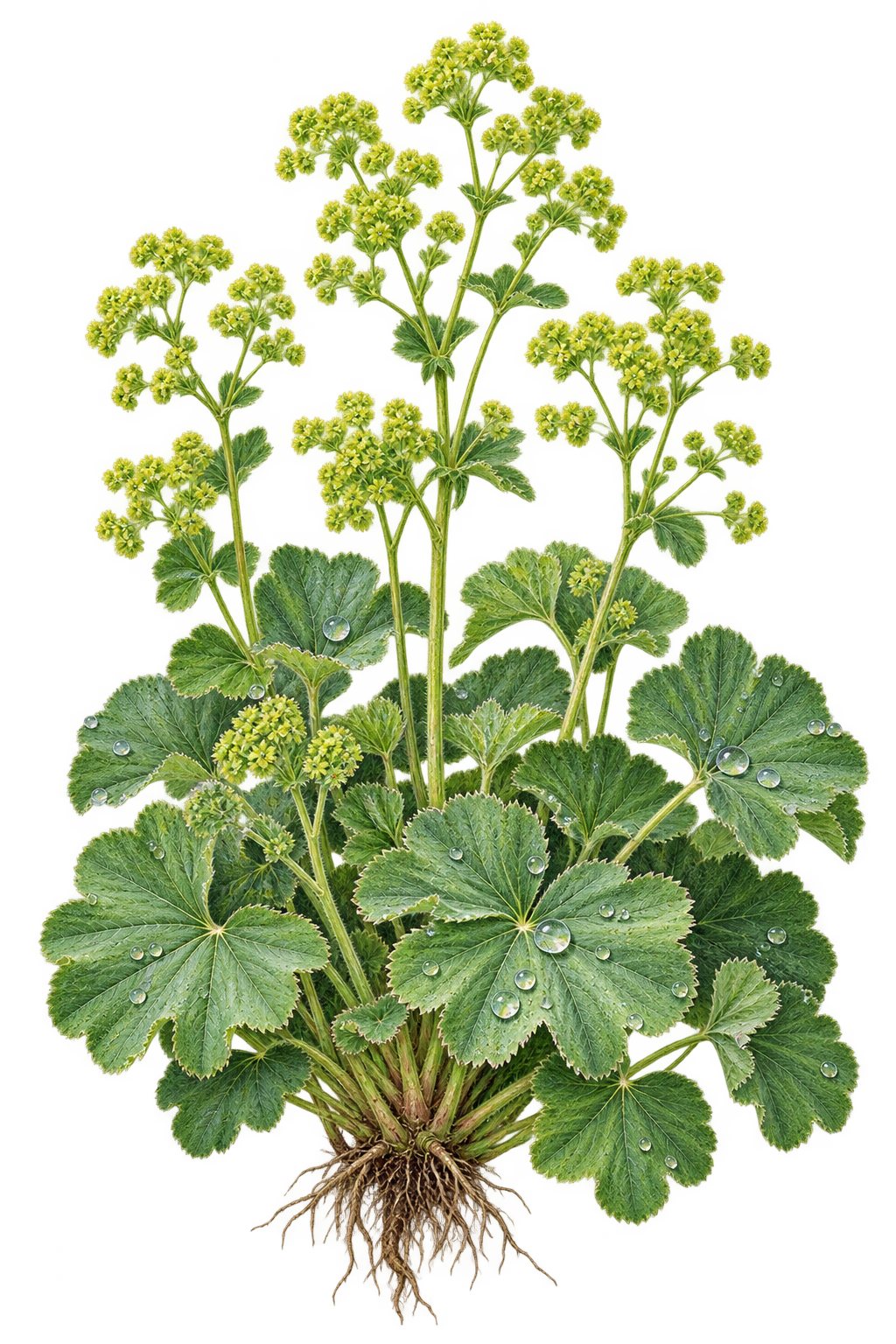
Observe the way water beads on the leaves and use that as a meditation on what you hold and what rolls away. Use a leaf or engraved image as a symbol of transformation. Place it near a journal when working with themes of change, identity, or self-trust. Use collected rainwater only if it is safe for the intended non-ingestible ritual use; do not assume leaf-collected water is sterile. Pair with a bowl or cup in ritual to emphasize vessel symbolism. Work with the question: What am I holding because it nourishes me, and what am I holding simply because I can?
Best Time to Harvest
Traditionally, aerial parts are gathered during active growth, commonly around flowering when leaves and flowering stems are in good condition. For magical work, there is no need to harvest medicinal quantities. A single leaf image, responsibly gathered leaf, or garden observation may be enough.
Correspondences
- Season
- late spring into summer
Page 2 of 2
Deeper Reading
Botanical Profile
- Plant Family
- Rosaceae
- Common Names
- Lady’s-mantle · common lady’s mantle · alchemilla · lion’s foot
- Growth Habit
- Herbaceous perennial, usually low-growing and clump-forming, with basal leaves and branching sprays of small greenish flowers.
- Native Range
- Kew lists A. vulgaris as native to Europe. Other Alchemilla species extend across Europe, Asia, and other cool-temperate regions.
- Habitat
- Lady’s mantle prefers temperate conditions and is associated with meadows, grassland, stream margins, and cultivated gardens depending on species. Garden forms generally prefer: Moist but well-drained soil Full sun to partial shade Some afternoon shade in hot climates Regular moisture during establishment Many garden references use A. mollis, so check species identity when comparing horticultural advice.
- Identifying Characteristics
- For Alchemilla generally: Rounded to fan-shaped leaves Palmately lobed or pleated appearance Fine hairs or leaf structure that causes water to bead dramatically Small yellow-green to chartreuse flowers Mounding perennial habit Lady’s mantle species can be difficult to distinguish. Do not rely on the common name alone when medicinal identity matters.
- Parts Traditionally Used
- Aerial parts / herb · Leaves · Flowering tops
Taxonomic Note
“Lady’s mantle” is used for several Alchemilla species. The garden ornamental Alchemilla mollis is especially common, while medicinal references may involve A. vulgaris, A. xanthochlora, or other species. This record centers A. vulgaris and calls out the naming problem rather than treating all Alchemilla as interchangeable.
History & Cultural Context
Lady’s mantle has one of the clearest plant-name connections to alchemy. The Metropolitan Museum of Art’s Cloisters garden notes that droplets remain conspicuously on the pleated leaves and that medieval/early modern traditions associated this water with magical or alchemical power. The name Alchemilla became linked with alchemy, and the plant’s collected droplets were associated with alchemical work. The common name “lady’s mantle” was also linked in Christian European tradition to the Virgin Mary, the scalloped leaf being compared to a mantle or cloak. These are European historical associations, not universal meanings.
Traditional & Historical Medicinal Uses
Historical/traditional use — not a statement of proven modern effectiveness. A 2024 review in the Journal of Ethnopharmacology found long-standing traditional use of Alchemilla species for dysmenorrhea, menopausal complaints, other gynecological conditions, and wound-related or astringent applications in different traditions.
Magical Uses
Alchemy Transformation Mystery Water Purity Self-possession Protection Healing symbolism Feminine archetypes Receptivity Hidden knowledge Reflection Transformation rituals Self-worth and self-possession work Water or dew symbolism Protective work centered on soft boundaries rather than aggression Reflection on receptivity versus over-absorption Feminine archetype work, when that language fits the practitioner Alchemical symbolism: turning experience into knowledge Rituals about holding, receiving, and releasing Observe the way water beads on the leaves and use that as a meditation on what you hold and what rolls away. Use a leaf or engraved image as a symbol of transformation. Place it near a journal when working with themes of change, identity, or self-trust. Use collected rainwater only if it is safe for the intended non-ingestible ritual use; do not assume leaf-collected water is sterile. Pair with a bowl or cup in ritual to emphasize vessel symbolism. Work with the question: What am I holding because it nourishes me, and what am I holding simply because I can?
Modern Evidence
Research on Alchemilla includes laboratory and animal studies involving antioxidant, anti-inflammatory, antimicrobial, cardiovascular, wound-healing, and other biological activity. However, the 2024 review specifically notes that clinical studies are limited. Traditional use should not be converted into a claim that lady’s mantle has proven effectiveness for menstrual, reproductive, or other health conditions.
Notes & Personal Connection
Add your own experiences, observations, and notes about working with this plant. How does it speak to you? What is your personal connection?
Keep This Grimoire Entry
Print Page 1 and Page 2 together, single-sided or front and back.
Download to Print