Return to entryChecking Lady’s Mantle printable layout…
Herbs & Salts Grimoire

Lady’s Mantle

Alchemilla vulgaris L.

Traditional Uses

Lady’s mantle has a long history in European folk herbal practice, especially in connection with women’s reproductive and gynecological complaints.

Folklore

Lady’s mantle has one of the clearest plant-name connections to alchemy.

Magical Associations

  • Alchemy
  • Transformation
  • Mystery
  • Water

Core Correspondences

Element:
Water · Earth also
Planet:
Venus and
Energy:
transformation · receptivity

Witchcraft Uses

  • Transformation rituals
  • Self-worth and self-possession work
  • Water or dew symbolism
  • Protective work centered on soft boundaries rather
  • Reflection on receptivity versus over-absorption

Caution

Multiple Alchemilla species share this name. Evidence and safety remain limited; seek qualified guidance.

Educational purposes only. Not medical advice.

How to Work With

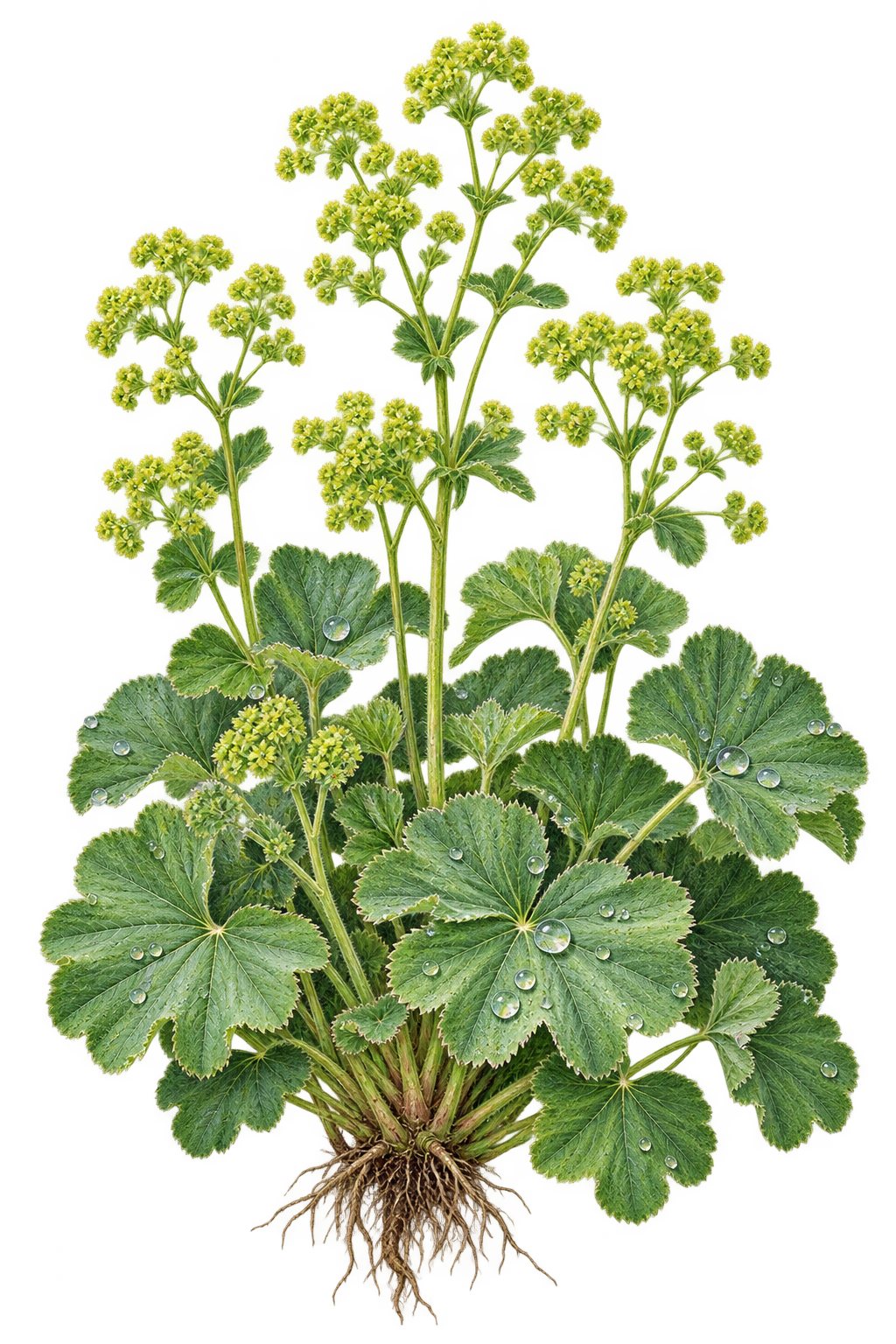
Observe the way water beads on the leaves and use that as a meditation on what you hold and what rolls away.

Best Time to Harvest

Traditionally, aerial parts are gathered during active growth, commonly around flowering when leaves and flowering stems are in good.

Correspondences

Color: soft green · chartreuse • Season: late spring into

Herbs & Salts Grimoire

Lady’s Mantle

Alchemilla vulgaris L.

Botanical Profile

Plant FamilyRosaceae
Common NamesLady’s Mantle · Lady’s-mantle · common lady’s mantle
Alternate NamesLady’s-mantle · common lady’s mantle · alchemilla
Growth HabitHerbaceous perennial, usually low-growing and clump-forming, with basal leaves and branching sprays
Native RangeKew lists A. vulgaris as native to Europe
HabitatLady’s mantle prefers temperate conditions and is associated with meadows, grassland, stream margins, and cultivated
Identifying CharacteristicsFor Alchemilla generally: Rounded to fan-shaped leaves Palmately lobed or pleated appearance Fine hairs or leaf structure
Parts Traditionally UsedAerial parts / herb · Leaves

Traditional Uses & Modern Evidence

Historical/traditional use — not a statement of proven modern effectiveness. A 2024 review in the Journal of Ethnopharmacology found long-standing traditional use of Alchemilla species for dysmenorrhea, menopausal complaints, other gynecological conditions, and wound-related or astringent applications in different traditions. Research on Alchemilla includes laboratory and animal studies involving antioxidant, anti-inflammatory, antimicrobial, cardiovascular, wound-healing, and other biological activity. However, the 2024 review specifically notes that clinical studies are limited.

Magical & Spiritual Practice

Alchemy Transformation Mystery Water Purity Self-possession Protection Healing symbolism Feminine archetypes Receptivity Hidden knowledge Reflection Transformation rituals Self-worth and self-possession work Water or dew symbolism Protective work centered on soft boundaries rather than aggression Reflection on receptivity versus over-absorption Feminine archetype work, when that language fits the practitioner Alchemical symbolism: turning experience into knowledge Rituals about holding, receiving, and releasing Observe the way water beads on the leaves and use that as a meditation.

Notes & Personal Connection

Add your own experiences, observations, and notes about working with this plant. How does it speak to you? What is your personal connection?

Safety & Caution

Species identity matters because several Alchemilla species share the common name.

Sources & Research Notes

Royal Botanic Gardens, Kew • Kew Medicinal Plant Names Services • Jakimiuk & Tomczyk, 2024, Journal of