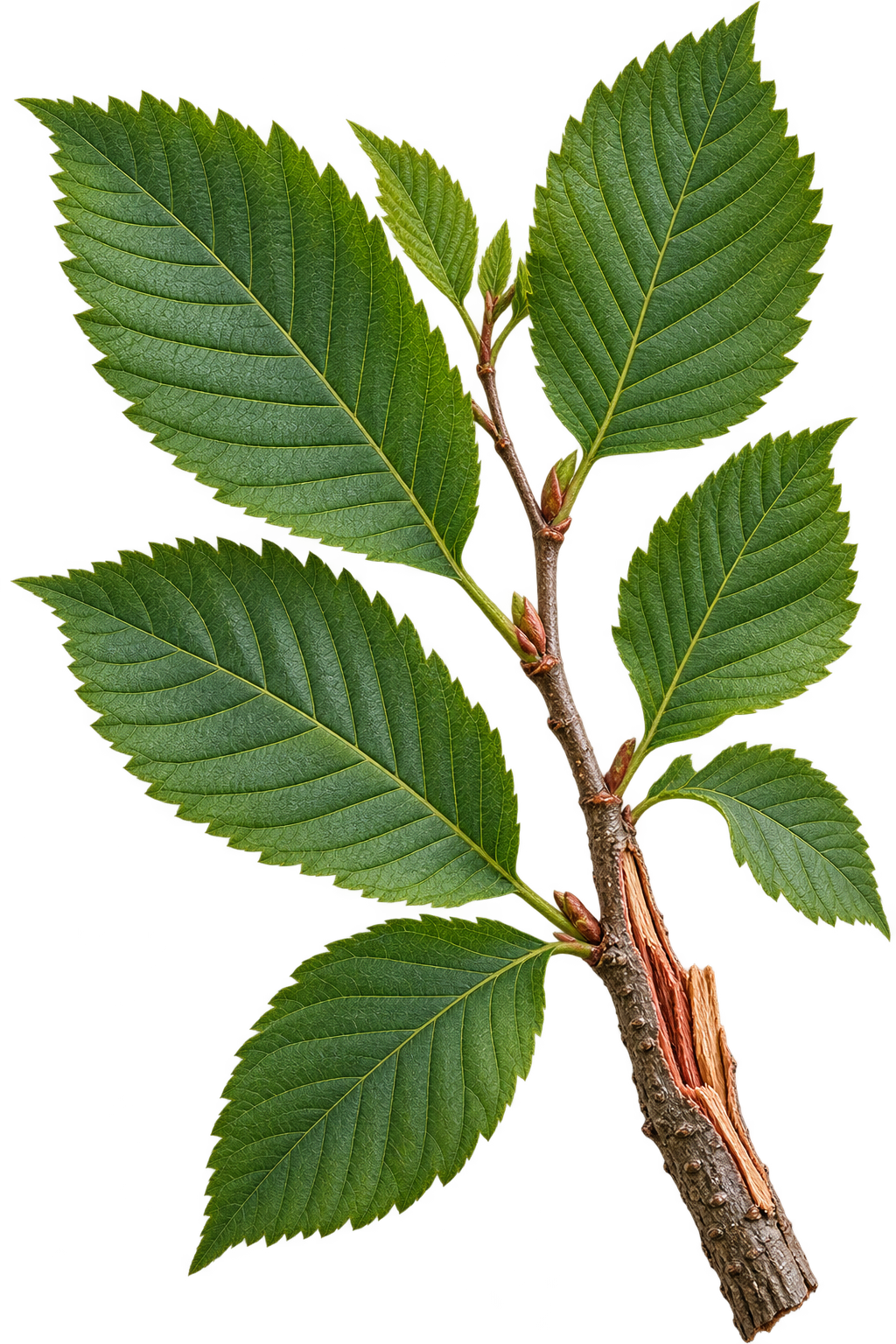
Slippery Elm
Traditional Uses
The mucilage-rich inner bark has long been used in Indigenous North American and later folk herbal traditions. Historical preparations included teas or decoctions for sore throats and digestive complaints, plus poultices or washes for irritated skin and sores.
Folklore
Slippery elm has a rich North American ethnobotanical history. In modern Hoodoo and Conjure practice, the bark is particularly associated with protection from slander, gossip, lies, and harmful speech.
Magical Associations
- protection
- boundaries
- quieting gossip
- reputation protection
- peaceful communication
- household protection
Core Correspondences
- Energy:
- protection • boundaries • peaceful speech • resilience • reputation
Witchcraft Uses
- protection sachets
- anti-gossip or reputation work
- peaceful-communication jars
- household boundary work
- privacy and discretion intentions
Caution
Use correctly identified, responsibly sourced inner bark. Do not strip living wild trees. Safety data for medicinal use are limited; consult a qualified professional when pregnant, breastfeeding, taking medication, or managing a health condition.
How to Work With
Place a small amount in a sachet or jar while setting an intention for truthful communication, privacy, calm conflict, or protection from harmful speech. Keep it near an entryway, workspace, or altar.
Best Time to Harvest
Historical references describe inner-bark harvest in spring and fall. Because bark removal can seriously injure the tree, prefer responsibly sourced commercial bark rather than casual wild harvest.