Herbs & Salts Grimoire
Slippery Elm
Ulmus rubra Muhl.Quick Reference
Traditional Uses
Slippery elm’s inner bark has a long history in distinct Indigenous North American and later Euro-American herbal traditions. Historical preparations included teas or decoctions for sore throats and digestive complaints and poultices or washes for irritated skin, sores, and wounds.
Magical Associations
- Protection
- Boundaries
- Quieting gossip
- Reputation protection
- Peaceful communication
- Household protection
- Resilience
- Grounded protection
Folklore
Slippery elm has a rich North American ethnobotanical history. In modern Hoodoo and Conjure practice, the bark is particularly associated with protection from slander, gossip, lies, and harmful speech.
Core Correspondences
Witchcraft Uses
- Protection sachets
- Anti-gossip or reputation work
- Peaceful-communication jars
- Household boundary work
- Privacy and discretion intentions
⚠ Caution
Use correctly identified, responsibly sourced inner bark. Do not strip living wild trees. Safety data for medicinal use are limited; consult a qualified professional when pregnant, breastfeeding, taking medication, or managing a health condition.
Educational purposes only. Not medical advice.How to Work With
Place a small amount in a sachet or jar while setting an intention for truthful communication, privacy, calm conflict, or protection from harmful speech. Keep it near an entryway, workspace, or altar.
Best Time to Harvest
Historical references describe inner-bark harvest in spring and fall. Because bark removal can seriously injure the tree, prefer responsibly sourced commercial bark rather than casual wild harvest.
Page 2 of 2
Deeper Reading
Botanical Profile
- Plant Family
- Ulmaceae
- Common Names
- Red elm · Gray elm
- Alternate Names
- Soft elm · Ulmus fulva · Slippery elm bark
- Growth Habit
- Medium-sized deciduous hardwood tree with a broad crown and shallow, spreading roots.
- Native Range
- Eastern and central North America, from parts of the northeastern United States and southern Canada west into the northern Great Plains and south through much of the central and eastern United States.
- Habitat
- Moist, rich lower slopes, streambanks, river terraces, floodplains, and bottomlands; also some drier upland limestone-derived soils.
- Identifying Characteristics
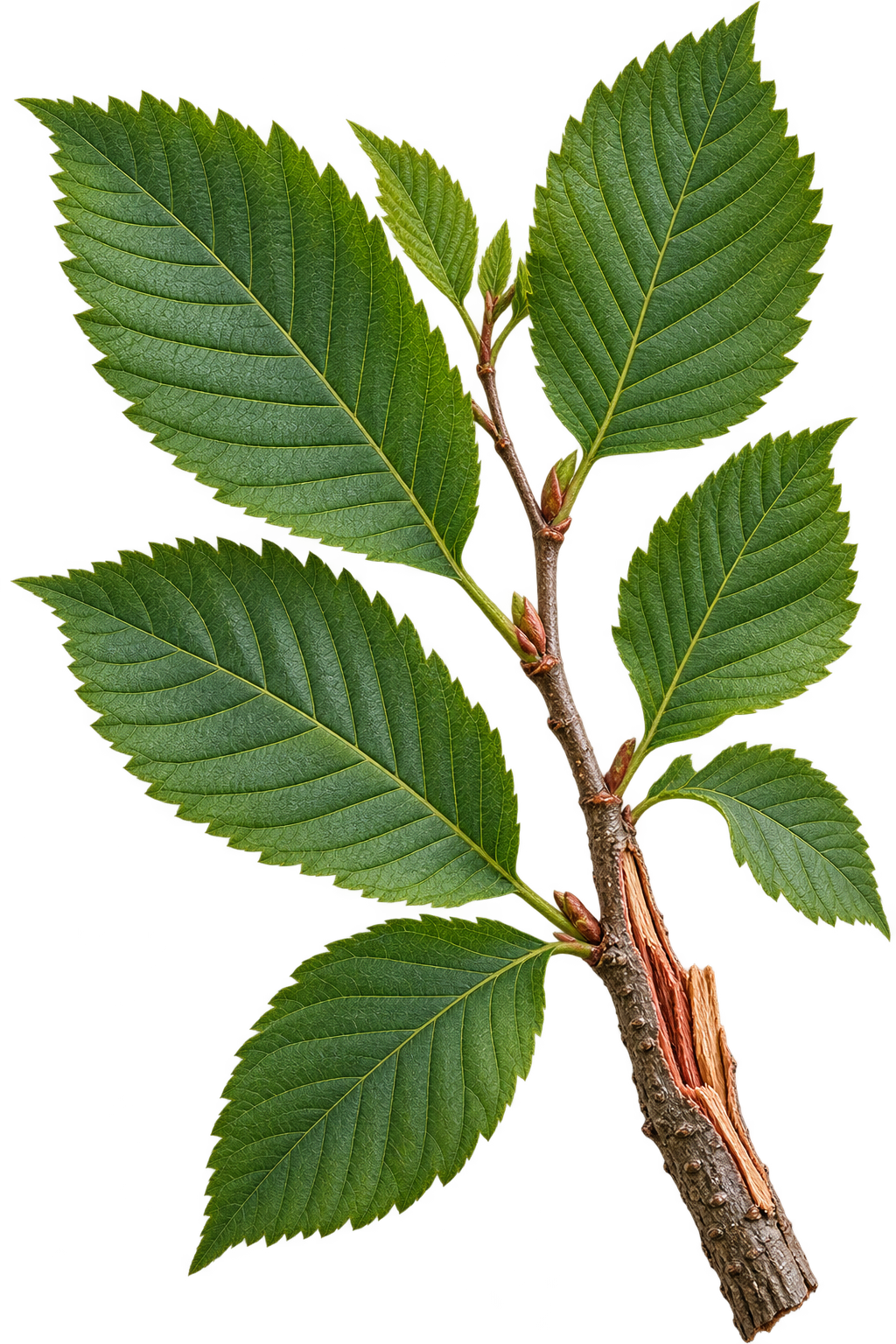
- Rough-textured, strongly serrated leaves with asymmetrical bases; rough twigs; hairy reddish-brown winter buds; small spring flowers; mucilaginous inner bark.
- Parts Traditionally Used
- Inner bark
History & Cultural Context
Slippery elm is deeply rooted in North American ethnobotany. Meskwaki people used bark in winter-house construction, and several peoples used inner-bark fiber for cordage, ropes, bags, and baskets. Medicinal records vary by nation and must not be generalized as one universal Indigenous practice. The bark later entered Euro-American folk medicine and commercial herbalism. Substantial commercial harvesting makes responsible sourcing especially important.
Traditional & Historical Medicinal Uses
The medicinal part is the mucilage-rich inner bark. Historical ethnobotanical records document distinct uses among multiple Indigenous nations: Ojibwe use in relation to sore throats; Menomini and Meskwaki bark poultices for sores; Iroquois combinations for swollen or infected glands and washes for sore eyes; and recorded laxative uses among several Plains and woodland peoples. Later Appalachian and Euro-American herbal practice continued the bark in teas, lozenges, powders, washes, and poultices. These are records of traditional and historical practice, not proof that slippery elm treats or cures disease.
Magical Uses
In contemporary folk magic, slippery elm is especially suited to work involving words, reputation, privacy, conflict, and personal boundaries. Hoodoo and Conjure traditions specifically associate the bark with work against slander, gossip, lies, and backbiting. Outside that named context, a modern practitioner might work with slippery elm as a symbol of calm communication, resilience, protective boundaries, or refusing to let harmful words define them. A small sachet, altar bowl, jar, or written-intention practice is appropriate; ingestion is unnecessary for magical work.
Modern Evidence
Modern references identify mucilage as the characteristic constituent of slippery elm bark. Mixed with water, it forms a viscous gel capable of coating surfaces, providing a plausible basis for traditional soothing use. High-quality clinical trials of slippery elm by itself are limited, and multi-ingredient studies cannot establish its independent effectiveness.
Notes & Personal Connection
Add your own experiences, observations, and notes about working with this plant. How does it speak to you? What is your personal connection?
Keep This Grimoire Entry
Print Page 1 and Page 2 together, single-sided or front and back.
Download to Print