Herbs & Salts Grimoire
Motherwort
Leonurus cardiaca L.Quick Reference
Traditional Uses
Motherwort has a long history in European herbalism, particularly in women’s-health and heart-related folk traditions. Its common name reflects its historical relationship with maternal and reproductive herbal practice.
Magical Associations
- Courage
- emotional strength
- protection
- compassion
- boundaries
- self-love
- maternal symbolism
- resilience
- heart-centered healing symbolism.
Folklore
The plant’s old associations with mothers, courage, the heart, household protection, and emotional steadiness shaped its later magical reputation. Modern witchcraft frequently uses motherwort symbolically for boundaries, emotional courage, self-compassion, protection, and strength during difficult heart-centered work.
Core Correspondences
- Planet
- Venus
- Gender
- Feminine
Witchcraft Uses
- Self-love rites
- boundary work
- courage magic
- protection charms
- emotional-release rituals
- shadow work
- heart-centered baths
- incense blends
- altar offerings.
⚠ Caution
Avoid during pregnancy unless specifically directed by a qualified clinician; motherwort has a history of uterine-related use. People taking heart, blood-pressure, anticoagulant, or other medications should not use internal preparations casually. Ritual-only products should not be ingested unless specifically labeled for that use.
Educational purposes only. Not medical advice.How to Work With
Use dried motherwort in sachets, ritual baths where botanically appropriate, incense blends, courage or boundary bowls, or self-love altars. In shadow-work practice it can represent the strength to face difficult emotions without allowing them to consume the process.
Best Time to Harvest
Harvest aerial parts around early flowering, before the flower whorls become excessively prickly, on a dry day after dew has evaporated.
Correspondences
Page 2 of 2
Deeper Reading
Botanical Profile
- Plant Family
- Lamiaceae
- Common Names
- lion’s tail · lion’s ear
- Growth Habit
- Upright herbaceous perennial, commonly about 60–150 cm tall, with square stems and clumping to spreading growth.
- Native Range
- Native from Europe eastward to Iran and parts of western Asia; widely introduced in North America and elsewhere.
- Habitat
- Disturbed soils, roadsides, field edges, old homesteads, waste places, hedgerows, and gardens. Prefers sun to partial shade and moderately fertile soil.
- Identifying Characteristics
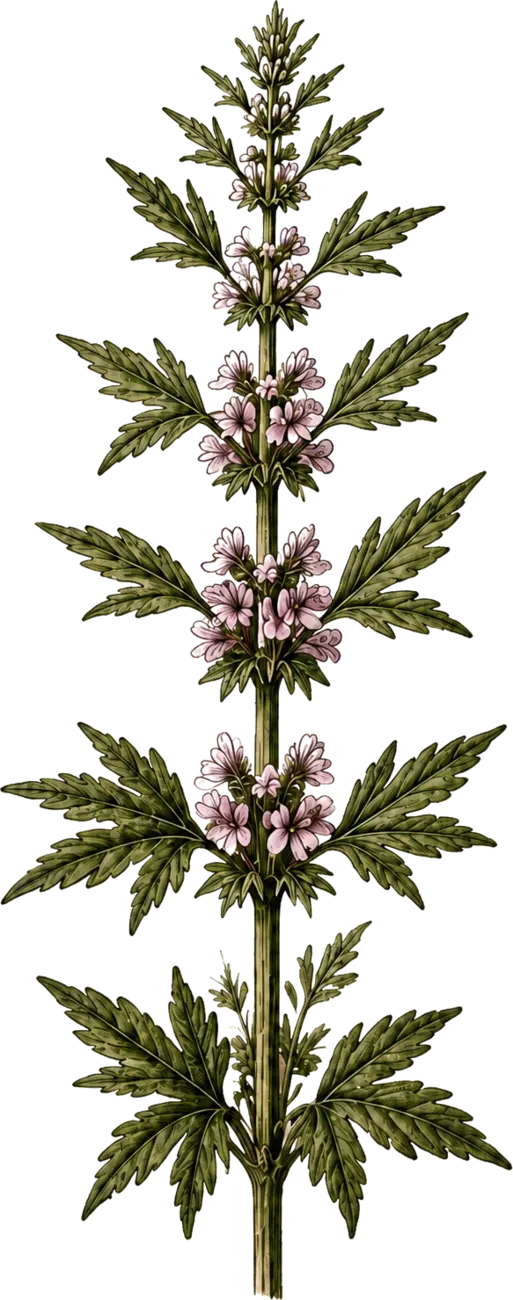
- Square stems; opposite deeply lobed leaves, especially on lower growth; upper leaves less divided; small pink to purple flowers arranged in dense whorls around the stem at leaf nodes. Mature flower calyces can become sharply pointed and prickly.
- Parts Traditionally Used
- Aerial parts, especially leaves and flowering tops.
Traditional & Historical Medicinal Uses
Historical herbal traditions used motherwort for menstrual, childbirth-related, nervous, and heart complaints. The page must not encourage self-treatment or imply safety during pregnancy.
Magical Uses
Self-love rites; boundary work; courage magic; protection charms; emotional-release rituals; shadow work; heart-centered baths; incense blends; altar offerings.
Modern Evidence
Motherwort's historical herbal use is not proof of modern clinical effectiveness. Concentrated products can affect the heart, bleeding, and uterine activity; medicinal use requires qualified guidance and is not a substitute for medical care.
Notes & Personal Connection
Add your own experiences, observations, and notes about working with this plant. How does it speak to you? What is your personal connection?
Keep This Grimoire Entry
Print Page 1 and Page 2 together, single-sided or front and back.
Download to Print