Crystal & Gemstone Grimoire
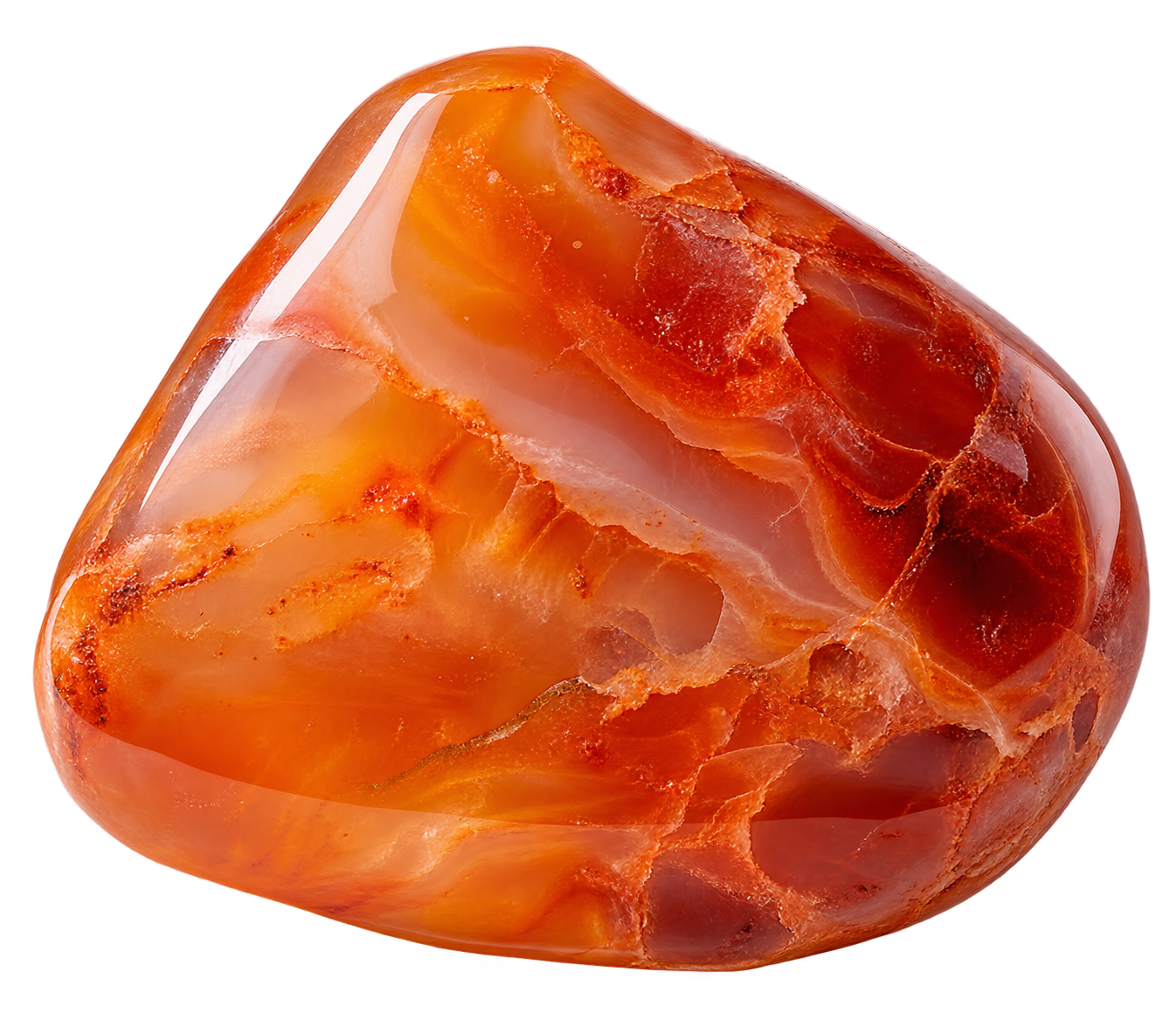
Carnelian
CarnelianHistorical & Cultural Uses
Carnelian has a long human history in amulets, seals, beads, carvings, and jewelry across ancient Egypt, the Near East, the Mediterranean world, South Asia, and elsewhere.
Magical Associations
- Modern crystal practice often links carnelian with motivation
- courage
- creative fire
- self-trust
- embodied confidence
- and action. These are symbolic modern associations and should not be framed as guaranteed outcomes.
Folklore & Legends
Carnelian has a long human history in amulets, seals, beads, carvings, and jewelry across ancient Egypt, the Near East, the Mediterranean world, South Asia, and elsewhere.
Core Correspondences
- Element
- Fire
- Mohs
- 6.5–7
Spiritual & Magical Uses
- Motivation and action-oriented spellwork
⚠ Care & Safety
Normal brief water exposure is generally fine.
Educational purposes only. Not medical advice.How to Work With This Crystal
Use carnelian when you want to emphasize movement, motivation, or embodied energy. Carry it, place it near a workspace, include it in a focus bowl, or pair it with journaling and practical action steps. It works best when symbolic intention is paired with actual follow-through.
Cleansing & Care
Carnelian is fairly durable. Clean with mild soap, lukewarm water, and a soft cloth, then dry well. Store away from harder gemstones that might scratch polished surfaces, and away from situations that could chip an edge.
Additional Correspondences
Page 2 of 2
Deeper Reading
Mineral Profile
- Mineral Class
- Silicate; quartz family; chalcedony variety
- Chemical Composition
- SiO₂
- Crystal System
- Trigonal as quartz; chalcedony occurs as a microcrystalline aggregate
- Hardness (Mohs)
- 6.5–7
- Luster
- Waxy to vitreous
- Color(s)
- Pale orange · orange-red · reddish orange · orange-brown to red-brown
- Transparency
- Translucent to opaque
- Streak
- White
- Common Formations
- Massive · nodular · vein filling · cabochons · beads · carvings · tumbled stones
- Cleavage
- No cleavage; uneven to conchoidal fracture
- Fracture
- No cleavage; uneven to conchoidal fracture
- Geological Origin
- Carnelian forms as microcrystalline silica in cavities, nodules, veins, and volcanic or sedimentary environments where silica-rich fluids precipitate chalcedony. The orange-to-red coloration is typically related to iron impurities and oxidation.
- Common Locations
- Carnelian is found in many places worldwide. Historically and commercially important sources include India · Brazil · Uruguay · Madagascar · and other chalcedony-producing regions.
- Rarity
- —
Historical & Cultural Uses
Carnelian is a warm orange to reddish variety of chalcedony, valued for both jewelry and symbolic use. Its color comes largely from iron compounds, and some material on the market may be heat treated to deepen red or orange tones. That does not make it fake, but it does mean color alone is not always enough to judge a piece’s history. Carnelian has a long human history in amulets, seals, beads, carvings, and jewelry across ancient Egypt, the Near East, the Mediterranean world, South Asia, and elsewhere. It has often been linked in historical and folkloric traditions with vitality, status, ornament, and protective or empowering symbolism.
Magical & Spiritual Uses
Modern crystal practice often links carnelian with motivation, courage, creative fire, self-trust, embodied confidence, and action. These are symbolic modern associations and should not be framed as guaranteed outcomes.
Notes & Personal Connection
Add your own experiences, observations, dreams, and notes about working with this crystal. How does this crystal speak to you? What is your personal connection?
Keep This Grimoire Entry
Print Page 1 and Page 2 together, single-sided or front and back.
Download to Print