Crystal & Gemstone Grimoire
Pyrite
PyriteHistorical & Cultural Uses
The name derives from Greek words related to fire because pyrite can produce sparks when struck.
Magical Associations
- In modern crystal practice
- pyrite is often associated with prosperity symbolism
- protection
- confidence
- willpower
- and determined action. These are contemporary symbolic associations rather than scientific properties.
Folklore & Legends
The name derives from Greek words related to fire because pyrite can produce sparks when struck.
Core Correspondences
- Chakra
- Solar plexusroot
- Mohs
- 6–6.5
Spiritual & Magical Uses
- Prosperity or abundance symbolism
⚠ Care & Safety
Avoid soaking or repeated wetting.
Educational purposes only. Not medical advice.How to Work With This Crystal
Use pyrite when you want a symbol of confidence, structure, and protective brightness. Place it on a desk, include it in prosperity bowls or abundance-themed layouts, or use it as a visual reminder to follow intention with real-world effort.
Cleansing & Care
Clean gently and keep the stone dry. A soft dry cloth or very lightly damp cloth followed by immediate drying is safest. Store away from humidity and do not leave it in damp containers. Fragile or weathering specimens deserve especially dry storage.
Additional Correspondences
Page 2 of 2
Deeper Reading
Mineral Profile
- Mineral Class
- Sulfide; pyrite group
- Chemical Composition
- FeS₂
- Crystal System
- Isometric
- Hardness (Mohs)
- 6–6.5
- Luster
- Metallic
- Color(s)
- Pale brass-yellow · golden metallic · sometimes tarnished
- Transparency
- Opaque
- Streak
- Greenish black to brownish black
- Common Formations
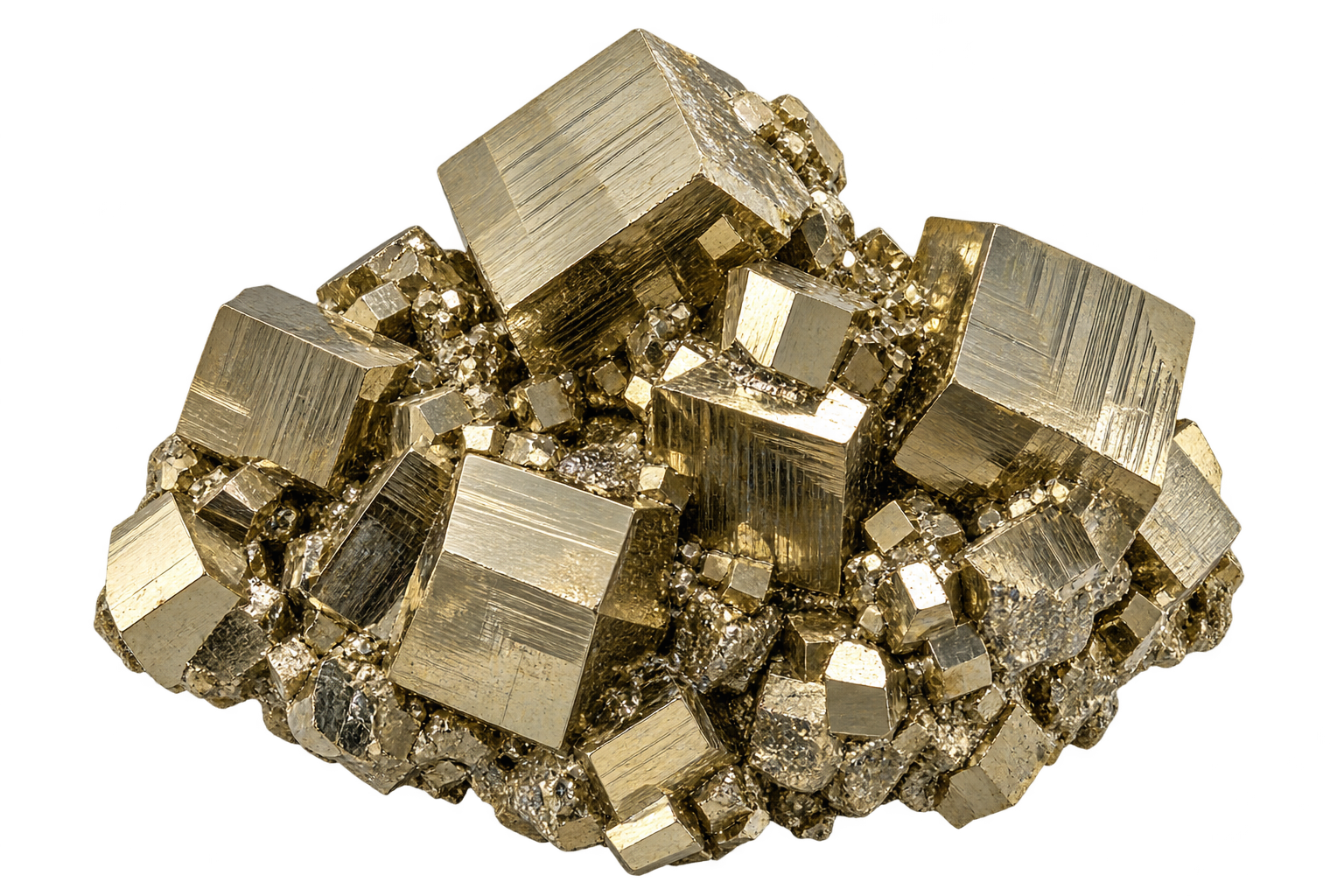
- Cubes · pyritohedrons · striated crystals · nodules · masses · clusters
- Cleavage
- Cleavage indistinct to poor; conchoidal to uneven fracture
- Fracture
- Cleavage indistinct to poor; conchoidal to uneven fracture
- Geological Origin
- Pyrite forms in a wide range of geological environments, including hydrothermal veins, sedimentary settings, igneous systems, metamorphic rocks, and ore deposits. It often appears as sharply formed cubic crystals or as massive and nodular material.
- Common Locations
- Pyrite is extremely widespread. Well-known specimens come from Spain · Peru · the United States · Italy · and many other localities. Some famous collector pieces are noted for bright metallic cubic crystals.
- Rarity
- —
Historical & Cultural Uses
Pyrite is a brassy metallic iron sulfide famous for its bright luster and common nickname “fool’s gold.” It is one of the most recognizable minerals in the world and remains popular both for collecting and for modern symbolic use. The name derives from Greek words related to fire because pyrite can produce sparks when struck. Historically it has had practical importance in fire-making and mineral collections, and it has long been admired for its metallic appearance. Modern metaphysical meanings often build on its golden color and bright reflective surface.
Magical & Spiritual Uses
In modern crystal practice, pyrite is often associated with prosperity symbolism, protection, confidence, willpower, and determined action. These are contemporary symbolic associations rather than scientific properties.
Notes & Personal Connection
Add your own experiences, observations, dreams, and notes about working with this crystal. How does this crystal speak to you? What is your personal connection?
Keep This Grimoire Entry
Print Page 1 and Page 2 together, single-sided or front and back.
Download to Print