Herbs & Salts Grimoire
Fenugreek
Trigonella foenum-graecumQuick Reference
Traditional Uses
Fenugreek seed and leaf have long histories as foods and in traditional herbal practice. Historical uses vary by region; those traditions are not proof of modern medical effectiveness.
Magical Associations
- Prosperity
- Abundance
- Money drawing
Folklore
Its old name ‘Greek hay’ reflects its history as both fodder and a cultivated food plant. Across regions, fenugreek became associated with nourishment, household stores, and plenty.
Core Correspondences
- Element
- Earth
- Planet
- Saturn
- Energy
- AbundanceSteady growth
Witchcraft Uses
- Prosperity sachets
- Abundance bowls
- Household blessing work
⚠ Caution
Food amounts differ from concentrated supplements. Fenugreek can cause digestive effects and allergic reactions, may interact with medicines, and is not considered safe in amounts greater than food during pregnancy. Seek qualified guidance for medicinal use.
Educational purposes only. Not medical advice.How to Work With
Use the seeds symbolically in prosperity bowls or sachets, grow the plant in a sunny herb garden, or work with it as a culinary herb when food use is appropriate for you. Do not ingest concentrated products without checking relevant cautions.
Best Time to Harvest
Harvest leaves while tender. Collect mature pods after they yellow and dry; allow seeds to finish drying before storage.
Correspondences
- Color
- Golden yellowGreen
- Season
- Autumn
Page 2 of 2
Deeper Reading
Botanical Profile
- Plant Family
- Fabaceae
- Alternate Names
- Greek hay · methi
- Growth Habit
- Aromatic annual herb
- Native Range
- Iraq to northern Pakistan; widely cultivated beyond its native range
- Habitat
- An annual of temperate regions, commonly encountered in cultivation
- Identifying Characteristics
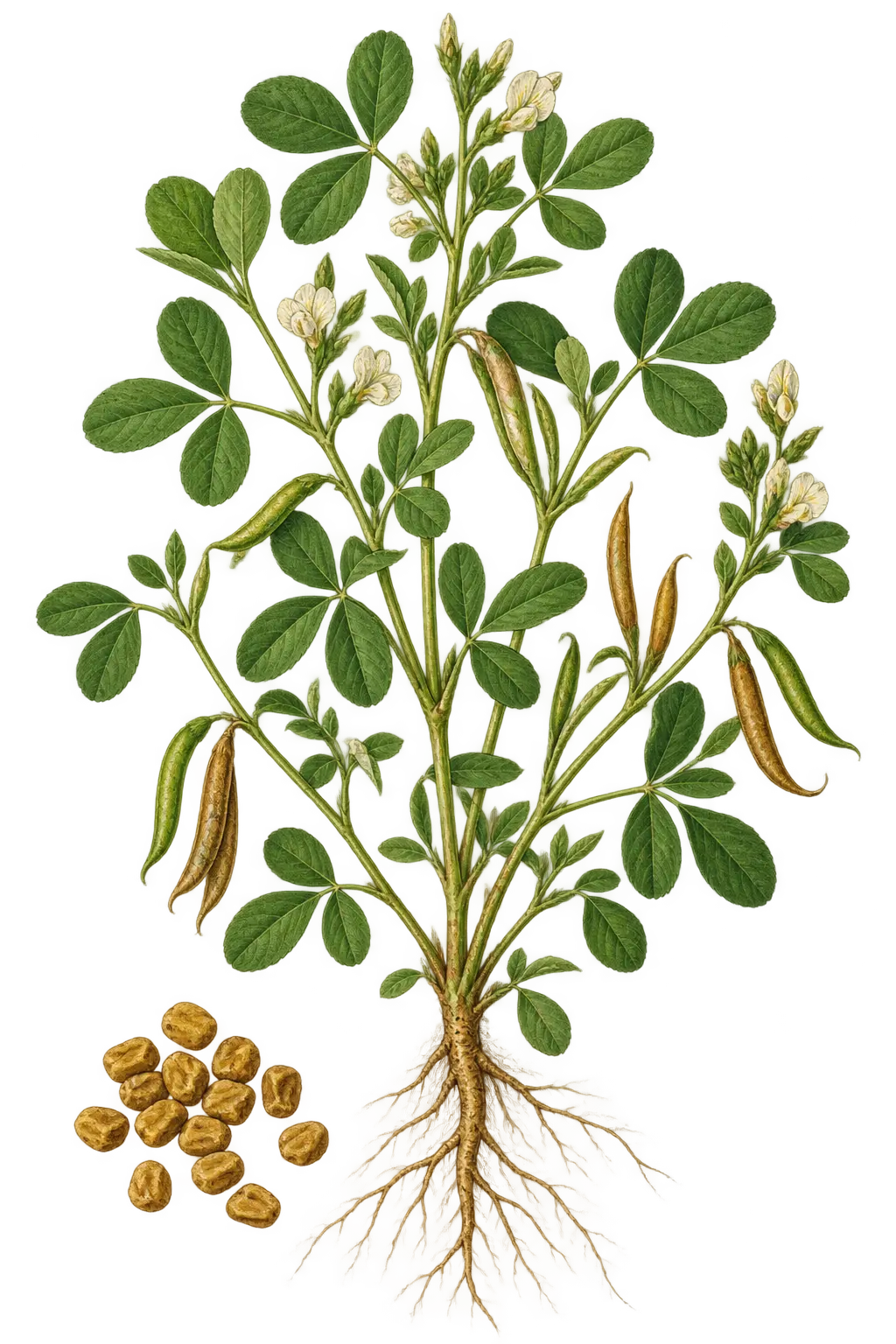
- Trifoliate leaves, small pale pea-like flowers, and narrow pods holding hard, angular yellow-brown seeds.
- Parts Traditionally Used
- Seeds · Leaves
Traditional & Historical Medicinal Uses
Fenugreek has been cultivated as a food, spice, and traditional herbal material across the Mediterranean, North Africa, western Asia, and South Asia. The leaves are eaten fresh or dried, while the strongly aromatic seeds are used whole or ground. Historical traditions have described preparations of the seed for digestive complaints, lactation, and metabolic concerns. These accounts describe traditional practice rather than established effectiveness. Modern evidence remains limited or mixed for many promoted uses, and concentrated products should not be treated as substitutes for medical care.
Magical Uses
In modern Western folk-magic and correspondence-based practice, fenugreek is most often placed in prosperity and abundance work. The seed's culinary value, multiplication in the pod, and long association with household stores make it a fitting symbol of provisions that grow rather than diminish. Practitioners may keep seeds in a dedicated prosperity bowl, add them to a sachet, or place a small offering on an altar concerned with household abundance. These are symbolic spiritual practices, not guarantees of financial results.
Notes & Personal Connection
Add your own experiences, observations, and notes about working with this plant. How does it speak to you? What is your personal connection?
Keep This Grimoire Entry
Print Page 1 and Page 2 together, single-sided or front and back.
Download to Print