Herbs & Salts Grimoire
Ginger
Zingiber officinaleQuick Reference
Traditional Uses
Ginger is the aromatic rhizome of Zingiber officinale. Its pungency and warmth make it a common contemporary magical symbol of movement, courage, energy, success, motivation, and getting an intention moving.
Magical Associations
- Energy
- Movement
- Courage
- Success
- Warmth
- Speed
- Motivation
- Prosperity
Folklore
Kew notes ginger's long history as a traded spice and that the Greeks and Romans obtained it through Arab traders. Modern magical correspondences should be presented separately from its historical culinary trade.
Core Correspondences
Witchcraft Uses
- Prosperity work
- Courage work
- Creativity
- Momentum symbolism
- Tea rituals when food-grade
- Simmer pots
- Incense blends
⚠ Caution
Culinary ginger is widely used as food, but concentrated products may cause digestive effects and can interact with anticoagulant, blood-sugar, or blood-pressure medicines. Pregnancy, gallbladder disease, surgery, and medicinal dosing warrant professional guidance.
Educational purposes only. Not medical advice.How to Work With
- Prosperity work - Courage work - Creativity - Momentum symbolism - Tea rituals when food-grade - Simmer pots - Incense blends
Best Time to Harvest
Harvest cultivated rhizomes after the foliage begins to yellow and die back. Younger rhizomes are milder and more tender; mature rhizomes are more fibrous and pungent. Use food-grade material for culinary use.
Page 2 of 2
Deeper Reading
Botanical Profile
- Plant Family
- Zingiberaceae
- Growth Habit
- Rhizome / Spice
- Native Range
- Ginger is an ancient cultivated plant whose precise wild origin is uncertain; its domestication and early cultivation are associated with tropical and subtropical Asia.
- Habitat
- Cultivated in warm, humid tropical to subtropical conditions in rich, well-drained soil with steady moisture and partial to full sun.
- Identifying Characteristics
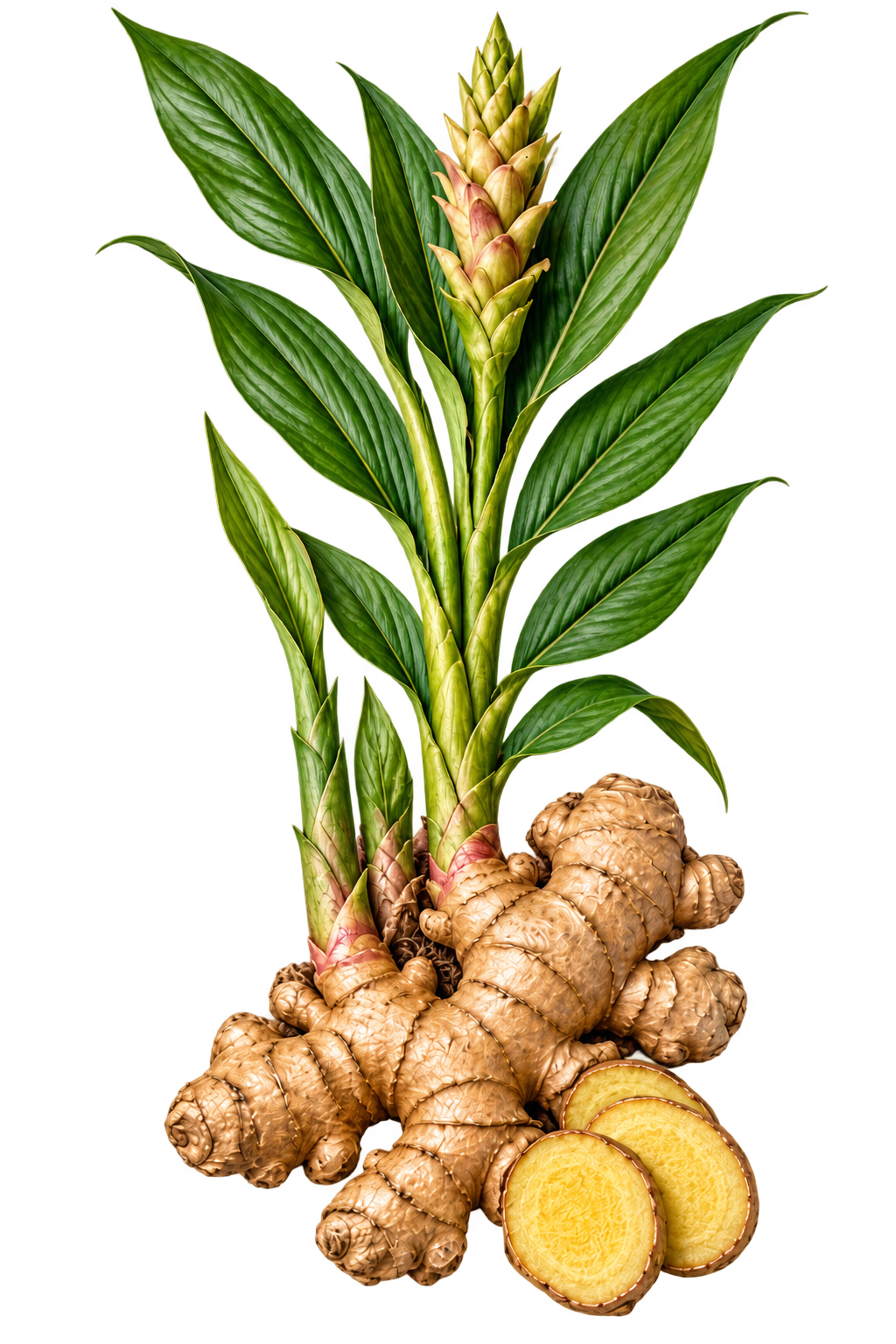
- A clumping herb with thick aromatic branching rhizomes, upright pseudostems formed by overlapping leaf sheaths, narrow lance-shaped leaves, and cone-like flower spikes arising separately from the leafy shoots.
- Parts Traditionally Used
- Rhizome / Spice
History & Cultural Context
Ginger has a long, geographically varied history as a food, trade spice, and traditional herbal material across Asia and later worldwide. Those histories should not be collapsed into a single medical tradition or treated as proof of modern efficacy.
Traditional & Historical Medicinal Uses
Ginger is the aromatic rhizome of Zingiber officinale. Its pungency and warmth make it a common contemporary magical symbol of movement, courage, energy, success, motivation, and getting an intention moving. Kew notes ginger's long history as a traded spice and that the Greeks and Romans obtained it through Arab traders. Modern magical correspondences should be presented separately from its historical culinary trade.
Magical Uses
Ginger is the aromatic rhizome of Zingiber officinale. Its pungency and warmth make it a common contemporary magical symbol of movement, courage, energy, success, motivation, and getting an intention moving. - Prosperity work - Courage work - Creativity - Momentum symbolism - Tea rituals when food-grade - Simmer pots - Incense blends
Modern Evidence
Ginger has been studied most extensively for nausea, but evidence and preparations vary by indication. Research does not validate every traditional or marketed claim, and medicinal use should not replace diagnosis or treatment.
Notes & Personal Connection
Add your own experiences, observations, and notes about working with this plant. How does it speak to you? What is your personal connection?
Keep This Grimoire Entry
Print Page 1 and Page 2 together, single-sided or front and back.
Download to Print