Herbs & Salts Grimoire
Goji Berries
Lycium barbarum L.; L. chinense has also historically supplied goji/wolfberryQuick Reference
Traditional Uses
Fruit is used in Chinese food and traditional medicine. Keep traditional claims culturally situated rather than translating them into guaranteed clinical effects.
Magical Associations
- vitality
- longevity symbolism
- endurance
- nourishment
- abundance
- well-being
Folklore
Long history as food and medicine in East Asia, particularly China. Fruit and root bark have separate traditional uses. Modern Western “superfood” marketing is much newer.
Core Correspondences
⚠ Caution
Published case reports describe probable interaction with warfarin and increased anticoagulant effect/bleeding. People using anticoagulants should discuss use with a clinician. Food and concentrated medicinal use are different contexts.
Educational purposes only. Not medical advice.How to Work With
A standardized historical Western magical system for goji is not well documented. Contemporary symbolic practice may draw on longevity/vitality food symbolism for vitality, endurance, nourishment and abundance; label these modern.
Page 2 of 2
Deeper Reading
Botanical Profile
- Plant Family
- Solanaceae
- Common Names
- Goji · wolfberry · Chinese wolfberry
- Growth Habit
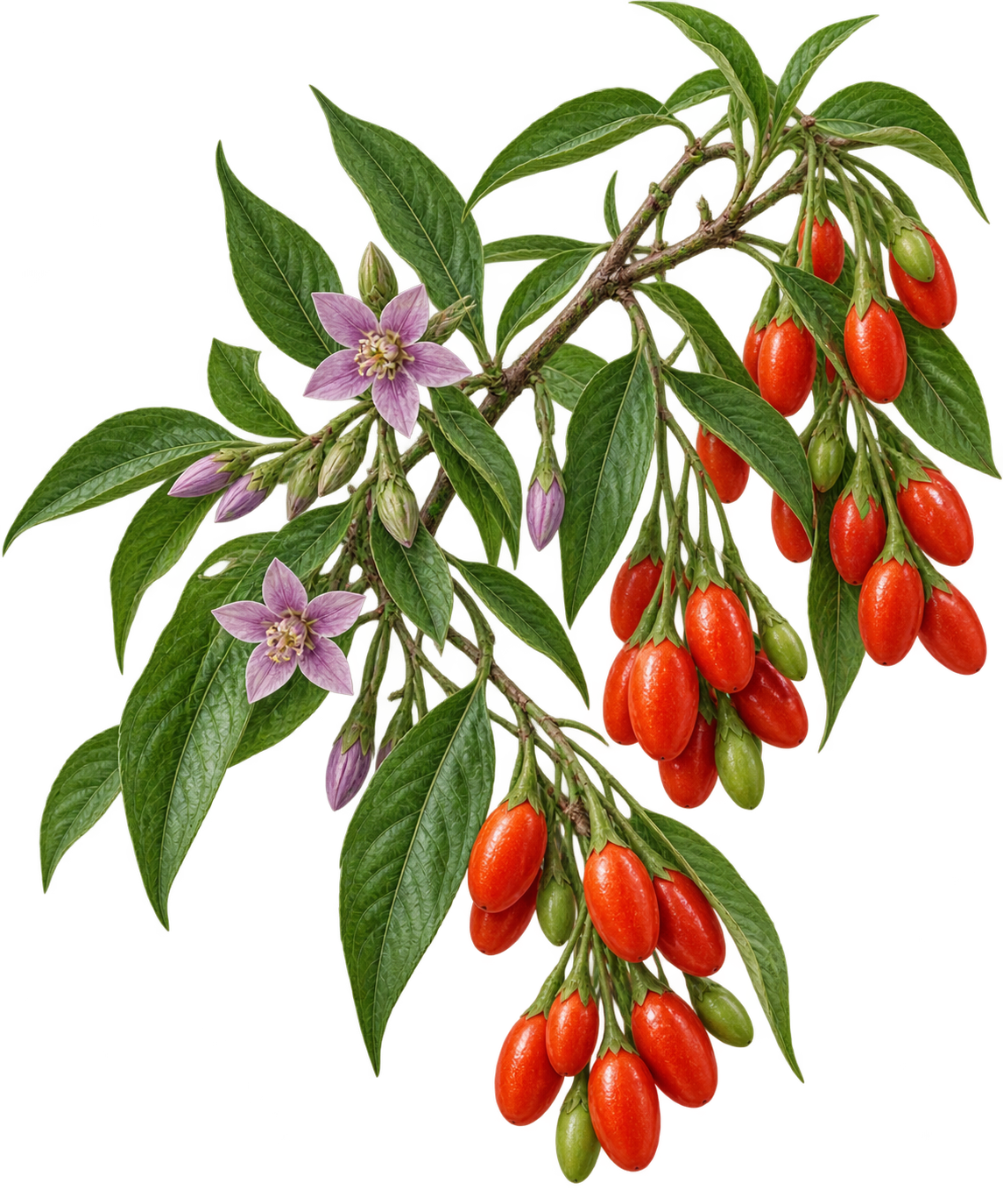
- Woody Lycium shrub producing elongated orange-red berries. L. barbarum and L. chinense have both supplied goji/wolfberry in East Asian food/medicine but are not botanically or chemically identical.
- Native Range
- Long history as food and medicine in East Asia, particularly China. Fruit and root bark have separate traditional uses. Modern Western “superfood” marketing is much newer.
- Habitat
- Woody Lycium shrub producing elongated orange-red berries. L. barbarum and L. chinense have both supplied goji/wolfberry in East Asian food/medicine but are not botanically or chemically identical.
- Identifying Characteristics
- Woody Lycium shrub producing elongated orange-red berries. L. barbarum and L. chinense have both supplied goji/wolfberry in East Asian food/medicine but are not botanically or chemically identical.
Traditional & Historical Medicinal Uses
Fruit is used in Chinese food and traditional medicine. Keep traditional claims culturally situated rather than translating them into guaranteed clinical effects.
Magical Uses
A standardized historical Western magical system for goji is not well documented. Contemporary symbolic practice may draw on longevity/vitality food symbolism for vitality, endurance, nourishment and abundance; label these modern.
Modern Evidence
Goji berries are foods, while concentrated products and medicinal claims require separate evaluation. Evidence for broad disease-treatment claims is insufficient, and clinically important interactions, including with warfarin, have been reported.
Notes & Personal Connection
Add your own experiences, observations, and notes about working with this plant. How does it speak to you? What is your personal connection?
Keep This Grimoire Entry
Print Page 1 and Page 2 together, single-sided or front and back.
Download to Print