Herbs & Salts Grimoire
Heal All
Prunella vulgarisQuick Reference
Traditional Uses
Heal All has a long history in European and Asian herbal traditions. European herbalists used it in preparations for sore throats, fevers, and wound care, while Chinese materia medica has long used the dried flowering or fruiting spikes in preparations associated with swellings, eye complaints, and traditional ‘liver fire’ patterns. This is historical and traditional-use information, not a statement of proven modern medical effectiveness.
Magical Associations
- Healing
- Restoration
- Recovery
- Resilience
- Self-care
- Renewal
- Wholeness
- Soothing energy
Folklore
Names such as ‘self-heal,’ ‘heal-all,’ and ‘woundwort’ reflect the strong reputation this plant developed in European folk herbalism. Its long association with mending wounds and everyday household healing later made it a natural symbol of resilience, restoration, and recovery in modern folk-magical practice.
Core Correspondences
Witchcraft Uses
- Healing or restoration spell jars
- Self-care or recovery-focused sachets
- Candle work for resilience and renewal
- Altar work during emotional or spiritual recovery
- Ritual baths when appropriate for the individual
- Symbolic work for rebuilding strength after a difficult period
⚠ Caution
Traditional use does not establish modern safety or effectiveness. Published reviews note that information on toxicity, pregnancy, breastfeeding, and herb-drug interactions remains limited. Use appropriate plant identification and consult a qualified health professional before medicinal use if pregnant, breastfeeding, taking medication, or managing a health condition.
Educational purposes only. Not medical advice.How to Work With
Work with Heal All in rituals centered on restoration, resilience, self-care, and renewal. Add it to spell jars, sachets, altar work, baths, or candle rituals when your intention is to mend, recover, regroup, or gently rebuild after something difficult. Here, healing refers to spiritual or symbolic intention rather than medical treatment.
Best Time to Harvest
Gather correctly identified leaves and flowering aerial growth from clean, unsprayed plants during bloom, after dew has dried. Leave ample flowers for pollinators and natural reseeding, then dry the material promptly in a well-ventilated place.
Page 2 of 2
Deeper Reading
Botanical Profile
- Plant Family
- Lamiaceae
- Common Names
- Heal-all · Self-heal · Common selfheal · Woundwort
- Alternate Names
- Xia Ku Cao · Xiakucao · Prunella vulgaris
- Growth Habit
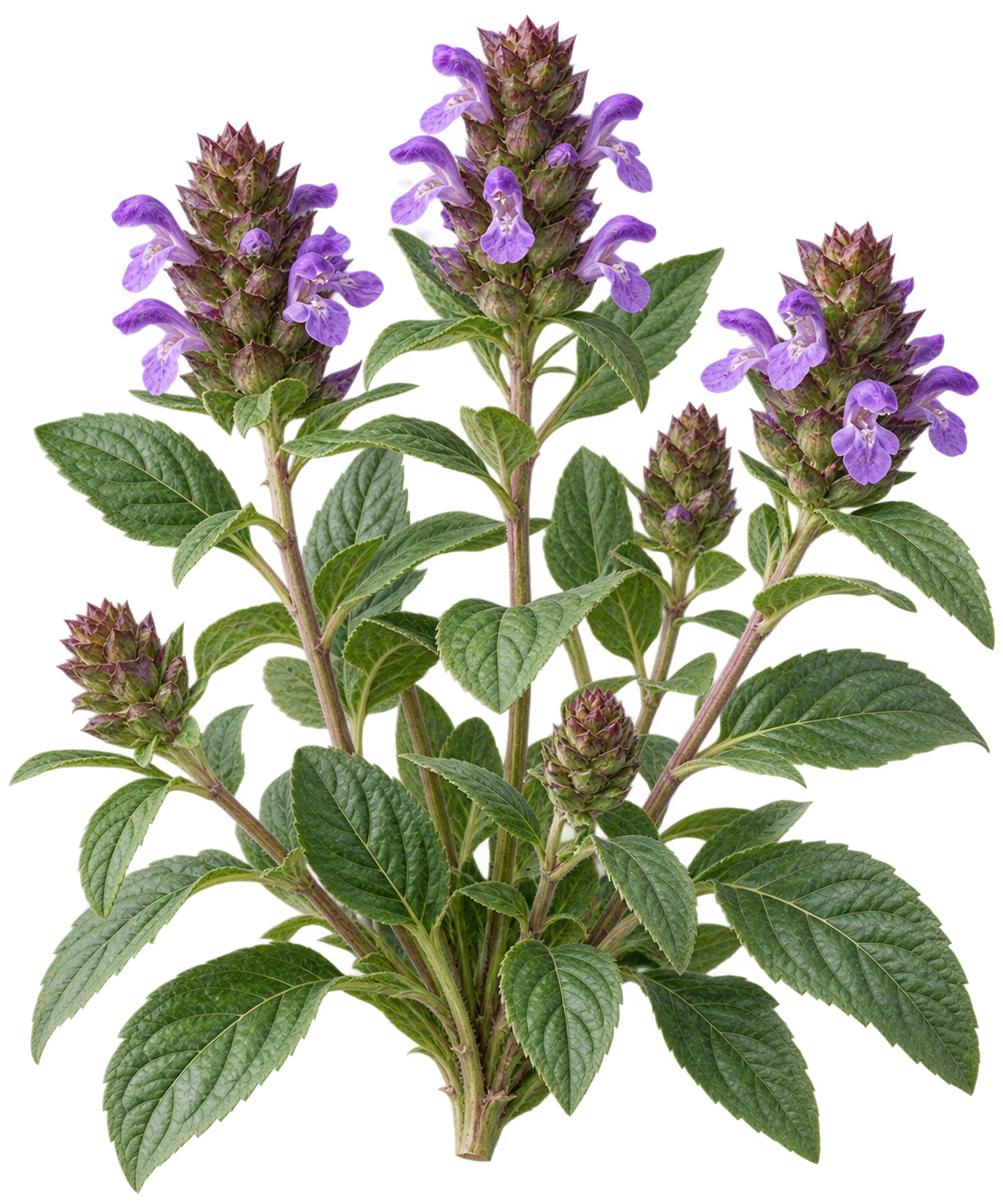
- A low-growing perennial herb in the mint family, usually forming spreading patches. It produces upright flowering stems topped with dense purple to violet flower spikes.
- Native Range
- Widely distributed across temperate parts of Europe and Asia and now also common across much of North America and other temperate regions.
- Habitat
- Common in meadows, lawns, pastures, woodland edges, roadsides, disturbed ground, and other open areas. It tolerates mowing and compacted soils and often persists in places with regular foot or animal traffic.
- Identifying Characteristics
- Square stems; opposite, oval-to-lance-shaped leaves; and compact cylindrical flower heads made up of small purple or violet tubular flowers. Like many members of the mint family, the flowers are two-lipped.
- Parts Traditionally Used
- Leaves · Flowering tops · Whole aerial herb · Dried flowering or fruiting spikes
Traditional & Historical Medicinal Uses
Heal All has a long and geographically varied history of medicinal use. In seventeenth-century European herbal practice, Prunella vulgaris was used for sore throats, fevers, and wound healing. Preparations historically included infusions, gargles, washes, poultices, and other external applications. Its common names—self-heal, heal-all, and woundwort—reflect the plant’s longstanding reputation as a household herb for mending and recovery. Chinese materia medica records Prunella vulgaris from at least the Eastern Han period. The dried flowering or fruiting spikes, known as Xia Ku Cao, have traditionally been used within Chinese medicine for patterns involving swellings or masses, red or painful eyes, headaches, dizziness, and conditions interpreted through the traditional concept of clearing ‘liver fire.’ These descriptions belong to the historical framework of Chinese medicine rather than serving as modern biomedical claims. Other documented folk traditions include use for colds and rheumatic complaints in Turkey, use of the flowering fruit spikes as a diuretic in Japanese folk medicine, and regional Iranian use for sore throat, bleeding, headaches, digestive complaints, hemorrhoids, and eye inflammation. These records of traditional and historical use do not establish that Heal All treats or cures these conditions today.
Magical Uses
In contemporary witchcraft and folk practice, Heal All is commonly associated with restoration, resilience, renewal, self-care, and recovering after difficult periods. Its historical names make it especially suited to symbolic work around mending, rebuilding, and returning to a sense of wholeness. Use it in healing jars, resilience sachets, altar offerings, ritual baths, candle work, or personal reflection focused on recovery and renewal. It can also serve as a symbolic reminder that healing is often gradual and that restoration may involve rest, boundaries, patience, and repeated acts of care. These are spiritual and symbolic practices, not medical treatments.
Modern Evidence
Modern laboratory and preclinical research has examined constituents of Prunella vulgaris including rosmarinic acid, flavonoids, triterpenoids, polysaccharides, and other compounds. Research has explored anti-inflammatory, antimicrobial, antioxidant, immune-related, and other biological activities, but much of this evidence is laboratory or preclinical and does not establish clinical effectiveness.
Notes & Personal Connection
Add your own experiences, observations, and notes about working with this plant. How does it speak to you? What is your personal connection?
Keep This Grimoire Entry
Print Page 1 and Page 2 together, single-sided or front and back.
Download to Print