Herbs & Salts Grimoire
Holy Basil
Ocimum tenuiflorum L.Quick Reference
Traditional Uses
Historical and traditional systems, especially Ayurveda and other South Asian practices, have used Tulsi in teas and other preparations associated with respiratory complaints, general well-being, and resilience. These statements describe historical/traditional use and are not claims of proven medical effectiveness.
Magical Associations
- Purification and sacred space
- Protection
- Blessing
- Devotion
- Spiritual clarity
- Household harmony
- Resilience
- Renewal
- Reverence
- Spiritual growth
Folklore
Tulsi is an important sacred plant in Hinduism and is strongly associated with purity, devotion, Lakshmi, and the worship of Vishnu and his forms.
Core Correspondences
- Element
- Tradition varies
- Planet
- Tradition varies
- Gender
- Tradition varies
Witchcraft Uses
- Keep dried Tulsi on an altar or devotional space as a symbolic reminder of reverence, clarity, or spiritual discipline.
- Add dried Tulsi to a non-ingested sachet or spell jar focused on protection, blessing, harmony, or renewal.
- Use Tulsi in a ritual bath only when the user has confirmed the material is appropriate for topical use and has no relevant allergy or sensitivity.
- Use the herb as a focus for meditation on resilience, devotion, gratitude, or spiritual growth.
- When incorporating Tulsi into practices inspired by Hindu traditions, encourage respectful learning rather than treating sacred Hindu customs as interchangeable with generic witchcraft.
⚠ Caution
Culinary amounts and medicinal or supplemental doses are not the same. Long-term and population-specific safety data remain limited, and concentrated extracts or essential oils require separate caution.
Educational purposes only. Not medical advice.How to Work With
Keep dried Tulsi on an altar or devotional space; add it to a non-ingested sachet or spell jar for protection, blessing, harmony, or renewal; or use it as a focus for meditation on resilience, devotion, gratitude, or spiritual growth. Practices inspired by Hindu traditions should be approached with respectful learning.
Best Time to Harvest
No harvesting guidance was supplied in the approved publishing package.
Page 2 of 2
Deeper Reading
Botanical Profile
- Plant Family
- Lamiaceae
- Alternate Names
- Tulsi · Tulasi · Ocimum sanctum L. · Sacred basil
- Growth Habit
- Short-lived perennial herb or subshrub that may reach roughly 1 meter in height.
- Native Range
- Tropical and subtropical Asia into parts of the western Pacific.
- Habitat
- Traditionally cultivated around homes, courtyards, temples, and other sacred spaces.
- Identifying Characteristics
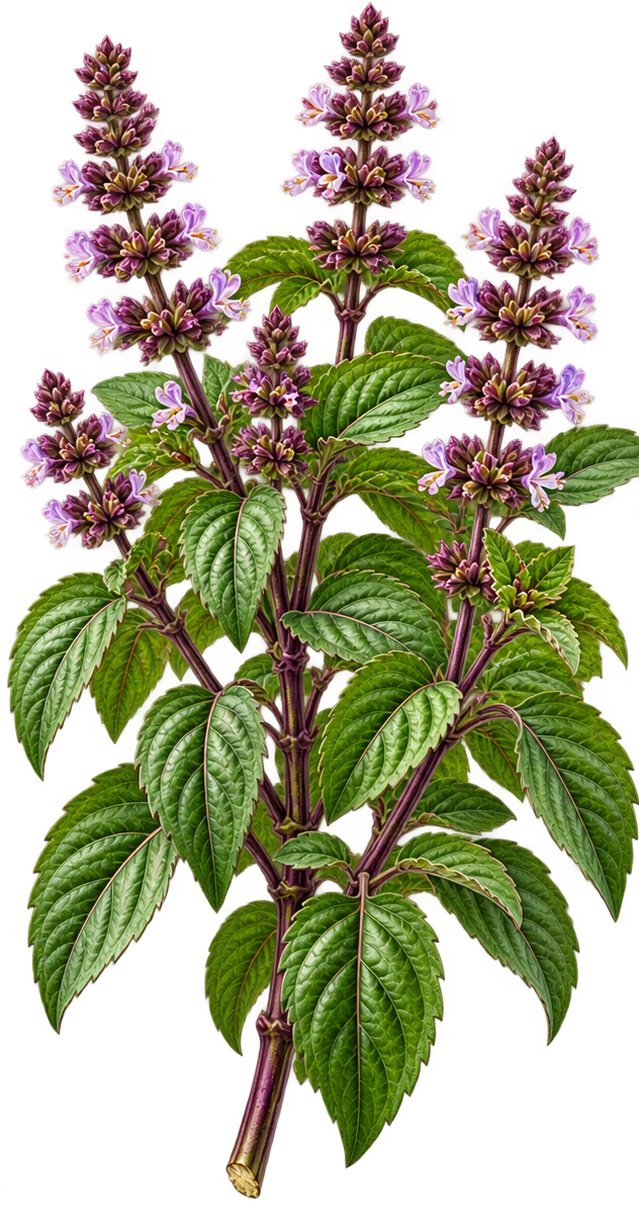
- An aromatic member of the mint family with elliptic to ovate leaves, stems that may show purplish coloration, and small flowers borne on upright flowering spikes. Holy basil should not be confused with culinary sweet basil, Ocimum basilicum; they are related plants but are not the same species.
- Parts Traditionally Used
- Leaves · Aerial parts
Traditional & Historical Medicinal Uses
Tulsi has a long history of religious, household, culinary, and medicinal use in South Asia. Kew describes it as an important sacred plant in Hinduism and notes that its religious and medicinal histories are closely intertwined. Tulsi has traditionally been cultivated around homes, courtyards, temples, and other sacred spaces. In Hindu traditions, Tulsi is personified as a goddess and is strongly associated with purity and devotion. Some traditions identify Tulsi with or as a manifestation of Lakshmi, and Tulsi is closely connected with the worship of Vishnu and his forms. These are living religious traditions and should be presented respectfully rather than reduced to generic “witchcraft correspondences.” Historical and traditional systems, especially Ayurveda and other South Asian practices, have used Tulsi in many preparations. Traditional uses have included teas and other preparations associated with respiratory complaints, general well-being, and resilience. These statements describe historical/traditional use and are not claims of proven medical effectiveness. Modern human research has investigated Tulsi for several possible effects, but the quality and size of the evidence base varies. The Grimoire does not state that Tulsi prevents, treats, or cures disease.
Magical Uses
For a modern witchcraft audience, Holy Basil may be discussed through themes that are consistent with its documented sacred and devotional history: purification and sacred space, protection, blessing, devotion, spiritual clarity, household harmony, resilience, renewal, reverence, and spiritual growth. These are symbolic, spiritual, folk, or modern magical associations, not scientific properties. Do not present Tulsi solely as a Western occult herb. Its sacred role in Hindu traditions is central to its cultural history. Avoid claiming that modern Western planetary, elemental, gendered, or deity correspondences are ancient or universally Hindu. Variable modern correspondences are described as tradition varies rather than presented as certain.
Notes & Personal Connection
Add your own experiences, observations, and notes about working with this plant. How does it speak to you? What is your personal connection?
Keep This Grimoire Entry
Print Page 1 and Page 2 together, single-sided or front and back.
Download to Print