Herbs & Salts Grimoire
Feverfew
Tanacetum parthenium (L.) Sch.Bip.Quick Reference
Traditional Uses
Feverfew has a long history in European herbal traditions for fever and headache-related complaints. Today it is most often investigated for migraine prevention, but findings are mixed and do not establish reliable benefit.
Magical Associations
- Protection
- Warding
- Cleansing and clearing stagnant energy
- Peace and calm
- Resilience
- Mental clarity
- Steady energy
- Balance
Folklore
Its common name reflects a long European herbal reputation for fever and other complaints; modern symbolic themes should remain distinct from that history.
Core Correspondences
- Element
- Tradition varies
- Planet
- Tradition varies
- Gender
- Tradition varies
Witchcraft Uses
- Add dried feverfew to a non-ingested protection sachet.
- Include it in a symbolic cleansing blend.
- Place a small amount on an altar as a reminder of resilience and balance.
- Use it as a focus for meditation on clarity or steady energy.
- Include it in a symbolic offering where appropriate to the practitioner's tradition.
⚠ Caution
Do not take feverfew during pregnancy. It may slow blood clotting, interact with medicines, cause allergy in people sensitive to ragweed relatives, irritate the mouth or skin, and cause digestive effects.
Educational purposes only. Not medical advice.How to Work With
Use dried feverfew in a non-ingested protection sachet or symbolic cleansing blend, place a small amount on an altar as a reminder of resilience and balance, or use it as a meditation focus. Do not ingest, chew fresh leaves, or apply it to skin as a ritual instruction.
Best Time to Harvest
No harvesting guidance was supplied in the approved publishing package.
Page 2 of 2
Deeper Reading
Botanical Profile
- Plant Family
- Asteraceae
- Alternate Names
- Chrysanthemum parthenium (L.) Bernh.
- Growth Habit
- Aromatic biennial or perennial herb in the daisy family.
- Native Range
- Southeastern Europe to the western Himalaya; introduced widely elsewhere.
- Habitat
- Introduced and cultivated widely beyond its native range.
- Identifying Characteristics
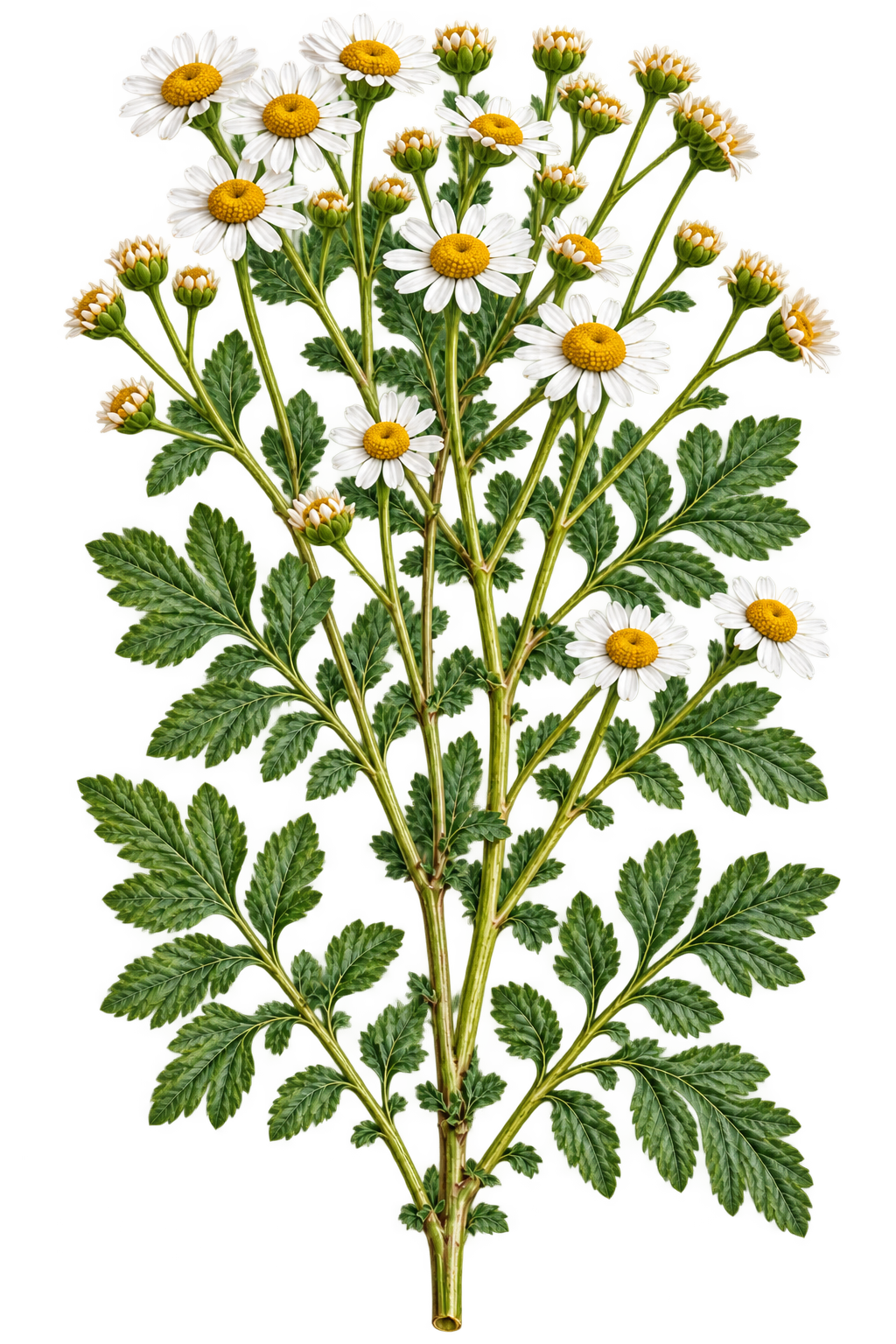
- Leafy stems, deeply divided green leaves, and clusters of small daisy-like flower heads with white ray florets and yellow central disc florets. Its resemblance to chamomile is not sufficient for identification; use the botanical name and distinguishing leaf and flower characteristics.
- Parts Traditionally Used
- Leaves · Aerial parts
Traditional & Historical Medicinal Uses
Feverfew has a long history in European herbal traditions and was used for fever and a variety of other complaints. Its common name reflects that historical reputation. Historical medicinal use is not evidence that the plant is effective for every condition for which it was traditionally used. Traditional herbal uses included fever and headache-related complaints. Today, feverfew is most often investigated or promoted for migraine prevention. Clinical findings have been mixed, and the evidence is not strong enough to establish reliable benefit. There is little or no evidence supporting its use for other health conditions. Feverfew is not presented as curing migraines, treating fever, or providing proven medical benefits.
Magical Uses
Modern or variable folk and magical practice associates feverfew with protection, warding, cleansing, peace, calm, resilience, mental clarity, steady energy, and balance. These are spiritual associations, not demonstrated physiological effects. The plant's historical reputation may be discussed alongside modern symbolic themes of protection, clarity, and resilience, but those modern associations are not presented as universally attested ancient folklore.
Notes & Personal Connection
Add your own experiences, observations, and notes about working with this plant. How does it speak to you? What is your personal connection?
Keep This Grimoire Entry
Print Page 1 and Page 2 together, single-sided or front and back.
Download to Print